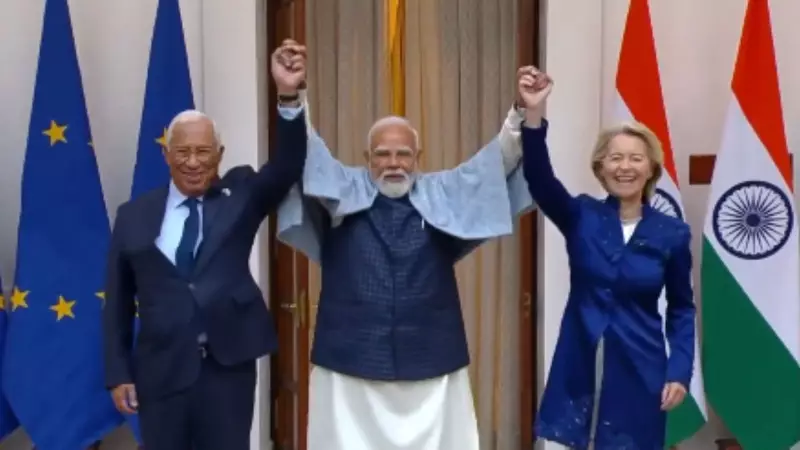
India-EU Trade Deal Finalized: Major Swap of Automobiles and Wine for Labor-Intensive Goods
In a landmark agreement that reshapes economic ties between two major global players, India and the European Union have concluded negotiations on a comprehensive trade deal. The pact centers on a strategic exchange: EU access for automobiles and wine in return for significant concessions on India's labor-intensive sectors. This breakthrough follows years of stalled talks and addresses core priorities for both economies.
Boosting Indian Exports and Employment
For India, a primary goal is to shore up trade-linked jobs in key sectors like textiles, footwear, and the marine industry. This move gains urgency amid challenges like recent US tariff actions. Government data reveals that exports from these labor-intensive products reached $35 billion in 2024. Under the new deal, duties on $33.5 billion worth of these goods will drop to zero immediately upon implementation. The remaining tariffs will be phased out over 3, 5, or 7 years.
This zero-duty access is crucial for leveling the playing field with competitors. Notably, it brings India on par with countries like Vietnam, which secured a similar EU trade agreement in 2019, propelling its role in global supply chains.

Detailed Tariff Reductions for Indian Goods
Commerce Ministry officials outlined specific tariff cuts for Indian exports to the EU:
- Marine sector: Duties reduced from up to 26% to zero.
- Leather & footwear: Reduced from up to 17% to zero.
- Chemicals: Reduced from up to 12.8% to zero.
- Plastic & rubber: Reduced from up to 6.5% to zero.
- Textiles & apparel: Reduced from up to 12% to zero.
- Gems & jewellery: Reduced from up to 4% to zero.
- Toys and sports goods: Reduced from up to 4.7% to zero.
EU Gains: Automobiles and Beverages
In exchange, the EU secures enhanced market access for its automobiles and alcoholic beverages, aiding its bid to revive industrial bases against global competition, particularly from China. The EU stated that duties on European motor vehicles will be slashed from 110% to 10%, with an import quota set at 250,000 units.
For beverages:
- Wine: Tariffs drop from 150% to 20% for premium ranges and 30% for medium ranges.
- Spirits: Reduced from up to 150% to 40%.
- Beer: Reduced from 110% to 50%.
Similar reductions were implemented in India's recent FTAs with the UK and Australia, indicating a consistent trade strategy.
Quota-Based System and Sensitive Protections
To address domestic sensitivities, India has granted automobile access on a quota basis. The quota specifically applies to imported EU luxury cars retailing above Rs 25 lakhs, protecting India's mid-level segment where local manufacturers dominate. Officials explained that the market is segmented, with quotas designed to safeguard lower segments. If demand exceeds quotas, the expectation is for EU manufacturers to establish production units in India.
Notably, quotas for Electric Vehicles (EVs) will only activate in the fifth year, allowing India's growing EV manufacturing sector time to develop. For every car quota granted, India has secured a 2.5 times larger export quota to the EU, aiming to boost India's automobile exports. With the EU's auto market being twice the size of India's, these negotiations were particularly complex and went down to the wire.
Overall Tariff Liberalization
The deal encompasses extensive tariff liberalization. The EU has agreed to eliminate tariffs on approximately 99.5% of the value of goods traded, covering 96.8% of tariff lines. India will liberalize 97% of goods by value, covering 92.1% of its tariff lines. This high level of access underscores the deal's comprehensive nature, marking a significant step since talks collapsed in 2013 over automobile market access disputes.

This India-EU trade agreement represents a balanced approach, fostering job growth in India's key sectors while opening new opportunities for European industries, setting a precedent for future international trade partnerships.