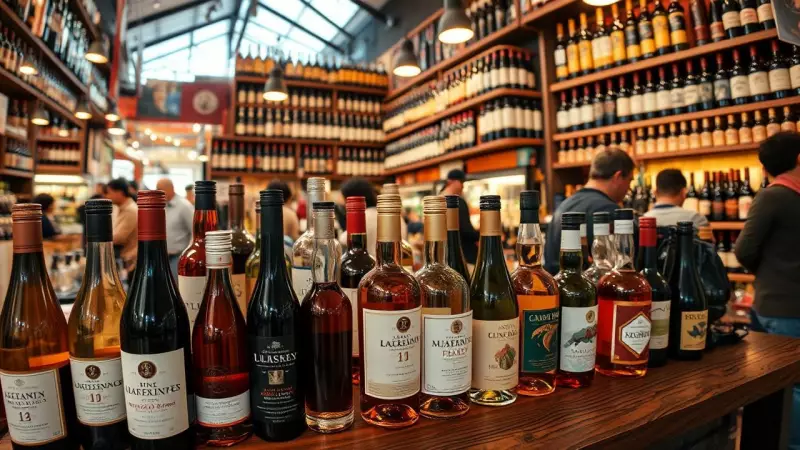
Historic India-EU Free Trade Agreement to Make European Alcohol More Affordable
Imported European wines, whiskies, and beers are poised to become significantly more affordable in India following the conclusion of a landmark free trade agreement (FTA) between India and the European Union. Described by leaders from both sides as the "mother of all deals," this pact marks a transformative moment in bilateral trade relations.
Tariff Reductions: What Gets Cheaper and By How Much?
Under the newly unveiled agreement, India will implement substantial reductions in import duties on alcoholic beverages, paving the way for lower retail prices and increased availability of premium European brands across the country. The specific duty cuts are as follows:
- Wines: Import tariffs on premium European wines will be slashed from as high as 150% to just 20%, while medium-range wines will see duties reduced to 30%. However, wines priced below €2.5 will not receive any concessions.
- Spirits: Tariffs on spirits including whisky, vodka, rum, and gin, which currently reach up to 150%, will be lowered to 40%.
- Beer: Beer duties will fall dramatically from 110% to 50%, making European beer brands much more accessible, particularly in metropolitan cities and tourism hubs.
These reductions are expected to particularly benefit wines from France, Italy, Spain, and Germany, along with Scotch whisky, Irish whiskey, craft gins, and various continental beer brands.

A Long-Awaited Deal: 18 Years of Negotiations
The agreement was formally concluded on Tuesday after nearly 18 years of negotiations that began back in 2007. Leaders from both India and the European Union emphasized that this FTA will help navigate global economic uncertainty, deepen supply-chain partnerships, and reduce strategic dependencies.
Prime Minister Narendra Modi hailed the agreement as a historic breakthrough, stating that it would unlock new opportunities for India's 1.4 billion people and millions across Europe. He noted that the pact spans nearly a quarter of global GDP and about one-third of world trade.
European Commission President Ursula von der Leyen remarked that the FTA would combine "Indian skills and scale with Europe's technology, capital and innovation." She added, "It will create levels of growth that neither side can achieve alone, and by combining these strengths, we reduce strategic dependencies."
India's Strategic Gains from the FTA
India has secured significant benefits from this agreement, particularly for its labor-intensive sectors. The EU has granted zero-duty or preferential access for Indian textiles, apparel, leather, gems and jewellery, handicrafts, and footwear—a core demand that has been met in all of India's FTAs so far.
Additionally, the EU has agreed to eliminate duties on Indian wines, opening new export opportunities for Indian producers targeting the growing diaspora market. India has also received quota-based duty reductions on table grapes, with duty-free access for 85,000 tonnes, while exports beyond that quota can continue at existing Most Favored Nation (MFN) rates.
Calibrated Approach and Implementation Timeline
An official involved in the negotiations explained that India followed a calibrated approach similar to its trade deals with Australia and New Zealand. "Like auto, wine is one of the biggest exportable items for the Indian industry. So for them, it is very important. And we have given duty concessions in a calibrated way. The duties will be reduced in seven years," the official stated.
Major Trade Numbers and Strategic Implications
India's bilateral trade in goods with the EU stood at $136.53 billion in 2024–25, with exports of $75.85 billion and imports of $60.68 billion, making the EU India's largest goods trading partner. Services trade reached $83.10 billion, with India posting a trade surplus of $15.17 billion.
At the joint announcement, von der Leyen praised India's Commerce Minister Piyush Goyal for his pivotal role in closing the deal. EU Trade Commissioner Maros Sefcovic called it "the biggest FTA ever," adding: "High tariffs down, opportunity unleashed. Proof that win-win trade is real and that genuine partnership... is always worth the effort."

Impact on Popular European Brands
The duty reductions will make a wide range of European alcoholic beverages more affordable in India. Notable brands that are expected to see price drops include:
- Wines: Château Pétrus, Château d'Yquem, Vega Sicilia Único, Bordeaux & Burgundy Reds/Whites, Champagne, Barolo & Barbaresco.
- Whiskey: Jameson, Tullamore D.E.W., Bushmills, Mackmyra, Stauning.
- Vodka: Absolut, Grey Goose, Belvedere, Ketel One, Cîroc, Wodka Gorbatschow.
- Beer: Hoegaarden, Stella Artois, Beck's, Heineken, Erdinger, Paulaner, Amstel, 1664 Blanc, Murphy's Irish Stout.
This comprehensive FTA covers trade in goods and services, with tariff cuts or eliminations on nearly 97% of EU exports to India, resulting in annual duty savings of up to €4 billion according to European Union estimates. The agreement represents a significant step forward in strengthening economic ties between two of the world's largest economies.