India-EU Trade Deal Finalized: Goyal Addresses Trump's Role and Implementation Timeline
In a significant development for global trade, India and the European Union have concluded negotiations for a landmark free trade agreement, described as the 'mother of all deals'. Union Commerce Minister Piyush Goyal addressed the media on Tuesday, responding to questions about the potential influence of US President Donald Trump in pushing the two sides toward this ambitious pact.
Goyal Dismisses Trump as a 'Unifying Factor' in FTA Talks
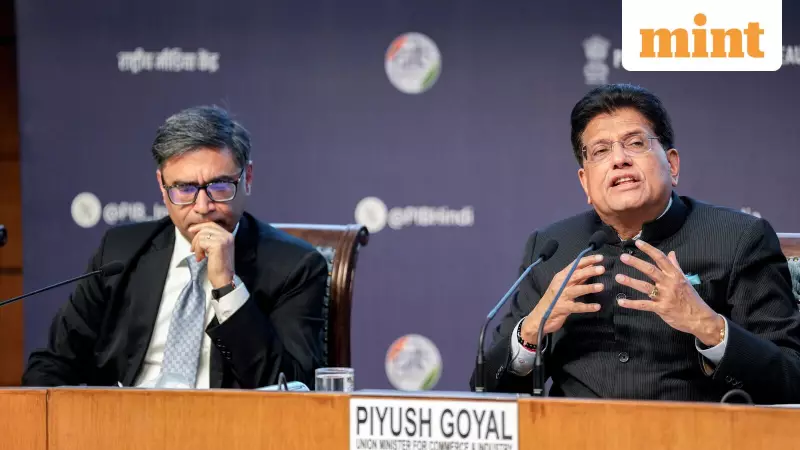
At a press conference, a journalist from Euronews asked Minister Goyal whether President Trump had acted as a unifier in advancing the India-EU free trade agreement, noting that both India and several European nations have faced US tariffs. The query specifically probed how much of a unifying factor Trump was, beyond the deal's inherent win-win nature.
"I do not think we even discussed this at any point of time," Goyal firmly responded, emphasizing that the agreement stands on its own merits. He highlighted that the focus has always been on creating a balanced and equitable pact that benefits all stakeholders.

Key Details of the Historic India-EU Free Trade Agreement
After nearly two decades of negotiations, India and the 27-nation European Union have finalized a comprehensive trade deal that is set to reshape economic relations. The agreement is expected to:
- Double EU exports to India by 2032 through the elimination or reduction of tariffs on 96.6% of traded goods by value.
- Generate savings of approximately 4 billion euros ($4.75 billion) in duties for European companies.
- Provide duty-free access to the European Union for 93% of Indian shipments once implemented.
- Make imports of luxury cars and wines from the EU more affordable in India.
Minister Goyal confirmed that the agreement is likely to be implemented within the 2026 calendar year, following a fast-track legal review process.
Geopolitical Context and US Reaction to the India-EU FTA
The timing of this agreement is particularly noteworthy, as it comes amid heightened geopolitical turbulence and market uncertainty. Factors such as President Trump's tariff policies and the ongoing Russia-Ukraine conflict have contributed to a shifting global trade landscape.
The United States has expressed discomfort over the timing of the India-EU FTA. US Treasury Secretary Scott Bessent criticized the European Union for concluding a trade pact with India while trade negotiations between New Delhi and Washington are still in progress.
Trump's repeated imposition of tariffs on Europe, citing an "unfair" trade surplus, has raised concerns about increased export costs and economic instability. This backdrop underscores the strategic importance of the India-EU deal in fostering new trade alignments.
Broader Implications and India's FTA Strategy
Together, India and the European Union account for 25% of global GDP and approximately one-third of international trade, amounting to about $11 trillion. This agreement marks the EU as India's 22nd FTA partner, reinforcing India's proactive approach to trade diplomacy.
Since 2014, the NDA government has signed trade deals with multiple countries, including Mauritius, the UAE, the UK, EFTA, Oman, and Australia, with announcements also made regarding New Zealand. Minister Goyal reiterated that each agreement is independent and designed to be "balanced, equitable, and fair" for all parties involved.
As the world navigates complex trade dynamics, the India-EU free trade agreement stands as a testament to bilateral cooperation and economic resilience, poised to deliver substantial benefits across industries in both regions.