India-EU Trade Agreement: The Real Test Begins After Signing
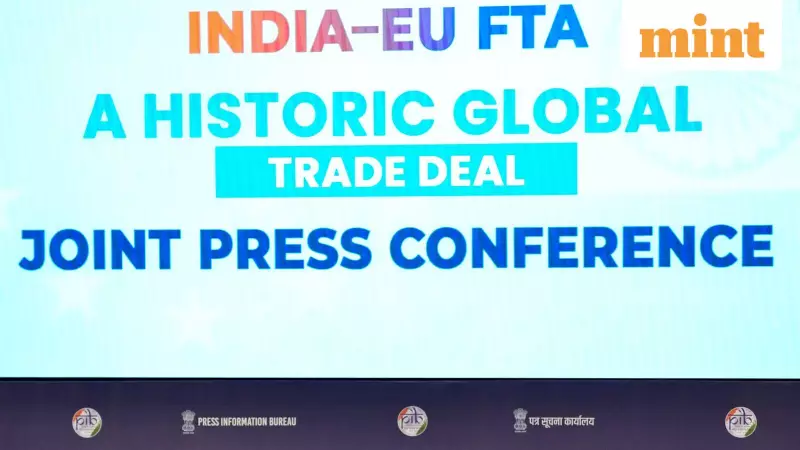
The recently concluded India-European Union free trade agreement has been celebrated as a landmark deal with potential to reshape global economic dynamics. However, as the initial excitement fades, attention must shift to the formidable implementation challenges that will ultimately determine whether this partnership delivers on its transformative promise.
The Weight of Expectations
This comprehensive trade pact represents one of the most significant bilateral economic initiatives in recent years, connecting two economic blocs that collectively account for approximately one-quarter of global output. The agreement envisions phased tariff reductions across substantial portions of bilateral goods trade while establishing frameworks for regulatory cooperation, sustainability disciplines, and supply-chain resilience mechanisms.
For Indian exporters, the deal offers improved access to high-income European markets for pharmaceuticals, engineering goods, automotive components, textiles and apparel, processed foods, and specialty chemicals. These sectors face substantial EU demand but must navigate exacting regulatory thresholds that present significant compliance challenges.

For European businesses, the agreement opens expanded opportunities in India's rapidly growing market for automobile and auto-component manufacturers, renewable-energy developers, wines and spirits producers, machinery firms, luxury brands, and infrastructure operators seeking scale in Asia's third-largest economy.
The Implementation Imperative
Trade agreements are frequently judged immediately upon announcement, with markets reacting, officials celebrating, and headlines proclaiming new partnership eras long before the difficult implementation work begins. History provides sobering lessons: many free trade agreements hailed as transformative have delivered far less than promised because implementation consistently lagged behind ambition.
If India and the European Union genuinely want this pact to serve as an engine of durable economic integration, they must treat execution as a strategic project requiring sustained attention and resources. The technical demands will be substantial, given the EU's sophisticated regulatory framework covering chemicals, food safety, data protection, carbon accounting, sustainability reporting, labor processes, and product liability.
Meanwhile, India represents a continental-scale market with multiple regulatory layers spanning central ministries, state governments, port authorities, customs zones, and sectoral regulators. Bridging these complex systems will require far more than parliamentary approval and ceremonial signatures.
Practical Challenges Ahead
For Indian exporters, the most significant obstacles will often involve non-tariff barriers rather than traditional customs duties. These include:
- Conformity assessments and certification timelines
- Traceability requirements and documentation standards
- Technical barriers to trade and regulatory compliance
- Rules of origin verification and administration
European companies expanding operations in India face mirror-image challenges, including navigating land acquisition rules, sub-national regulations, environmental clearances, tax administration complexities, and varying state-level implementation of central policies.
If such frictions persist despite preferential tariff arrangements, the economic benefits of the agreement will only be partially realized. What ultimately separates successful trade partnerships from mediocre ones is the institutional machinery established after signature and the sustained commitment to making it function effectively.
Building Implementation Infrastructure
Several priority areas demand immediate attention as the agreement moves toward implementation:

- Standards infrastructure: Developing testing laboratories, accreditation bodies, and certification agencies capable of meeting EU requirements
- Rules of origin administration: Creating streamlined compliance mechanisms that don't burden businesses with excessive paperwork
- Dynamic regulatory alignment: Establishing joint working groups that can keep pace with evolving sustainability rules, carbon-border measures, data governance frameworks, and chemicals regulation
- Dispute prevention: Developing technical consultation mechanisms between regulators to resolve trade frictions before they escalate to formal arbitration
Corporate Preparedness and Strategic Implications
Industry faces substantial homework as well. Indian firms must upgrade compliance systems, invest in traceability technologies, adopt digital documentation practices, and treat regulatory excellence as a competitive asset rather than bureaucratic imposition. While larger corporations may manage these transitions relatively smoothly, smaller exporters will likely struggle without targeted support from export-promotion councils, chambers of commerce, and government assistance programs.
How this agreement is implemented will significantly shape perceptions of India's broader trade strategy. After years of cautious engagement, New Delhi has demonstrated renewed willingness to open its market through phased liberalization. If this deal delivers visible export growth, investment inflows, and supply-chain integration, it will strengthen the case for further economic opening through additional agreements. If implementation falters, skepticism about India's trade liberalization agenda will quickly return.
The ultimate success indicators won't be found in diplomatic communiqués but in practical outcomes: whether Indian pharmaceutical and textile firms establish durable footholds in European markets, whether engineering exporters successfully integrate into continental supply chains, and whether European clean-energy companies, machinery producers, and automakers translate market access into long-term investment commitments in India.
Broader Strategic Significance
For the European Union, the stakes extend beyond immediate economic gains. Brussels increasingly views trade agreements as instruments for diversifying economic partners, securing clean-energy supply chains, and embedding sustainability norms in partner countries. This strategic agenda cannot be realized through legal texts alone; it demands years of sustained technocratic engagement and regulatory cooperation.
The India-EU free trade agreement now enters its most challenging phase. Success will be measured in tangible metrics: shipment volumes, customs clearance times, investment decisions, and factory expansions. If both sides treat implementation as secondary to diplomacy, the agreement will likely underperform relative to expectations. However, if they approach execution as a flagship economic-governance project requiring continuous attention and resources, this partnership could become one of the most consequential trade relationships of this decade.
The applause following the negotiation conclusion will soon subside. That is precisely when the substantive work must accelerate, determining whether this historic agreement becomes a transformative economic partnership or merely another promising deal that failed to deliver its full potential.