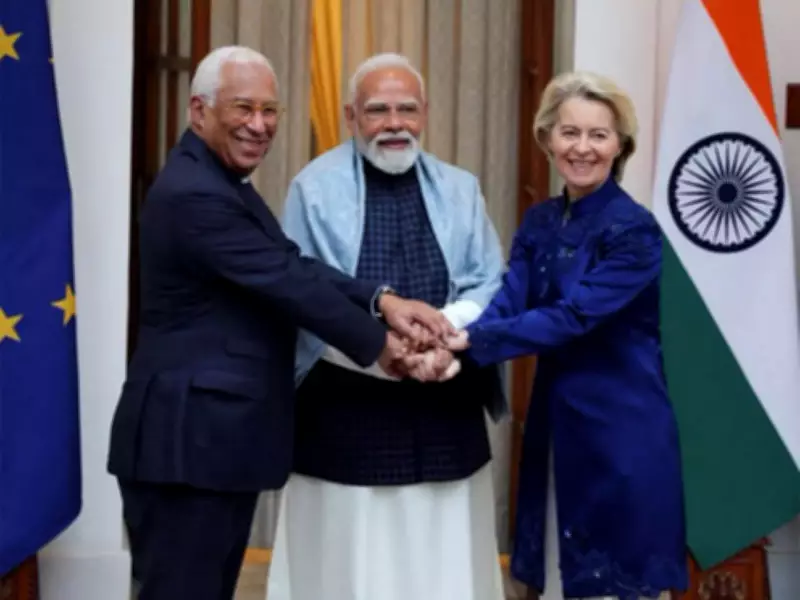
India-EU Trade Agreement Incorporates Special Safeguard Provisions for Future Regulations
New Delhi: The recently negotiated trade agreement between India and the European Union includes two significant safeguard provisions designed to protect exporters from potential future regulatory changes that could undermine the benefits of the deal, according to official sources. These mechanisms ensure that if new rules or regulations emerge that create trade barriers, corrective actions can be promptly implemented by the affected nation.
Dual Safeguard Mechanisms for Market Access Protection
The commerce ministry official identified the two special market access safeguarding measures as:
- Rapid Response Mechanism (RRM)
- Non-Violation Complaints (NVCs) provisions
These provisions represent a forward-looking approach to trade governance, specifically addressing concerns about evolving regulatory landscapes that could impact bilateral trade flows.

Functioning of the Rapid Response Mechanism
Under the Rapid Response Mechanism, both India and the European Union have agreed to establish a dedicated and expedited framework to handle concerns arising from existing and future measures or regulations. This mechanism specifically targets situations where new rules might:
- Create significant disruption to trade between the two regions
- Threaten to create substantial impediments to bilateral commerce
- Undermine the anticipated benefits of the trade agreement for exporters
As explained by officials, "These provisions are designed to address new regulations and impediments that may emerge over time. Future rules could potentially raise concerns for trade, and this mechanism provides a structured way to handle such situations."
Escalation Protocol for Unresolved Issues
The agreement establishes a clear escalation pathway for matters that cannot be resolved at initial levels:
- Initial Resolution Attempts: Concerns are first addressed at official or technical levels through established channels
- Ministerial Escalation: If issues remain unresolved, they can be escalated to the ministerial level for higher-level intervention and decision-making
This structured approach ensures that trade barriers arising from new regulations receive appropriate attention at multiple governance levels, from technical experts to political leadership.
Strategic Importance for Indian Exporters
The inclusion of these safeguard provisions represents a significant achievement for Indian negotiators, providing:
- Future-Proofing: Protection against unforeseen regulatory changes in European markets
- Predictability: Greater certainty for exporters investing in EU market access
- Recourse Mechanisms: Formal channels to address emerging trade concerns systematically
These mechanisms acknowledge the dynamic nature of international trade regulations while ensuring that the fundamental benefits of the India-EU trade agreement remain protected against potential future disruptions.