India-EU Free Trade Agreement Could Revolutionize Car Prices for Indian Consumers
India's proposed free trade agreement (FTA) with the European Union holds the potential to dramatically lower the prices of cars imported from Europe if successfully finalized. Ongoing negotiations are intensely focused on reducing import duties and easing various trade barriers, which could make numerous European-built models significantly more affordable for Indian buyers. This development promises to reshape the automotive landscape in one of the world's fastest-growing markets.
Substantial Duty Reductions on the Horizon
Currently, India imposes steep import duties on fully built cars, ranging from a substantial 70 percent to as high as 110 percent. Under the proposed India-EU free trade agreement, these peak tariffs are expected to be slashed to approximately 40 percent during the initial implementation phase. This represents a considerable reduction that could enhance price competitiveness and broaden consumer choices in a market that relies heavily on imports for premium and specialized vehicles.
Around two lakh cars annually could qualify for concessions under the proposed deal, although electric vehicles are anticipated to remain excluded from FTA benefits for the first five years, according to a Reuters report. The specific quota is still under negotiation and may undergo revisions before the agreement is finalized. In the initial phase, the reduced duty is likely to apply exclusively to fully built cars priced above 15,000 euros, equivalent to roughly Rs 16.3 lakh. Over the longer term, the agreement could establish a framework for further reductions in import duties, fostering deeper trade integration.

Timing Coincides with High-Level Diplomatic Engagement
The timing of this proposal is particularly noteworthy, as it aligns with a four-day visit to India by Ursula von der Leyen, President of the European Commission. This high-level engagement underscores the strategic importance both parties place on strengthening economic ties and finalizing a comprehensive trade pact that could benefit multiple sectors, including automotive.
Wide Range of European Cars Poised for Price Cuts
If the proposed trade agreement moves forward, completely imported models from several prestigious European manufacturers could see meaningful price reductions. Do note that all models and details mentioned are indicative and based on current available information. The potential beneficiaries span from ultra-luxury marques to more accessible performance brands.
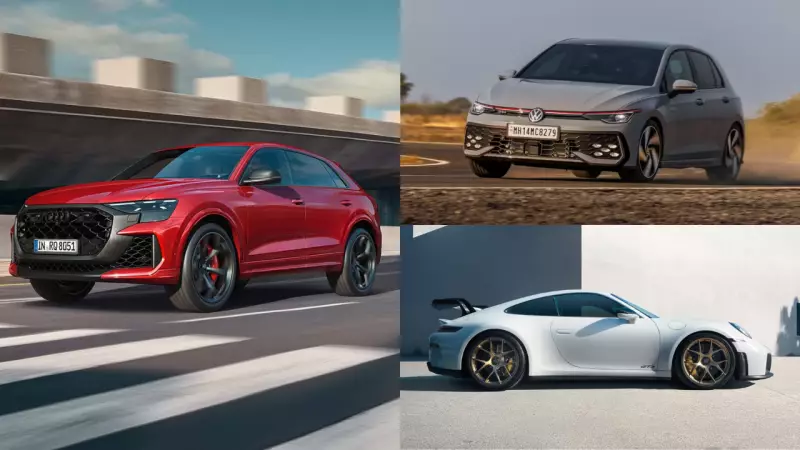
German manufacturers stand to gain significantly, with numerous performance and luxury models likely becoming more affordable. From Mercedes-Benz, this includes the AMG G63, G400d, AMG S 63 E Performance, and the Maybach S-Class S680. BMW models such as the M4, M5, M8, XM hybrid SUV, and Z4 roadster could also see price adjustments. Audi's lineup, including the Q8, RS Q8, RS5 Sportback, RS7, and A8 L, may benefit similarly. All Porsche internal combustion engine (ICE) models, including the iconic 911, 718 Boxster/Cayman, Panamera, Macan, and Cayenne, are expected to be covered.
At the more accessible end of the market, cars like the Skoda Octavia vRS and Volkswagen models such as the Golf GTI, Tiguan R-Line, and the soon-to-be-launched Tayron R-Line may also become more competitively priced once the deal takes effect.
Italian Luxury Brands Could See Similar Gains
High-end imports from celebrated Italian automotive brands may experience comparable price advantages. Lamborghini's entire India lineup, including the Urus, Revuelto, and Huracan—all sourced from Italy—could become more attainable. Models from Ferrari and Maserati might also see enhanced affordability, potentially expanding their customer base in the Indian market.
This proposed trade agreement represents a pivotal moment for India's automotive sector, promising to make European cars more accessible while stimulating competition and consumer choice. As negotiations progress, stakeholders will closely monitor developments that could redefine import dynamics and pricing structures for years to come.