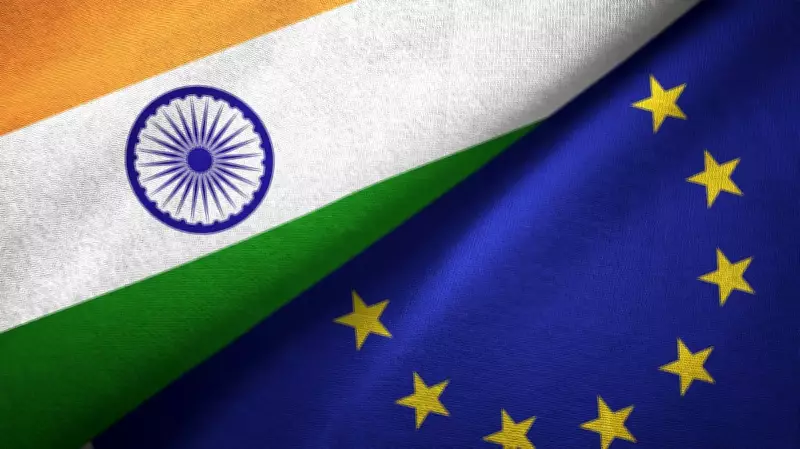
India-EU Trade Agreement: A Strategic Pivot in a Disrupted Global Economy
The recent India-EU trade deal represents a significant milestone in international economic relations, signaling a clear intent to navigate the complexities of a disrupted and weaponized global trade environment. This agreement comes at a critical juncture, as nations worldwide grapple with geopolitical tensions, supply chain vulnerabilities, and the increasing use of trade as a strategic tool. By forging this partnership, India and the European Union are positioning themselves to enhance economic resilience and foster mutual growth in an era marked by uncertainty.
Navigating a Weaponized Trade Landscape
In today's global economy, trade has evolved beyond mere economic exchange to become a weaponized instrument of foreign policy and national strategy. The India-EU agreement acknowledges this reality, aiming to create a stable framework that can withstand external pressures and disruptions. Key aspects of this deal include:
- Enhanced market access for goods and services between India and EU member states.
- Strengthened intellectual property protections to encourage innovation and investment.
- Mechanisms for resolving trade disputes efficiently, reducing the risk of prolonged conflicts.
- Commitments to sustainable development and labor standards, aligning with global best practices.
This comprehensive approach underscores the strategic depth of the agreement, moving beyond traditional trade pacts to address broader economic and geopolitical challenges.

Deepening Economic Ties as a Strategic Imperative
The India-EU trade deal is not merely about boosting bilateral trade volumes; it is a strategic imperative for both regions. For India, this agreement offers an opportunity to diversify its trade partnerships, reduce dependency on volatile markets, and attract European investment in key sectors such as technology, manufacturing, and renewable energy. For the European Union, it provides access to India's rapidly growing consumer market and strengthens its presence in the Indo-Pacific region, counterbalancing other global powers.
Moreover, this deal is expected to:
- Create new job opportunities through increased cross-border investments and collaborations.
- Facilitate technology transfer and knowledge sharing, driving innovation in both economies.
- Promote regulatory harmonization, making it easier for businesses to operate across borders.
- Enhance supply chain resilience by reducing reliance on single sources and fostering diversification.
By deepening economic ties, India and the EU are building a foundation for long-term stability and prosperity in a fragmented world.
Implications for the Global Trade Environment
The India-EU agreement sends a powerful message to the international community about the importance of cooperative trade strategies in a disrupted global environment. As protectionism and trade wars escalate, this deal exemplifies how nations can work together to:
- Mitigate the impacts of geopolitical tensions on economic growth.
- Foster inclusive development that benefits all stakeholders, from large corporations to small businesses.
- Advance shared goals such as climate action and digital transformation through trade frameworks.
In conclusion, the India-EU trade deal is a forward-looking initiative that goes beyond immediate economic gains. It reflects a strategic vision to navigate the weaponized and disrupted landscape of global trade, setting a precedent for future agreements that prioritize resilience, cooperation, and sustainable growth. As both regions implement this pact, the world will be watching to see how such partnerships can shape a more stable and prosperous global economy.