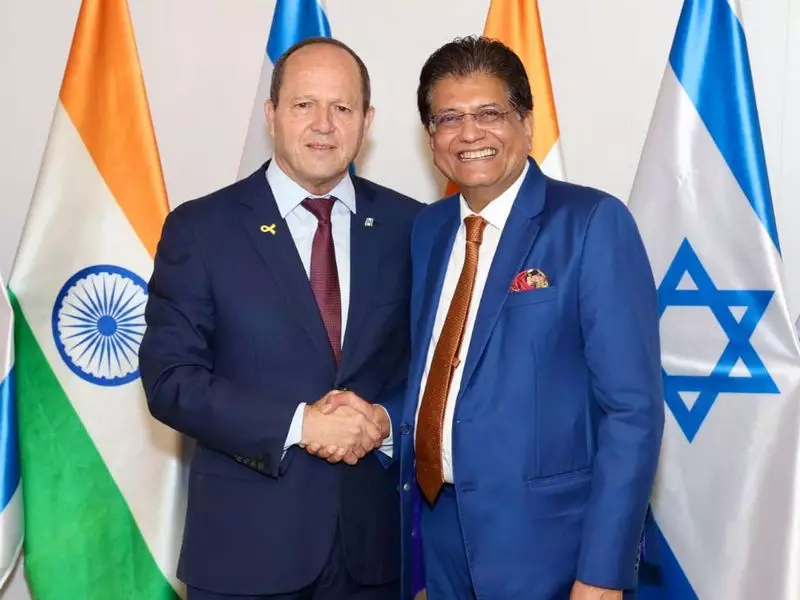
In a significant move to strengthen economic ties, India and Israel have formally agreed to begin negotiations for a comprehensive free trade agreement. The two nations signed the crucial terms of reference document that will guide the upcoming trade talks.
Formal Launch of Trade Negotiations
The breakthrough came during a virtual meeting between Commerce and Industry Minister Piyush Goyal and Israel's Foreign Minister Yair Lapid. The terms of reference document was signed on May 17, 2022, marking the official start of what promises to be extensive trade negotiations between the two countries.
This development represents a major step forward in economic diplomacy between India and Israel, who have been enjoying strengthened relations in recent years. The free trade agreement, once finalized, is expected to significantly boost bilateral trade that currently stands at approximately $10 billion, including defense-related transactions.

Strategic Importance and Economic Benefits
The proposed Comprehensive Economic Partnership Agreement (CEPA) aims to create a robust framework for enhanced economic cooperation. Both nations recognize the tremendous potential for growth in bilateral trade across multiple sectors.
Israel has emerged as one of India's most important technology partners, with collaborations spanning agriculture, water management, defense, and cybersecurity. The free trade agreement is expected to further accelerate technology transfer and joint innovation projects between the two knowledge-based economies.
Indian industries particularly stand to benefit from increased access to Israeli technology and innovation ecosystems, while Israeli companies gain entry to India's vast consumer market and manufacturing capabilities.
Next Steps and Implementation Timeline
With the terms of reference now finalized, both countries are preparing to commence the first round of formal negotiations. The negotiation teams will work towards creating a balanced agreement that addresses the economic priorities of both nations while removing existing trade barriers.
The agreement is expected to cover various aspects of economic cooperation including:
- Goods and services trade
- Investment promotion and protection
- Intellectual property rights
- Technical standards and regulations
- Dispute resolution mechanisms
The successful conclusion of these negotiations would mark a new chapter in India-Israel relations, building on the strong political and strategic partnership that has developed over the past three decades. Both governments have expressed commitment to concluding the negotiations in a time-bound manner, though no specific deadline has been publicly announced.
This free trade initiative comes at a time when India is actively pursuing similar agreements with several other trading partners, including the United Arab Emirates, Australia, and the United Kingdom, as part of its broader strategy to enhance global economic integration.