

India and Malaysia Strengthen Economic Ties with Local Currency Trade Agreement
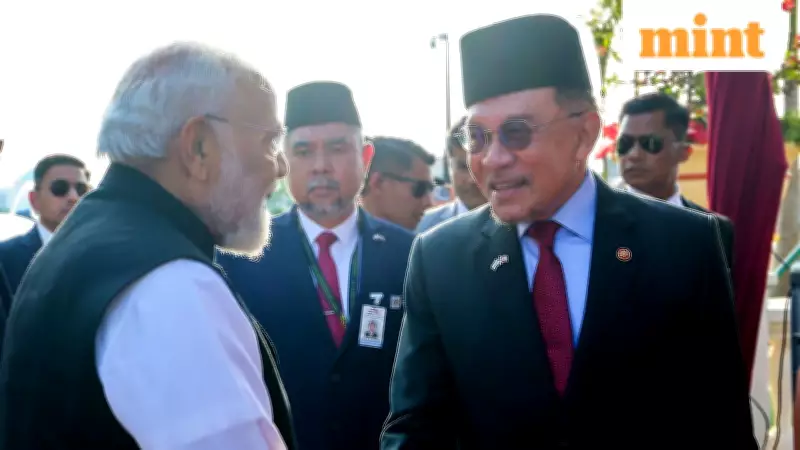
In a significant move to bolster international trade using domestic currencies, India and Malaysia have formally agreed to promote bilateral trade and investment transactions in their own national currencies. This landmark decision was reached during Prime Minister Narendra Modi's two-day official visit to Malaysia on February 7-8, 2026, marking a new chapter in the economic relationship between the two Asian nations.
Comprehensive Bilateral Partnership Framework
The joint statement released on Sunday detailed extensive discussions between Prime Minister Modi and Malaysian Prime Minister Anwar Ibrahim covering multiple strategic areas for enhanced cooperation. Both leaders explored opportunities for deeper collaboration in trade, digital economy development, semiconductor manufacturing, energy security, and defense partnerships. The comprehensive dialogue reflects the growing importance of the India-Malaysia relationship in the evolving global economic landscape.
"Both prime ministers appreciated the continued collaboration between the Reserve Bank of India and Bank Negara Malaysia to promote usage of local currency settlement in bilateral trade and investments, and encouraged industries on both sides to further facilitate the invoicing and settlement of trade in local currencies, i.e., Indian Rupee and Malaysian Ringgit," stated the official joint declaration.

Digital Economy and Financial Integration
The two nations made substantial progress on digital cooperation fronts, formally establishing the Malaysia-India Digital Council (MIDC) as a key platform to advance technological collaboration. This council will foster innovation and explore joint projects in critical areas including fintech solutions, e-governance systems, cybersecurity measures, artificial intelligence applications, Digital Public Infrastructure (DPI), and emerging technologies.
In another major development for digital finance integration, India's NPCI International Ltd (NIPL) and Malaysia's PayNet have agreed to establish bilateral payment linkages. This integration promises to significantly enhance business facilitation between the two countries while providing seamless, low-cost remittance and payment solutions for citizens and corporations alike. India's Unified Payments Interface (UPI) system continues to serve as a flagship example of the country's digital economy success on the global stage.
Trade Agreements and Economic Cooperation
India and Malaysia maintain established trade engagement through the Malaysia-India Comprehensive Economic Cooperation Agreement (MICECA) and the ASEAN-India Trade in Goods Agreement (AITIGA). Currently, both nations are actively reviewing the AITIGA framework to ensure it remains mutually beneficial, trade facilitative, and relevant to contemporary global trading practices and challenges.
The tenth meeting of the India-Malaysia CEO Forum was successfully conducted during Prime Minister Modi's visit to Kuala Lumpur on February 7, bringing together business leaders from both nations to explore commercial opportunities and address investment barriers.
Energy Security and Renewable Collaboration
Prime Minister Modi highlighted the significant strides made by Malaysian energy giants PETRONAS and Gentari in India's renewable energy and green hydrogen sectors. He emphasized the substantial potential for expanded collaboration in large-scale solar energy initiatives, leveraging Malaysia's technical expertise to drive clean energy solutions and achieve shared net-zero emissions ambitions.
Gentari has emerged as one of the top investors in India's green-energy space, with substantial presence in utility-scale renewable energy projects, commercial and industrial sectors through its acquisition of Amplus Solar in 2023, and in the green ammonia sector through its investment in AM Green Ammonia.

During the visit, Prime Minister Modi engaged with CEOs of major Malaysian corporations including Petronas, Berjaya, Khazanah, and Dato' K.S. Pua of Phison Electronics regarding their expansion plans in India across key sectors. Petronas, as a major exploration and production company in oil and gas, represents significant partnership potential as India seeks to enhance its energy security and attract global investment in its exploration and production sector.
Defense and Security Cooperation
On defense matters, both prime ministers encouraged growing maritime cooperation through regular goodwill visits and operational deployments. The existing Malaysia-India Defence Cooperation Committee (MIDCOM) and its subcommittees provide structured frameworks for defense collaboration, with both nations agreeing on terms of reference for establishing a Strategic Affairs Working Group (SAWG) and Su-30 Forum.
Both leaders acknowledged India's steadfast engagement in the ASEAN Defence Ministers' Meeting Plus (ADMM-Plus) framework and welcomed the co-chairmanship with Malaysia of the Counter-Terrorism Working Group for the 2024-2027 term. Modi and Ibrahim extended invitations to all ADMM-Plus members to participate in the forthcoming expert working group on Counter Terrorism Table-Top Exercise (EWG CT TTX), co-chaired by India and Malaysia and scheduled for hosting by Malaysia in 2026.
Food Security and Agricultural Trade
The two nations agreed to expand strategic collaboration on food security, nutrition, and agricultural trade, with particular focus on enhancing supply-chain resilience and ensuring stable access to staple commodities. At the heart of these discussions was a joint commitment to establish stable, resilient, and sustainable supply chains for essential agricultural products—an increasingly vital consideration amid global disruptions and price volatility in world markets.
Both leaders pledged to respect each country's domestic policy frameworks on food systems while pursuing greater cooperation. Malaysia reaffirmed its role as a reliable supplier of sustainable palm oil to India, with both leaders encouraging expanded collaboration in palm cultivation to enhance yield efficiencies and support sustainable agricultural practices.
The commitment extends to cooperation along the entire palm oil value chain, including downstream processing and higher value-added palm-based products. Both nations agreed on structured engagement mechanisms to resolve market access issues in a timely manner. Malaysia and Indonesia remain the primary suppliers of RBD Palmolein and Crude Palm Oil to India, with Malaysia supplying 495,259 tonnes of crude palm oil during November-December 2025, followed by Indonesia's 384,320 tonnes during the same period.





