

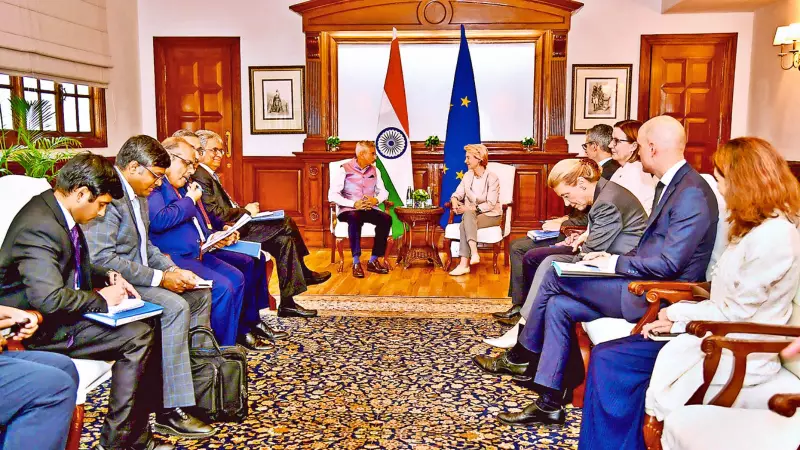
India Advances on EU Trade Pact While US Deal Faces Delays
India is making significant strides in its trade negotiations with the European Union. This progress comes at a time when a potential trade agreement with the United States remains uncertain. Commerce Secretary Rajesh Agarwal announced on Thursday that India and the EU have successfully closed twenty out of twenty-four chapters in their discussions.
The two sides are now working intensively to resolve the remaining issues. They hope to finalize the deal before top EU leaders arrive in India later this month for the Republic Day celebrations and the India-EU Summit.
High-Level Visits Add Urgency to Talks
The President of the European Council, Antonio Luis Santos da Costa, and the President of the European Commission, Ursula von der Leyen, will be chief guests at India's Republic Day events. Their visit, confirmed by the Ministry of External Affairs, will also include co-chairing the 16th India-EU Summit on January 27.

Commerce Secretary Agarwal emphasized the advanced stage of the talks. "We are very close now," he told reporters. "We have closed 20 out of 24 chapters. There are a few issues on which the negotiations are ongoing. We are virtually engaged on a day-to-day basis." He added that officials are striving to meet the deadline before the leaders' meeting.
Deal Seen as Counter to US Trade Volatility
The push for an EU agreement gains importance against the backdrop of unpredictable US trade policies. New Delhi has already sealed three trade deals in 2025, while the EU recently concluded a long-pending pact with the South American bloc Mercosur.
Once implemented, the India-EU Free Trade Agreement (FTA) will rank among the largest trade pacts ever signed by India. It is expected to:
- Help offset the impact of high US tariffs.
- Open new opportunities for India's labour-intensive exports in the European market.
- Provide a stable alternative as uncertainty clouds the US trade deal.
Sensitive Issues: Agriculture and Carbon Tax
A major breakthrough in the talks is the reported exclusion of agriculture from the deal. A government official confirmed that sensitive agricultural issues from both India and the EU are "off the table." This aligns with reports from European news website Euractiv, which stated Ursula von der Leyen told parliamentarians the upcoming FTA would exclude agriculture.
Agriculture has been a persistent stumbling block, notably in talks with the US, which has pressured India to buy genetically modified products. The EU itself faces farmer protests, like recent tractor demonstrations in Paris against the Mercosur deal over fears of cheap imports.
However, other challenges remain:
- Carbon Tax (CBAM): The EU's Carbon Border Adjustment Mechanism, implemented from January 1, poses a significant hurdle. It imposes a charge on imports from sectors like steel and aluminium from countries with lower environmental standards. India's exports of these metals to the EU could face higher costs.
- Market Access: Germany, a major EU auto exporter, seeks better access to India's fast-growing automobile market, which is also a key domestic employer.
- Other Goods: Negotiations continue on sensitive items like whisky.
Exporters Feel the Pressure of US Tariffs
The urgency for India is palpable. Indian exporters are already feeling the pinch from US tariffs, with reports of stalled negotiations for summer apparel orders worth around $2 billion. Exporters warn that without a trade deal, these orders could shift to competitors like Bangladesh, Vietnam, or China, which face lower tariffs.
"Orders are already shifting to other countries," industry sources said, noting that missing the summer order window could have long-term consequences for Indian manufacturing.
In response to the pressing timeline, the Commerce Ministry recently instructed trade lawyers working on these deals to avoid taking leave. Several high-level meetings have occurred in recent months, including between Commerce Minister Piyush Goyal and EU Trade Commissioner Marco Sefcovic, underscoring the political will to get the deal done.

As India navigates complex global trade dynamics, a successful pact with the European Union represents a crucial strategic move to secure its export future and reduce dependency on a volatile US trade relationship.





