

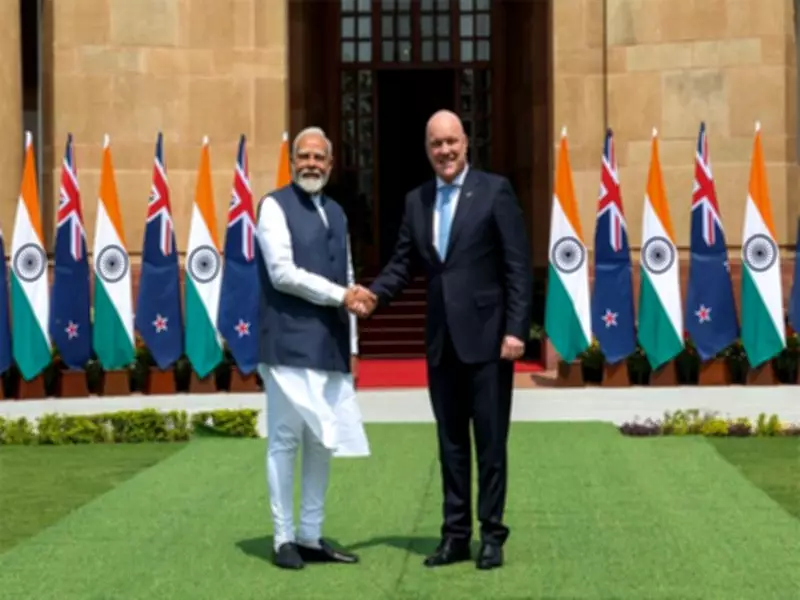
India and New Zealand to Formalize Free Trade Agreement on April 27
In a significant development for international trade, India and New Zealand are set to sign a comprehensive Free Trade Agreement (FTA) on April 27. This move marks a pivotal step in strengthening economic ties between the two nations, with New Zealand Prime Minister Christopher Luxon highlighting the potential to tap into India's massive consumer base of 1.4 billion people.
Strategic Timing and Economic Implications
The signing of the FTA comes at a crucial juncture as both countries seek to diversify their trade partnerships and boost economic growth. The agreement is expected to reduce tariffs, eliminate trade barriers, and facilitate smoother cross-border commerce. For New Zealand, this represents a strategic opportunity to expand exports, particularly in sectors like dairy, agriculture, and technology, while India aims to enhance its access to high-quality imports and attract foreign investment.
Prime Minister Luxon's Vision for Market Access
Prime Minister Christopher Luxon has emphasized the importance of this FTA, noting that it will provide New Zealand businesses with unprecedented access to one of the world's largest and fastest-growing markets. "This agreement is a game-changer for our economy, opening doors to over 1.4 billion consumers in India," Luxon stated. He added that the FTA aligns with New Zealand's broader trade strategy to forge stronger links with key Asian economies.

Key Areas of Focus in the FTA
The FTA is anticipated to cover a wide range of sectors, including:
- Goods and Services: Reduction of tariffs on agricultural products, manufactured goods, and digital services.
- Investment: Provisions to protect and promote bilateral investments, fostering a stable business environment.
- Intellectual Property: Enhanced cooperation on IP rights to encourage innovation and creativity.
- Sustainable Development: Commitments to environmental and labor standards, ensuring trade benefits are inclusive and responsible.
Broader Impact on Bilateral Relations
Beyond economic gains, the FTA is expected to deepen diplomatic and cultural ties between India and New Zealand. It reflects a shared commitment to fostering mutual prosperity and addressing global challenges through collaborative efforts. Analysts predict that this agreement could serve as a model for future trade deals, highlighting the growing importance of Indo-Pacific partnerships in the global economy.
As the signing date approaches, stakeholders from both nations are optimistic about the transformative potential of this FTA. It underscores a forward-looking approach to trade that prioritizes innovation, sustainability, and shared growth, setting a new benchmark for international economic cooperation.






