

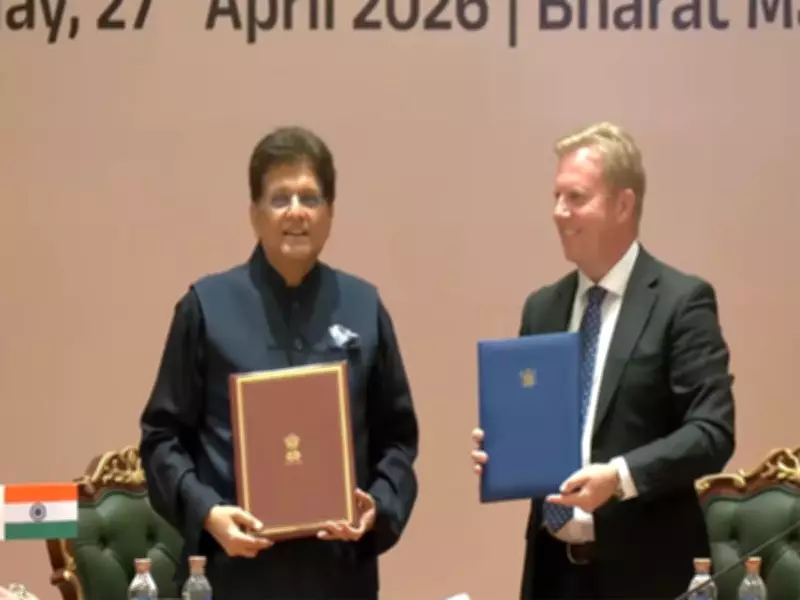
India and New Zealand have officially signed a Free Trade Agreement (FTA), marking a significant milestone in their bilateral economic relations. The pact, which eliminates tariffs on a wide range of goods, is expected to provide zero-duty access for Indian exports, thereby boosting trade volumes and creating new employment opportunities in both nations.
Key Highlights of the Agreement
The FTA covers trade in goods, services, and investment, with a focus on reducing barriers and enhancing market access. Under the agreement, New Zealand will eliminate tariffs on 80% of Indian exports, including textiles, pharmaceuticals, and engineering goods. In return, India will phase out tariffs on dairy products, wool, and kiwifruit from New Zealand over a period of 10 years.
Boost for Exports and Jobs
Indian exporters are set to benefit significantly from the zero-duty access, particularly in sectors such as ready-made garments, leather products, and auto components. The agreement is projected to increase bilateral trade by 30% within five years, leading to the creation of thousands of direct and indirect jobs in manufacturing and services.

Prime Minister Narendra Modi hailed the FTA as a "win-win" for both countries, emphasizing that it would strengthen supply chains and promote sustainable development. New Zealand Prime Minister Chris Hipkins echoed similar sentiments, noting that the pact would open new avenues for Kiwi businesses in India's rapidly growing market.
Strategic Implications
The FTA is part of India's broader strategy to deepen economic ties with the Asia-Pacific region. It also aligns with New Zealand's trade diversification goals, reducing its reliance on traditional markets like China. Experts believe that the agreement could serve as a template for future trade deals with other Commonwealth nations.
Challenges and Next Steps
Despite the optimism, some sectors in India, particularly dairy farmers, have expressed concerns about increased competition from New Zealand's subsidized dairy industry. To address this, the government has included safeguard measures and longer implementation timelines for sensitive products.
The next steps involve ratification by both parliaments and the establishment of a joint committee to monitor implementation. The FTA is expected to come into force by early 2025.






