

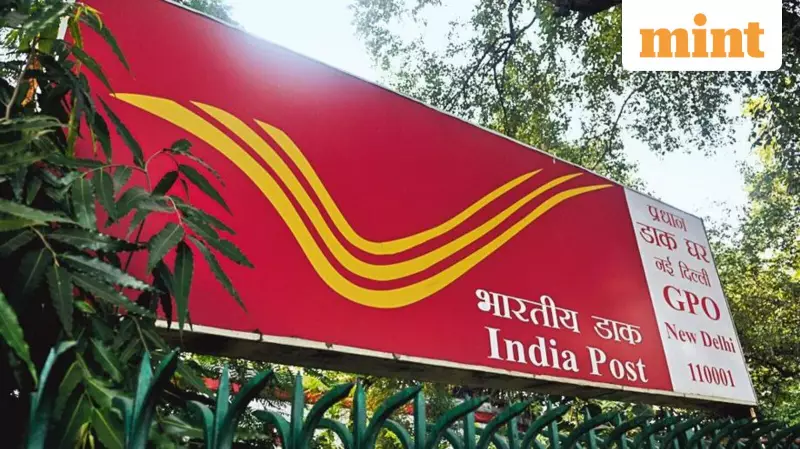
In a strategic move to diversify overseas markets and cushion the impact of steep US tariffs, the Indian government has significantly expanded the global reach of India Post. The world's largest postal network has added 50 new countries across Africa, Europe, Central Asia, and West Asia to its International Tracked Packet Service (ITPS), according to officials familiar with the development.
A Strategic Push for Market Diversification
This expansion, effective from early January 2026, is a direct response to the need for Indian exporters, particularly small businesses, to find new markets. The backdrop includes recent US import tariffs imposed in August 2025, which have prompted a search for alternative destinations. The ITPS, a service enabling trackable, low-weight international shipments, is a critical tool for small e-commerce sellers. With this addition, the service now covers a total of 135 countries.
The newly added destinations include nations like Algeria, Ethiopia, Iceland, Iran, Iraq, Russia, Papua New Guinea, and Zambia. The government amended Schedule III of the Post Office Regulations, 2024, to facilitate this expansion. For instance, shipping rates for a tracked packet to Afghanistan start at ₹285 plus ₹50 for additional weight, while for Russia, it's ₹245 plus ₹30.

Aligning with Potential FDI Reforms for Exports
This logistical enhancement coincides with a potential policy shift. The government is considering softening e-commerce rules for exports, specifically by allowing Foreign Direct Investment (FDI) in inventory-based models solely for export purposes. Currently, FDI is prohibited in inventory-based e-commerce, where companies own the goods they sell. This change could allow foreign-funded platforms to hold stock specifically for exporting 'Made in India' goods, a significant departure from the current marketplace-only model.
"India’s e-commerce exports remain far below their potential, and expanding access to affordable logistics is key to changing that," said Abhash Kumar, a trade economist at Delhi University. "India Post’s wide network and low-cost international shipping can help MSMEs and small sellers enter new markets."
Building an Export Ecosystem
The expansion is part of a broader commerce ministry plan to establish about 50 e-commerce export hubs over the next five years under a Public-Private Partnership (PPP) model. India Post, with its network of approximately 165,000 post offices, is central to this vision. Its initiatives like 'Dak Ghar Niryat Kendras' allow local artisans and MSMEs to export directly with simplified documentation.
"India Post can be a revolutionary partner... because of its unmatched reach into urban, semi-urban, and rural India," said Vivek Singhal, CEO of BIDSO, a B2B toys manufacturer. Industry leaders like Balfour Manuel of Blue Dart also emphasized the role of the broader logistics ecosystem in supporting MSMEs in cross-border trade.
The push is timely. While Amazon reported helping Indian sellers cross $20 billion in cumulative exports, with a target of $80 billion by 2030, the overall Indian footprint in global e-commerce exports is still limited. The global e-commerce market, valued at about $26.8 trillion in 2024, is projected to grow massively, and India aims to secure a larger share.
This multi-pronged strategy—combining logistics expansion through India Post, potential FDI liberalization for exports, and hub creation—aims to empower India's small businesses and producers, from handicraft artisans to apparel makers, to compete directly on the global digital stage.






