

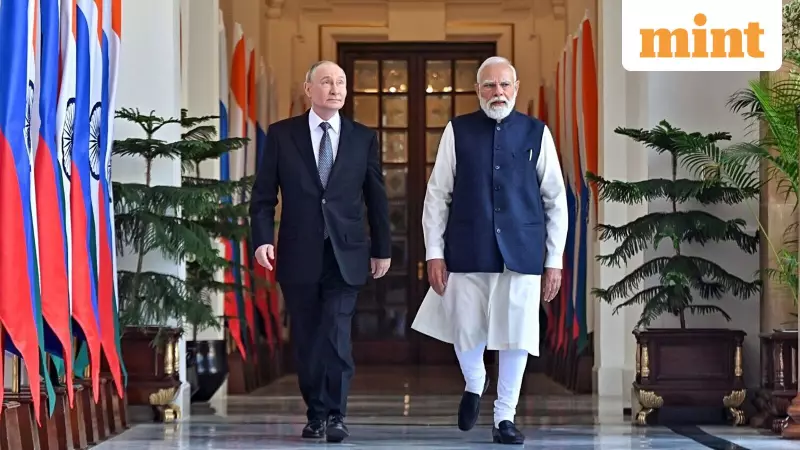
India and Russia have pledged to tackle the hurdles faced by their investors in the crucial oil and gas sector, marking a significant step to fortify their strategic energy partnership. The commitment came during high-level talks between Prime Minister Narendra Modi and visiting Russian President Vladimir Putin at the 2025 annual summit in New Delhi.
Addressing Sticky Investment Issues
The discussions, which resulted in a joint statement, gained urgency due to specific challenges Indian companies face. India's state-run ONGC Videsh (OVL) has been concerned about not receiving its share of equity oil from the Sakhalin-1 project, where it holds a 20% stake in Russia's Rosneft. Despite India's insistence on the original agreement for equity oil, Russia and Rosneft have maintained their position on paying dividends instead.
Furthermore, Indian energy firms have encountered difficulties in repatriating dividends from their Russian oil and gas assets, with substantial funds remaining stuck within Russia. The summit dialogue explicitly noted "the importance of expeditious resolution of issues related to investment projects in this area."

Expanding the Energy Partnership Horizon
Beyond resolving current disputes, the two nations explored widening their collaboration across the energy spectrum. The joint statement highlighted potential cooperation in numerous areas including:
- Oil, oil products, and petrochemicals
- Liquefied natural gas (LNG) and liquefied petroleum gas (LPG) infrastructure
- Oil refining and upstream technologies
- Underground coal gasification (UCG) technology
- Nuclear energy projects
This push for deeper ties comes at a delicate time. The United States has been pressuring India to reduce its imports of Russian oil and imposed sanctions on major suppliers Rosneft and Lukoil, effective from 21 November. These sanctions have already led to a slight decline in Russian oil exports to India.
Scale of Indian Investments in Russian Energy
The Indian footprint in Russia's energy sector is substantial and underscores why resolving investor issues is critical. OVL's interests extend beyond Sakhalin-1. The company also holds:
- A 26% stake in CSJC Vankorneft, which owns the Vankor Field and North Vankor licence.
- Imperial Energy Corp. Plc., with 10 exploration blocks in Siberia's Tomsk region.
An Indian consortium of Indian Oil Corp. Ltd., Oil India Ltd., and Bharat PetroResources Ltd. holds a 23.9% stake in the Vankor assets. Another consortium of the same companies owns a 29.9% stake in LLC Taas-Yuryakh.
On the flip side, Russian investment in India is exemplified by Rosneft's 49% stake in Nayara Energy, which operates the Vadinar refinery in Gujarat. This refinery, however, has felt the impact of European Union sanctions.
The energy partnership has been a cornerstone of booming bilateral trade, which reached a record $68.7 billion in FY25, nearly seven times the pre-pandemic level. Energy imports, primarily crude oil, constituted a massive $63.84 billion of India's imports from Russia last fiscal year. Since FY23, Russia has been India's top oil supplier, capitalizing on deep discounts offered after the Ukraine war began in February 2022.
The two-day visit, Putin's first to India in four years, aimed to strengthen cooperation not just in energy but across trade, technology, connectivity, and defence, reinforcing what both sides term their 'special and privileged strategic partnership.'






