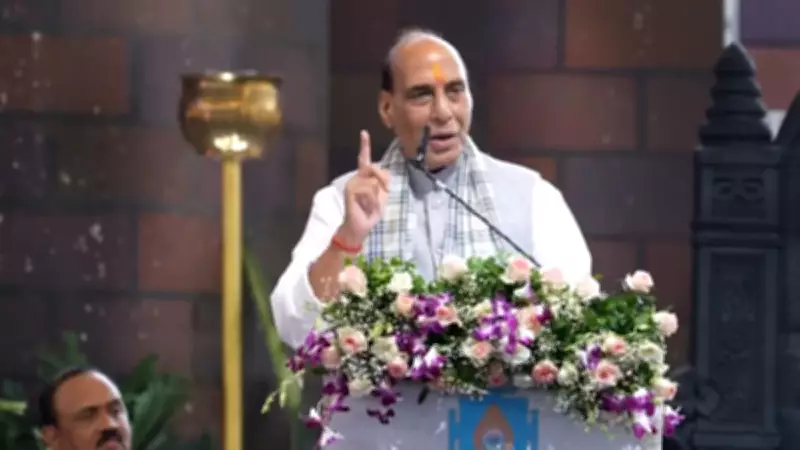
Defence Minister Rajnath Singh has set an ambitious target for India, stating that the country aims to become the world's largest weapons exporter in the next 25 to 30 years. Speaking at an event, Singh highlighted India's growing defence manufacturing capabilities and the government's commitment to boosting exports. He noted that India is currently among the top 25 arms exporters but has the potential to climb to the top spot.
Current Global Arms Export Leaders
The United States currently leads the global arms market, accounting for approximately 39% of all weapons exports, followed by Russia with around 19%. Other major exporters include France, Germany, and China. India, despite being one of the largest importers of defence equipment, has been steadily increasing its export footprint, with a focus on indigenously developed systems such as the BrahMos missile, artillery guns, and naval vessels.
India's Defence Export Growth
India's defence exports have grown significantly in recent years, from ₹1,521 crore in 2016-17 to over ₹16,000 crore in 2023-24. The government has implemented several policies to promote domestic manufacturing, including the Defence Production and Export Promotion Policy (DPEPP) 2020, which aims to achieve a turnover of ₹1.75 lakh crore in defence manufacturing by 2025. The country has also streamlined export procedures and provided incentives to private players.

Rajnath Singh emphasized that India's focus on innovation and self-reliance under the 'Make in India' initiative will be key to achieving this goal. He also highlighted the role of small and medium enterprises (SMEs) in the defence sector, which have contributed to the development of niche technologies and components.
Challenges and Opportunities
While India's ambition is commendable, experts point out several challenges. The global arms market is highly competitive, with established players having decades of experience and strong customer relationships. India also faces hurdles in terms of technology gaps, quality standards, and after-sales support. However, the growing demand for affordable and reliable defence equipment in developing countries presents a significant opportunity for India.
Singh's statement comes at a time when India is enhancing its defence cooperation with friendly nations in the Indo-Pacific region and Africa. The country has already exported defence items to over 75 countries, including the Philippines, Vietnam, and Armenia. The government is also promoting joint ventures with foreign original equipment manufacturers (OEMs) to co-develop advanced systems.
In conclusion, India's vision to become the world's largest weapons exporter in the next 25-30 years reflects its growing confidence in indigenous defence capabilities. With sustained policy support, investment in R&D, and a focus on quality, India could potentially reshape the global arms trade landscape.