

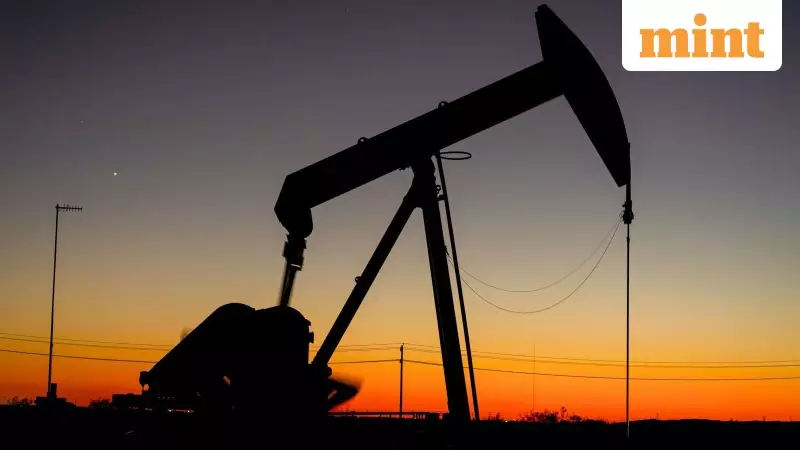
The global oil market is bracing for a significant surplus in 2026, a development poised to deliver substantial economic benefits to major importing nations like India. This impending 'super-glut' is expected to be amplified by the potential resurgence of Venezuelan crude oil production following recent geopolitical shifts, placing downward pressure on prices that were already forecast to decline.
The Venezuela Factor: Tapping the World's Largest Reserves
Venezuela possesses the world's largest proven oil reserves, estimated at a staggering 303 billion barrels, which constitutes nearly 20% of the global total according to OPEC data. This dwarfs the reserves of major producers like Saudi Arabia. However, years of stringent international sanctions have crippled its output, with production averaging only 921,000 barrels per day in 2024.
The recent US intervention in Venezuela has sparked speculation about the eventual lifting of these sanctions. While it will take considerable time for international oil majors to rehabilitate and ramp up production, the eventual return of significant volumes of Venezuelan heavy crude to the global market is seen as a key bearish factor. This comes at a time when the market is already softening.

Forecasting a 'Super-Glut': Supply Dwarfs Demand
Independent forecasts paint a clear picture of an oversupplied market. The International Energy Agency (IEA) predicts the oil surplus will swell to about 3.8 million barrels per day in 2026, up from 2.3 million in 2025. This projected glut is attributed to surging production, particularly from OPEC+ nations which have raised output targets, coupled with sluggish growth in global consumption.
Economists at Trafigura have warned of a 'super-glut' scenario. The IEA's numbers underscore this: while global oil demand is expected to grow by 860,000 barrels per day in 2026, supply is forecast to surge by 2.4 million barrels per day. This imbalance is set to be more severe than the surplus witnessed in 2020 during the initial COVID-19 shock.
Price Plunge and the Direct Benefit for India
The fundamental market dynamics point firmly to lower prices. After averaging $80.7 per barrel in 2024, Brent crude fell to an annual average of $69 in 2025. Forecasts for 2026 suggest a further drop, with the US Energy Information Administration (EIA) projecting an average as low as $52 per barrel. This trend is already visible in India's import bill; from April to October 2025, lower crude prices led to a 4.3% reduction in the oil import cost, saving billions in foreign exchange.
India, alongside China, is expected to account for 40% of global oil consumption in 2026, a sharp rise from 25% in 2025, with India being the primary driver of this growth. Demand is projected to be fueled by naphtha, diesel, and jet fuel. The IEA has previously noted that India will be the largest source of global oil demand growth through 2030.
For India, lower oil prices translate into multiple advantages: a reduced import bill aids the current account balance, helps maintain stable fuel prices for consumers and industry, and exerts a disinflationary effect on the broader economy. While domestic production is expected to decline, making the country increasingly reliant on imports, a period of softer global prices provides crucial fiscal and economic breathing room.
Key risks to this forecast include stronger-than-expected economic growth in China or an escalation of geopolitical conflicts in oil-rich regions like the Middle East or Ukraine, which could tighten supply. However, the prevailing consensus points towards a well-supplied market and cheaper crude, offering a tailwind for the Indian economy in 2026.






