

India and US Seal Interim Trade Framework, Marking a Historic Partnership Milestone
In a significant development for global economic relations, India and the United States jointly announced an interim trade framework agreement on February 6. This pivotal accord includes a firm commitment from both nations to broaden bilateral trade, with the United States implementing a substantial reduction in its reciprocal tariffs to 18%, down from the previous rate of 50%. A joint statement released by the two countries emphasized that this interim agreement "will represent a historic milestone in our countries' partnership, demonstrating a common commitment to reciprocal and balanced trade based on mutual interests and concrete outcomes."
Background and Timing of the Agreement
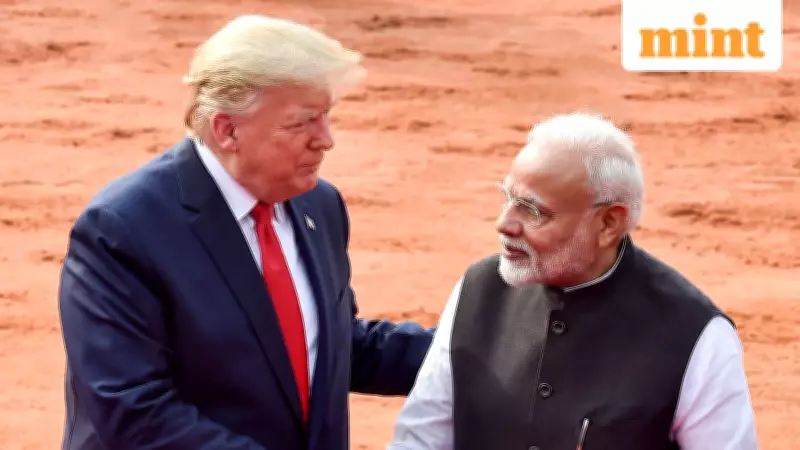
Notably, this announcement arrives almost precisely one year after negotiations on the broader US-India Bilateral Trade Agreement (BTA) commenced on February 13, 2025, under the leadership of US President Donald Trump and Prime Minister Narendra Modi. The interim framework serves as a crucial stepping stone toward finalizing the comprehensive BTA, reflecting sustained diplomatic efforts and a shared vision for enhanced economic cooperation.
Scope and Key Highlights of the Interim Trade Agreement
The framework encompasses ten key highlights that outline the mutual benefits and obligations for both countries. Under this agreement, India has committed to eliminating or significantly reducing tariffs on all US industrial goods, along with a broad spectrum of agricultural and food products. This tariff relief will apply to items such as:

- Dried distillers' grains (DDGs)
- Fresh and processed fruits
- Red sorghum for animal feed
- Soybean oil
- Tree nuts
- Wine and spirits
- Various additional products
Furthermore, the deal includes provisions for additional market access commitments and support for building more resilient supply chains, which are critical in today's interconnected global economy.
US Commitments and Tariff Reductions
On its part, the United States will apply a reduced reciprocal tariff rate of 18% on Indian exports, with the potential for further reductions as negotiations progress. This tariff cut applies to a diverse range of Indian goods, including:
- Artisanal products
- Certain machinery
- Home decor items
- Leather and footwear
- Organic chemicals
- Plastic and rubber products
- Textiles and apparel
Additionally, the US will completely remove reciprocal tariffs on specific goods such as aircraft parts, gems and diamonds, and generic pharmaceuticals. Both nations have pledged to "provide each other preferential market access in sectors of respective interest on a sustained basis" and will establish rules of origin to ensure that the agreement's benefits primarily accrue to India and the US.
Economic Commitments and Technology Cooperation
As detailed in the joint statement, India intends to purchase $500 billion worth of US products over the next five years. This substantial procurement will include:
- Aircraft and aircraft parts
- Coking coal
- Energy products
- Precious metals
- Technology products
In return, the United States has committed to significantly increasing trade in technology products, particularly Graphics Processing Units (GPUs) and other goods essential for data centers, while also expanding joint technology cooperation to strengthen digital infrastructure and innovation.
Addressing Non-Tariff Barriers and Enhancing Economic Security
The joint statement further underscores that India and the US will collaboratively "address non-tariff barriers that affect bilateral trade." Specific measures include:

- India agreeing to address long-standing barriers to the trade in US medical devices.
- Eliminating restrictive import licensing procedures that delay market access for US Information and Communication Technology (ICT) goods.
- Determining, within six months of the agreement's entry into force, whether US-developed or international standards are acceptable for US exports entering the Indian market in identified sectors.
Recognizing the importance of resolving persistent concerns, India has also agreed to tackle long-standing non-tariff barriers related to US food and agricultural products. The statement added, "The United States and India agree to strengthen economic security alignment to enhance supply chain resilience and innovation through complementary actions to address non-market policies of third parties, as well as cooperation on inbound and outbound investment reviews and export controls."
Key Takeaways from the Landmark Deal
The interim trade agreement delivers several critical outcomes:
- The US reciprocal tariffs on Indian exports are reduced from 50% to 18%, facilitating greater market access.
- India will eliminate tariffs on a wide range of US goods, fostering stronger and more balanced trade relations.
- The accord emphasizes addressing non-tariff barriers and enhancing digital trade rules, paving the way for a more seamless economic partnership.
- Both countries are committed to preferential market access and supply chain resilience, aligning with broader strategic interests.
This interim framework not only boosts immediate trade prospects but also sets a robust foundation for the eventual US-India Bilateral Trade Agreement, promising to open new opportunities and reinforce the economic ties between two of the world's largest democracies.





