

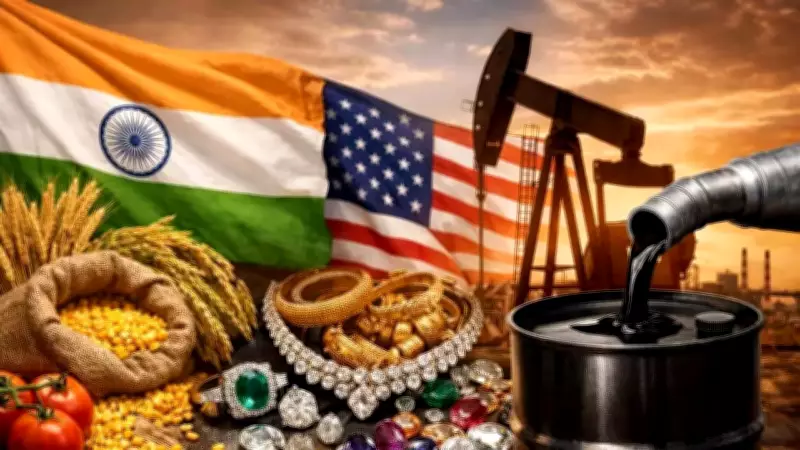
India and the United States Finalize Interim Trade Agreement Framework
In a significant diplomatic and economic development, India and the United States have jointly announced a comprehensive framework for an interim trade agreement. This pact outlines substantial tariff reductions, preferential market access, and specific commitments across key sectors, while carefully preserving protections for sensitive areas such as agriculture and dairy. The framework, unveiled on Saturday, is designed to lay the groundwork for a more extensive Bilateral Trade Agreement (BTA) in the future.
Joint Commitment to Reciprocal Trade
According to the official joint statement, the interim agreement reaffirms the unwavering commitment of both nations to fostering "reciprocal and mutually beneficial trade." It aims to bolster more resilient supply chains and mitigate ongoing trade tensions. "The US and India are pleased to announce that they have reached a framework for an Interim Agreement regarding reciprocal and mutually beneficial trade," the statement declared. Concurrently, US President Donald Trump has signed an executive order revoking the 25% tariffs previously imposed on India for its crude oil purchases from Russia, signaling a thaw in bilateral relations.
Key Sectoral Terms and Benefits
The interim trade pact, anticipated to be signed by mid-March, seeks to provide much-needed relief to Indian exporters after months of uncertainty. It encompasses several critical sectors with detailed terms:

Manufacturing and Industrial Goods
A pivotal outcome is the tariff relief for Indian manufacturing exports. The United States will apply a reciprocal tariff rate of 18% on Indian-origin goods, marking a sharp reduction from earlier levels. This covers sectors including textiles and apparel, leather and footwear, plastic and rubber products, organic chemicals, home décor, artisanal products, and select machinery. In return, India has committed to eliminating or reducing tariffs on all US industrial goods. Commerce and Industry Minister Piyush Goyal emphasized that this framework would "open a $30 trillion market for Indian exporters, especially MSMEs," creating new export and employment opportunities.
Agriculture: Market Access with Safeguards
India has agreed to reduce or eliminate tariffs on a range of US agricultural and food products, such as dried distillers’ grains (DDGs), red sorghum for animal feed, tree nuts, fresh and processed fruits, soybean oil, wine, and spirits. However, the government has firmly stated that sensitive agricultural and dairy products remain fully protected. "No concessions have been extended to sensitive agricultural sector produce in grains, fruits, vegetables, spices, oilseeds, dairy, poultry, & meat," Goyal asserted, highlighting that farmers' interests "remain paramount in all trade negotiations." This protection underscores India's commitment to safeguarding its rural economy.
Pharmaceuticals and Medical Devices
The framework provides for the removal of reciprocal tariffs on a wide array of Indian generic pharmaceuticals, contingent upon the successful conclusion of the interim agreement. Outcomes related to pharmaceutical ingredients will depend on the findings of a US Section 232 investigation. India will also receive negotiated benefits for generics and ingredients, while agreeing to address long-standing non-tariff barriers affecting US medical devices, including regulatory and market access issues.
Automobiles, Aircraft, and Heavy Industry
India will gain a "preferential tariff-rate quota" for automotive parts currently subject to US national security tariffs under Section 232. In the aviation sector, the US will remove tariffs on certain Indian aircraft and aircraft parts imposed under earlier aluminium, steel, and copper import proclamations. The agreement also signals expanded purchases of US aircraft and parts by India.

Technology, Digital Trade, and Energy
Both nations have committed to expanding trade in technology products, including graphics processing units (GPUs) and data centre-related equipment, and to deepening cooperation in technology and innovation. India has indicated its intention to purchase $500 billion worth of US energy products, aircraft, precious metals, technology products, and coking coal over the next five years. The framework outlines plans to address barriers to digital trade and develop "robust, ambitious, and mutually beneficial digital trade rules" as part of the future BTA.
Supply Chains and Standards
The two countries will collaborate to strengthen economic security and supply chain resilience, including cooperation on non-market policies of third parties, investment screening, and export controls. They will also discuss standards and conformity assessment procedures to ease compliance for exporters.
Leadership Perspectives and Future Outlook
Prime Minister Narendra Modi remarked that the framework "reflects the growing depth, trust and dynamism of our partnership" and would strengthen the 'Make in India' initiative while generating large-scale employment. "As India moves forward towards building a Viksit Bharat, we remain committed to building global partnerships that are future-oriented," he posted on X. The interim framework will be implemented promptly, with both sides aiming to conclude a comprehensive Bilateral Trade Agreement in line with an agreed roadmap.





