

India and US Seal Major Trade Agreement, Slashing Tariffs and Boosting Economic Ties
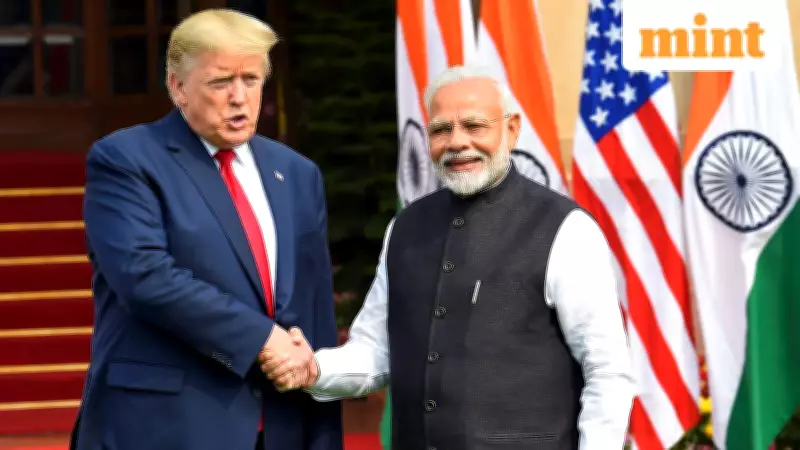
In a significant breakthrough following months of uncertainty and tariff disputes, India and the United States have reached a comprehensive trade deal. US President Donald Trump announced on Monday that he and Prime Minister Narendra Modi agreed to an immediate reduction of trade barriers between the two nations.
Key Provisions of the Landmark Trade Accord
The agreement delivers substantial relief for Indian exporters. Washington will cut its reciprocal tariff on Indian goods from 25% to 18% and completely roll back the additional 25% penalty that was imposed over India's purchases of Russian oil. In exchange, India has committed to bringing down both tariffs and non-tariff barriers on American products to zero.
President Trump characterized the deal as a broad reset of economic relations, noting that it also involves India significantly increasing its purchases of US energy resources, technology, and agricultural products while reducing its reliance on Russian crude oil. Prime Minister Modi welcomed the development enthusiastically, describing it as a victory for "Made in India" initiatives and a crucial step toward deeper cooperation between the world's two largest democracies.

Immediate Market Reaction and Industry Impact
Financial markets responded positively to the announcement. The Gift Nifty index experienced a notable jump, reflecting investor optimism that a persistent overhang on the rupee, equities, and interest rates might finally be lifting. The Indian rupee snapped its losing streak with a sharp 1.4% appreciation, strengthening from 91.52 to 90.27 against the US dollar—its most substantial daily gain in months.
Industry sectors that were particularly hard-hit by previous tariffs, especially textiles and gems and jewellery exporters, are breathing easier. The agreement removes significant uncertainty that had been hampering their competitiveness in the American market.
Strategic Implications and Global Positioning
The reduction to an 18% tariff rate places India broadly on par with other Asian trading partners and well below the punitive levels applied to China. While this doesn't confer special advantages, it restores fairness and predictability to the trade relationship. This development comes shortly after India's recent budget announcement and days following the sealing of a trade pact with the European Union, indicating New Delhi's accelerated pace in securing key global economic partnerships.
RBI Governor Sanjay Malhotra commented that the currency's future trajectory would depend on the fine print of the agreement, even as trade pacts support medium-term growth prospects. Market analysts now expect the rupee to stabilize within the 89-91 range against the dollar, with depreciation likely to slow in the coming year.
Broader Economic Context and Complementary Developments
The trade deal arrives amid several significant economic developments in India. Budget 2026 maintained fiscal discipline with a focus on capital expenditure, manufacturing, MSMEs, and healthcare while continuing strategic investments in electronics, semiconductors, and data centers. The government's AI approach has become more calibrated, prioritizing sector-specific applications and infrastructure over expensive large models.
Meanwhile, India's unrealized tax revenue reached ₹38.4 trillion by FY25, representing a 30.5% year-on-year increase and nearly triple FY20 levels. More than half of this amount now comes from non-disputed arrears rather than contested taxes, indicating a shift in the composition of outstanding revenue.
The 16th Finance Commission opted for continuity in Centre-state financial relations, maintaining states' share of central taxes at 41% while introducing new criteria to reward better-performing states and increasing funding for urban local bodies.
This trade agreement represents a pivotal moment in India-US economic relations, potentially setting the stage for increased investment flows, enhanced market access, and strengthened bilateral cooperation across multiple sectors.






