

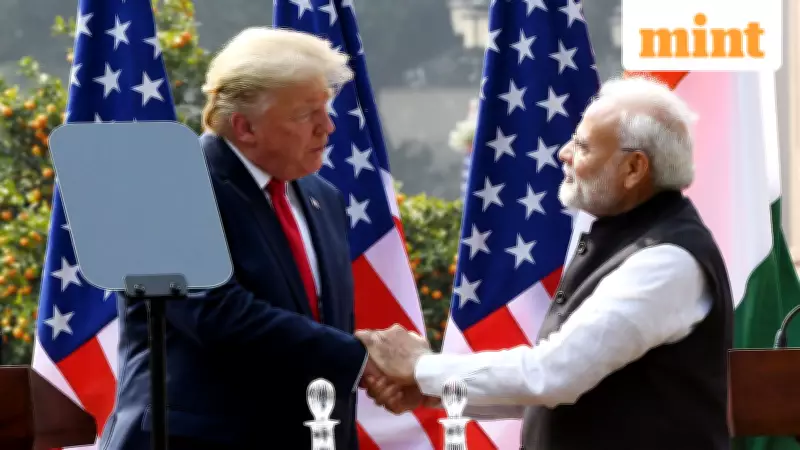
India-US Trade Deal Eases Tariff Tensions, Boosts Export Outlook
After months of uncertainty, the trade impasse between India and the United States has significantly eased following a crucial announcement by the White House in early February. The administration revealed plans to substantially reduce tariffs on Indian exports, marking a pivotal reversal from the sharp tariff hikes imposed in August 2025 that included penalties linked to India's imports of Russian crude oil.
According to detailed analysis from brokerage house BofA Global Research, the revised framework provides meaningful relief to Indian exporters, substantially improves India's tariff positioning relative to Asian peers, and potentially lifts the country's growth outlook. While the complete details of the agreement are still awaited, the broad contours of this interim deal announcement outline significant changes to tariffs, trade flows, energy sourcing, and policy implications, making this development critically important for India's economic trajectory.
Key Questions and Analysis for Investors
1. How do India's tariffs now compare with peers in Asia?

BofA Global Research indicates that India's tariff position improves materially under the revised framework. Peak tariff levels have fallen dramatically from approximately 50% to 18%, sharply narrowing the gap with Asian competitors. Notably, nearly 45% of India's exports were already exempt from the earlier 50% US tariffs. If sustained, this new tariff regime is expected to significantly enhance India's export competitiveness. Additionally, the Reserve Bank of India's real effective exchange rate has weakened about 12% over the past 14 months, further cushioning the impact of tariffs on exports.
2. Has India lowered tariffs on imports from the US?
Prima facie, yes. BofA Global Research noted that India has made significant concessions on tariffs for US exports. India's effective, trade-weighted tariff on US imports stood at about 7.3% in 2024, with the highest tariffs of around 14.6% applied to agricultural products. These tariffs are expected to fall meaningfully, which should support a substantial rise in US exports to India.
3. Will Section 232 tariffs still apply to India?
Yes. While there has been no formal clarification, BofA Global Research believes that Section 232 tariffs of around 25% on automobiles, auto components, iron, steel and aluminium will continue to apply to India, even after the broader tariff reductions.
4. Where does India's effective tariff rate stand now?
Based on BofA Global Research estimates, India's effective tariff rate is expected to settle at around 12–13%, assuming the reciprocal tariff of 18% is stacked on existing most-favoured-nation tariffs. Electronics, which account for about 40–45% of exports, are largely exempt, while Section 232 tariffs remain in force, keeping the net effective rate just above 12%.
5. What is the timeline for the $500 billion import commitment?
India has committed to importing $500 billion worth of goods from the US over the next five years, or about $100 billion annually. According to BofA Global Research, this target is achievable given India's total import bill of roughly $750 billion and the relatively small share of US goods, currently around 6%, in India's import basket.
6. Does the US import commitment widen India's current account deficit?
BofA Global Research expects the impact on India's current account balance to be limited. Higher imports from the US are likely to substitute imports from other countries, particularly Russia, as India scales back energy purchases. The report also highlighted that an improvement in services exports could support a current account surplus, with December 2025 already estimated to be in surplus.
7. Which sectors benefit most from lower tariffs?
Labour-intensive sectors that were directly impacted by tariff imposition are expected to be the biggest beneficiaries. According to BofA Global Research, textiles and gems and jewellery stand out, supported by sector-specific tariff reductions and favourable foreign exchange movements over the past year.
8. Can the deal increase FDI from the US?

Potentially yes. The US was among the largest sources of FDI into India, contributing about $5.5 billion of the $50 billion gross FDI inflows in 2024. BofA Global Research highlighted that greater market access, increased technology imports and participation in US-led initiatives around critical supply chains could support higher US FDI over time.
9. Will India open its agriculture sector to the US?
This remains unclear, but BofA Global Research believes some opening is inevitable. India already imports agricultural products such as almonds, fruits, nuts and berries from the US. It may also import corn and soy for cattle feed or use such imports as price-stabilisation buffers, it noted. Currently, India imports about $2 billion of agricultural goods from the US, while exports remain significantly higher.
10. What are the implications for growth, RBI policy and oil?
BofA Global Research sees upside risks to growth. GDP growth projections for FY26 and FY27 stand at 7.6% and 6.8%, respectively, with a potential 20–50 basis point upside in FY27 depending on the deal's final details. With tariff uncertainty easing, the RBI is expected to pause rate cuts while continuing liquidity support. On oil, India still imports about 27% of crude from Russia, down from 30% in August 2025. The shift away from Russian oil is estimated to have a limited impact of 3–9 basis points of GDP, as crude prices remain contained.
Disclaimer: The views and recommendations made above are those of individual analysts or broking companies, and not of Mint. We advise investors to check with certified experts before making any investment decisions.





