

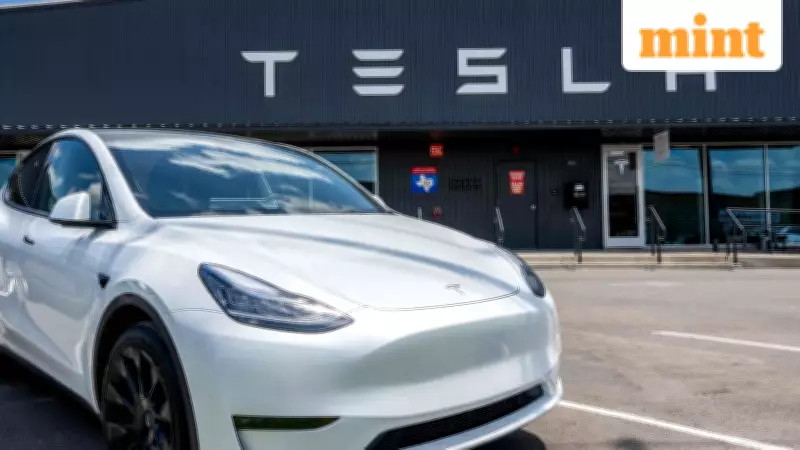
India-US Trade Pact Delivers Tariff Relief for Luxury Cars, But Excludes Electric Vehicles
In a significant development for bilateral trade, India and the United States have finalized an interim trade agreement that offers substantial tariff concessions for American luxury automobiles and motorcycles. However, the deal notably excludes electric vehicles (EVs), creating a major obstacle for Elon Musk's Tesla, which has been aggressively lobbying for reduced import duties to penetrate the Indian market.
Key Provisions of the Trade Agreement
According to officials cited by Reuters on February 7, New Delhi has agreed to slash tariffs on high-end American cars with engine capacities exceeding 3,000 cc. The duties will be reduced to 30% from the previously announced steep rate of 110% under this interim pact. Additionally, import duties on Harley-Davidson motorcycles will be completely eliminated, providing a boost to the iconic American brand.
The tariff reductions for traditional internal-combustion engine cars are set to be phased in gradually over the next decade, eventually reaching the 30% mark. This move is part of a broader exchange where the United States has drastically cut tariffs on Indian goods from 50% to 18%, in return for India halting purchases of Russian crude oil.

Electric Vehicles Left Out of the Deal
Despite these concessions, the agreement makes no provisions for electric vehicles, effectively shutting the door on lower-tariff access for Tesla. This exclusion ignores a key demand from Tesla CEO Elon Musk, who has repeatedly criticized India's high import duties as a barrier to entry.
The omission of EVs from the India-US deal stands in stark contrast to India's approach with European carmakers. Following a trade agreement with the European Union, New Delhi announced steep tariff cuts to as low as 10% across a wide range of vehicles, including gradual concessions on some electric models.
Tesla's Struggles in the Indian Market
Tesla's challenges in India are compounded by its tepid market performance since entering in July 2025. A Bloomberg report from January 2026 revealed that the company has been struggling to sell even one-third of the vehicles it imported into India last year. Many prospective buyers who made early bookings have backed out, leading Tesla to offer discounts of up to ₹200,000 (approximately $2,200) on select SUV variants to stimulate demand.
In 2025, Tesla registered only 227 cars in India, a disappointingly low figure for the world's third-largest passenger vehicle market. The report indicates that Indian consumers have been hesitant to fully embrace the brand due to its limited visibility and higher price points compared to alternatives.
Competitive Pressures and Global Context
Tesla's difficulties in India mirror its broader global challenges. The company's worldwide sales declined for the second consecutive year in 2025, with China's BYD overtaking it as the world's largest EV seller. Waning subsidies and intensifying competition have eroded Tesla's market share in key regions like the United States, Europe, and China.
In the Indian context, prospective car buyers often opt for alternatives after test drives, choosing models that are either more affordable or offer additional features. Competitors such as BMW's iX1 or BYD's Sealion are available at lower price points than Tesla's Model Y, further complicating Tesla's market strategy.
The India-US trade deal, announced by US President Donald Trump on February 2 after months of negotiations and a call with Indian Prime Minister Narendra Modi, represents a strategic recalibration of economic ties. However, for Tesla and the EV sector, it represents a missed opportunity that could delay the company's ambitions in one of the world's most promising automotive markets.






