

India-US Trade Agreement Removes Competitive Disadvantage, Says Former Ambassador
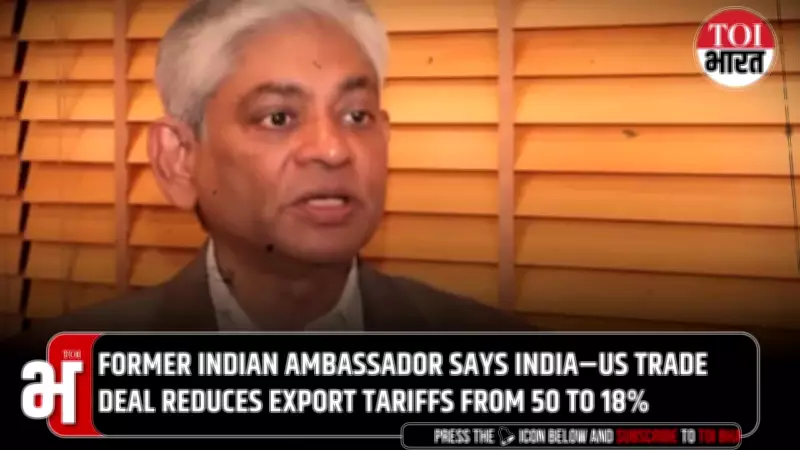
Former Indian Ambassador to the United States Arun K. Singh has described the recently concluded India–US trade agreement as a significant positive development for bilateral economic relations. In a detailed assessment, Singh emphasized that the reduction of tariffs to 18 per cent under the deal has effectively eliminated the competitive disadvantage previously faced by Indian exporters in the American market.
Key Benefits and Strategic Implications
Singh highlighted that this tariff reduction could play a crucial role in mitigating negative perceptions about the reliability of the US as a trade partner. He noted that such perceptions have often been a point of contention in international trade discussions. However, the former envoy was quick to underline that India's approach remains firmly rooted in its own national interests and strategic autonomy.
India has not yielded to any external pressure from the United States, Singh asserted, and will continue to make decisions based solely on what benefits the country economically and strategically. This stance reflects India's broader policy of diversifying its global partnerships while maintaining independence in foreign policy.
Broader Bilateral Relations and Future Outlook
On the broader spectrum of India-US relations, Singh pointed out that both nations have consistently worked to maintain stability and foster cooperation across various domains. He acknowledged the efforts from both sides to navigate complex geopolitical landscapes and ensure that the partnership remains robust and mutually beneficial.
Addressing a specific area of international interest, Singh commented on India's approach to purchasing Russian oil. He clarified that India's decisions in this regard would be dictated by practical considerations such as market conditions and the availability of resources. Our strategy is pragmatic and responsive to global economic realities, he explained, emphasizing that India's energy security needs are a priority.
- The trade deal reduces tariffs to 18%, enhancing competitiveness for Indian exports.
- It helps improve perceptions of US reliability as a trade partner.
- India maintains strategic autonomy and makes decisions based on national interest.
- Both countries work to keep bilateral ties stable and cooperative.
- India's Russian oil purchases depend on market conditions and availability.
In conclusion, Singh's remarks underscore the multifaceted nature of the India-US relationship, where economic agreements like the trade deal serve to strengthen ties while allowing India to uphold its strategic independence. The reduction in tariffs marks a pivotal step in leveling the playing field for Indian businesses and fostering a more equitable trade environment.






