

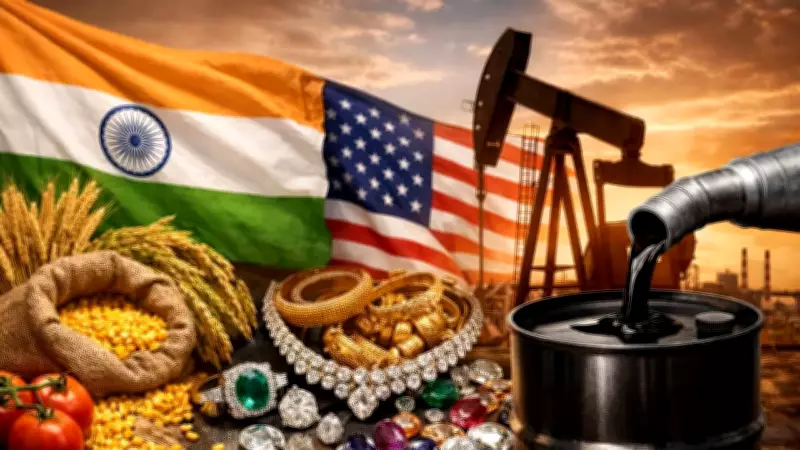
India and United States Announce Framework for Interim Trade Agreement
In a significant development aimed at de-escalating months of trade tensions, India and the United States jointly announced the framework for an interim trade agreement on Saturday. This landmark pact sets the stage for a broader bilateral trade agreement while immediately addressing key tariff barriers that have hindered commerce between the two nations.
Reciprocal Tariff Reductions and Market Access
Under the newly established framework, the United States will substantially reduce tariffs on a wide array of Indian goods, slashing duties from a steep 50% down to a more manageable 18%. This reduction applies to critical export sectors including textiles and apparel, leather and footwear, plastic and rubber products, organic chemicals, home décor items, artisanal products, and select machinery.
In a reciprocal move, India has committed to eliminating or significantly reducing tariffs on several American industrial goods and agricultural products. This includes dried distillers’ grains, red sorghum for animal feed, tree nuts, fresh and processed fruits, soybean oil, wine, and spirits. These adjustments are expected to make several American imports more affordable for Indian consumers, potentially lowering prices in the market.

Background and Negotiation Context
This interim agreement follows prolonged and sometimes tense negotiations, initiated after Washington imposed substantial tariffs on Indian imports, including a 25% duty introduced in August. The United States had previously alleged that India was indirectly supporting Russia’s war efforts against Ukraine through oil purchases—a charge that New Delhi has consistently and firmly rejected.
The framework reaffirms both countries' commitment to continue negotiations toward a comprehensive US-India Bilateral Trade Agreement. These talks were originally launched by Prime Minister Narendra Modi and US President Donald Trump in February 2025, following months of friction over trade and energy ties.
Future Tariff Removals and Economic Commitments
Subject to the successful conclusion and implementation of the interim agreement, Washington has indicated it will remove tariffs on additional Indian exports, including generic pharmaceuticals, gems and diamonds, and aircraft parts. This phased approach aims to build confidence and momentum toward a fuller pact.
Perhaps the most ambitious component of the framework is India’s declared intent to purchase $500 billion worth of US products over the next five years. This massive procurement plan includes energy products, aircraft and aircraft parts, precious metals, technology products, and coking coal, which is expected to significantly expand bilateral trade volumes.
Addressing Non-Tariff Barriers and Sectoral Cooperation
Both nations have committed to tackling non-tariff barriers that have historically affected trade, particularly in sectors such as medical devices, information and communication technology goods, and food and agricultural products. India has agreed to review standards and licensing procedures within a six-month timeframe to improve market access for US exports.
The agreement also outlines commitments to boost trade in digital and technology sectors, including graphics processing units (GPUs) and data centre goods, while expanding joint technology cooperation initiatives. Both sides will grant each other preferential market access in key sectors like automotive parts and pharmaceuticals.

Key Highlights of the Interim Trade Deal
- Tariffs on Indian Goods: US duties on Indian exports reduced from 50% to 18%, covering textiles, apparel, leather, footwear, plastics, chemicals, home décor, and machinery.
- Future Tariff Removals: Potential removal of US tariffs on generic pharmaceuticals, gems, diamonds, and aircraft parts upon final agreement.
- Tariffs on US Goods: India to eliminate or reduce duties on US industrial goods and agricultural products including grains, nuts, fruits, oils, wine, and spirits.
- Cheaper US Imports: Reduced duties may lower prices of select US food and agricultural products in the Indian market.
- Agriculture Safeguards: Sensitive Indian farm and dairy products remain protected under government assurances.
- $500 Billion Purchase Plan: India plans to buy $500 billion worth of US energy, aircraft, technology, metals, and coal over five years.
- Preferential Market Access: Mutual preferential access granted in sectors like automotive parts and pharmaceuticals.
- Digital and Technology Trade: Commitment to enhance trade in GPUs, data centre goods, and technology cooperation.
- Non-Tariff Barriers: India to address barriers affecting US medical devices, ICT goods, and agricultural exports.
- Path to Full Trade Pact: Interim agreement lays groundwork for a comprehensive India-US Bilateral Trade Agreement.
Implementation and Forward Momentum
Officials from both countries have stated that the framework will be implemented promptly, with negotiations continuing toward a full bilateral trade agreement aimed at further tariff reductions and expanded market access. The White House has characterized this framework as a historic milestone in the India-US partnership, one that will help strengthen resilient supply chains, increase investment flows, and enhance technology cooperation between the two democracies.
This interim agreement not only marks a de-escalation of recent trade tensions but also establishes a structured pathway toward deeper economic integration, reflecting the growing strategic and commercial alignment between India and the United States on the global stage.





