

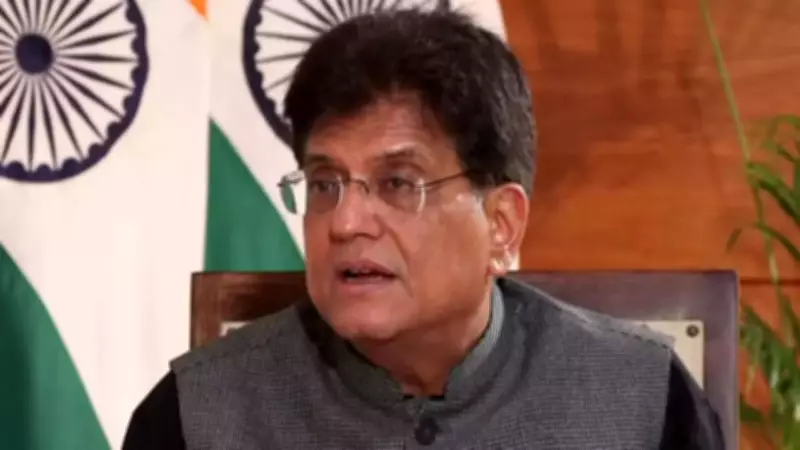
Goyal: India-US Trade Deal to Boost Cotton Demand, Not Harm Farmers
Commerce and Industry Minister Piyush Goyal stated on Friday that the India-US trade arrangement will expand cotton demand rather than hurt domestic growers, emphasizing that Indian farmers stand to gain significantly from rising textile exports. Speaking at the ET NOW Global Business Summit, Goyal projected a bright future for the cotton sector under the new trade framework.
Yarn Forward Mechanism to Benefit India
Explaining the operational mechanism, Goyal said India will receive the same concession that Bangladesh enjoys under the "yarn forward" principle. This allows countries to export garments to the US at zero duty if they process cotton or yarn purchased from the US. "The same concession is available to India also. It's called a yarn forward. If you buy cotton or yarn from the US and process it and use it for making garments, you are able to export it to the US at zero duty. That's an established principle of theirs. And India will benefit from the same way of working," he elaborated.
Enhanced Competitiveness for Indian Exports
Goyal highlighted that the reduction in US reciprocal tariffs from 50% to 18%, combined with zero reciprocal access for textiles in Europe, has made Indian exports substantially more competitive. "We become extremely competitive. Let us convert this market access into market share," he urged, projecting robust growth across multiple sectors including:

- Textiles
- Leather and footwear
- Handlooms and handicrafts
- Marine products
Protection of Sensitive Sectors in Trade Deals
The minister emphasized that recent free trade agreements finalized by India have been carefully structured to protect sensitive sectors while expanding export opportunities. In the US deal, key agricultural products such as rice, wheat, corn and millets have been excluded to safeguard farmer interests. Similarly, India has not opened the dairy sector in any of its trade agreements, recognizing that millions of small farmers depend on it for supplementary income.
Expanding Global Trade Access
Goyal revealed that India has concluded nine free trade agreements in the last three-and-a-half years with 37 developed economies, effectively opening up access to over 70% of global trade. These pacts aim to provide certainty and predictability for businesses, attract investment, create jobs and integrate India more deeply with global markets. "There has never been a country that became developed while remaining insulated from the global economy," he noted, adding that India's calibrated opening up is designed to balance consumer interests, farmer protection and export-led growth.
Strategic Imports and Investment Benefits
On the import front, where India and the US are targeting $500 billion of shipments over five years, Goyal identified specific areas of cooperation. India requires coking coal to boost steel production, with the US being a major supplier. Additionally, he foresaw significant benefits in aviation: "...with the US, we are hopeful to get more aeroplanes into the country, which would be good for our tourism, which would be good for our mobility and hopefully bring down the airfares for all of us... It should open up remote area connectivity into the country."
Goyal projected that the aviation sector alone could account for approximately $100 billion in imports over the next five years, including Boeing planes, aircraft engines and spare parts. He concluded by noting that India has strategically used trade pacts to secure advantages such as investment commitments and better terms for Indian professionals abroad, emphasizing that FTAs are about "trust, transparency and time-bound certainty" that attract investment beyond mere tariff reductions.






