

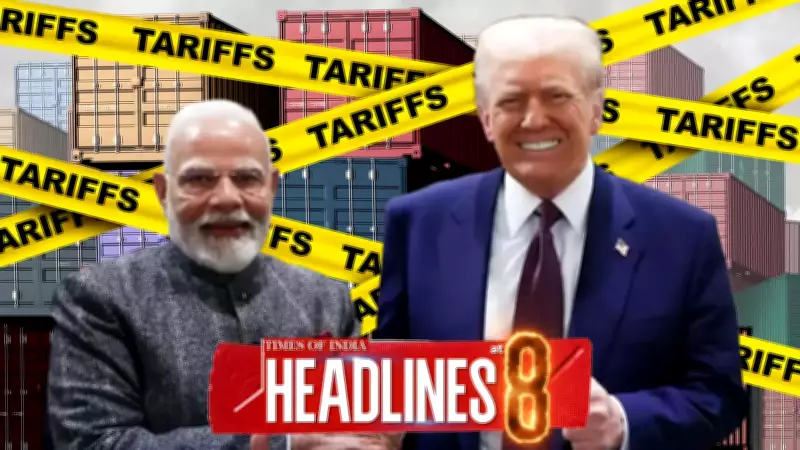
India-US Trade Agreement Marks Diplomatic Reset Amid Political Controversy
A significant breakthrough has been achieved in India-US relations following months of diplomatic tension and trade disputes. President Donald Trump has officially announced a comprehensive trade agreement between the two nations, signaling a potential reset in bilateral ties that had been strained over various economic and geopolitical issues.
Substantial Tariff Reductions Announced
The landmark trade deal involves substantial tariff reductions from both sides. The United States has agreed to slash its tariffs on Indian goods from a substantial 50% down to a more manageable 18%, representing a significant concession that could boost Indian exports to American markets. In reciprocal fashion, India has committed to eliminating tariffs entirely on American products, bringing them down to zero percent.
Prime Minister Narendra Modi has welcomed this development as a positive reset in India-US relations, with both leaders publicly projecting an image of renewed friendship and cooperation. The agreement comes after prolonged negotiations that had seen both countries imposing retaliatory tariffs on each other's goods in recent years.

Controversial Claims About Russian Oil Imports
However, the announcement has been accompanied by controversial statements from President Trump that have raised eyebrows in diplomatic circles. The American president has claimed that as part of this agreement, India will completely cease purchasing Russian oil and instead commit to buying approximately $500 billion worth of American products.
These specific claims have not yet been officially confirmed or clarified by the Indian government, leaving many questions unanswered about the exact terms and conditions of the trade pact. The fine print of the agreement remains unclear, with officials from both nations providing different interpretations of what the deal actually entails.
Political Backlash in India
The trade agreement has sparked immediate political controversy within India. Congress leader Rahul Gandhi has launched a sharp criticism of Prime Minister Modi, accusing him of being "compromised" in the negotiations with the United States. Gandhi has questioned whether India's sovereignty and independent foreign policy have been undermined through this agreement.
In response to these allegations, Commerce Minister Piyush Goyal has fired back strongly, dismissing the opposition's claims as misinformation and deliberate attempts to undermine India's diplomatic achievements. Goyal has questioned why the opposition cannot accept India's rising global stature and the government's success in negotiating favorable terms with a major economic power.
Geopolitical Implications and Future Challenges
The trade deal arrives at a particularly sensitive geopolitical moment, with India maintaining its traditional policy of strategic autonomy while navigating complex relationships with multiple global powers. The claim about halting Russian oil imports, if true, would represent a significant shift in India's energy procurement strategy and could have broader implications for New Delhi's foreign policy orientation.
As details continue to emerge about the specific provisions of the agreement, analysts are closely watching how this development will affect India's economic trajectory, its relationships with other trading partners, and its position in the evolving global order. The coming weeks are likely to bring more clarity about the actual terms of the deal and its implementation timeline.






