

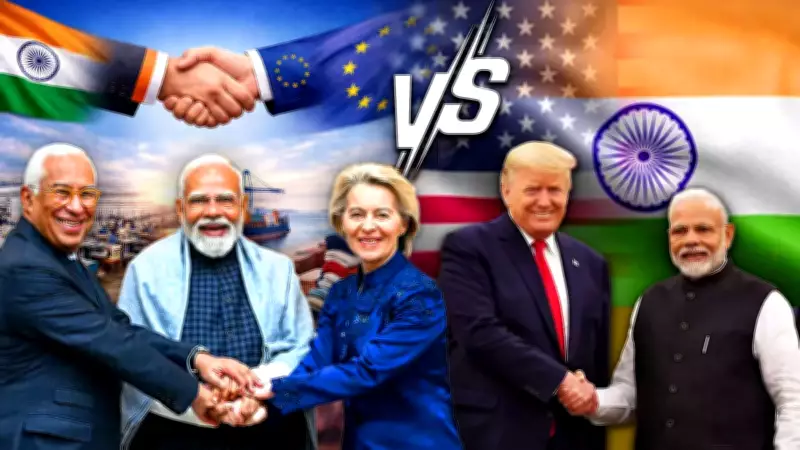
India-US Trade Deal vs India-EU FTA: Which Agreement Delivers Bigger Economic Benefits?
Two significant trade agreements are currently shaping India's international economic strategy, each offering distinct pathways to growth. The India-United States trade agreement and the India-European Union Free Trade Agreement represent different approaches with varying implications for exports, employment, and overall economic development.
Immediate Gains Through the India-US Trade Agreement
The India-US trade deal focuses on providing immediate relief and tangible benefits through strategic tariff reductions. This agreement specifically targets sectors that have faced substantial challenges due to elevated American duties in recent years. Key export industries including steel manufacturing, pharmaceutical production, and seafood processing stand to regain competitive margins quickly through this arrangement.
This bilateral agreement represents a pragmatic approach to addressing specific trade barriers that have hindered Indian exporters in the American market. By reducing tariff pressures on these critical sectors, the deal creates opportunities for:

- Enhanced export competitiveness in targeted industries
- Immediate financial relief for affected businesses
- Strengthened trade relations with one of India's largest trading partners
Long-Term Strategy Through the India-EU Free Trade Agreement
In contrast, the India-European Union Free Trade Agreement adopts a comprehensive, long-term perspective on economic partnership. This agreement promises near-total tariff elimination across European markets, creating unprecedented access for Indian goods and services. Economic projections suggest this arrangement could potentially double bilateral trade volumes by the early 2030s.
India's approach to this agreement demonstrates careful calibration, with strategic concessions on European automobiles and spirits designed to balance consumer access with domestic industry protection. This balanced strategy reflects India's commitment to:
- Securing sustainable market access in Europe
- Protecting domestic manufacturing interests
- Creating predictable trade conditions for long-term planning
Strategic Positioning in Global Trade Networks
Together, these agreements represent India's ambitious strategy to position itself at the center of global manufacturing and trade networks. The dual-track approach allows India to address immediate economic pressures while simultaneously building foundations for sustained growth through expanded market access.
The comparative value of these agreements will ultimately depend on several critical factors:
- Implementation speed and efficiency of both agreements
- Global demand patterns and economic conditions
- Adaptability of Indian businesses to seize emerging opportunities
- Effective utilization of market access provisions
While the US agreement offers short-term relief from specific trade pressures, the EU agreement provides long-term certainty through comprehensive market access. The optimal outcome for India's economy will likely emerge from successful implementation of both agreements, allowing businesses to benefit from immediate gains while positioning themselves for sustained growth in European markets.
These trade developments represent historic opportunities for Indian exporters and manufacturers. The ultimate economic impact will be determined by how effectively Indian businesses leverage these agreements to expand their global footprint, create employment opportunities, and contribute to India's broader economic growth objectives.






