

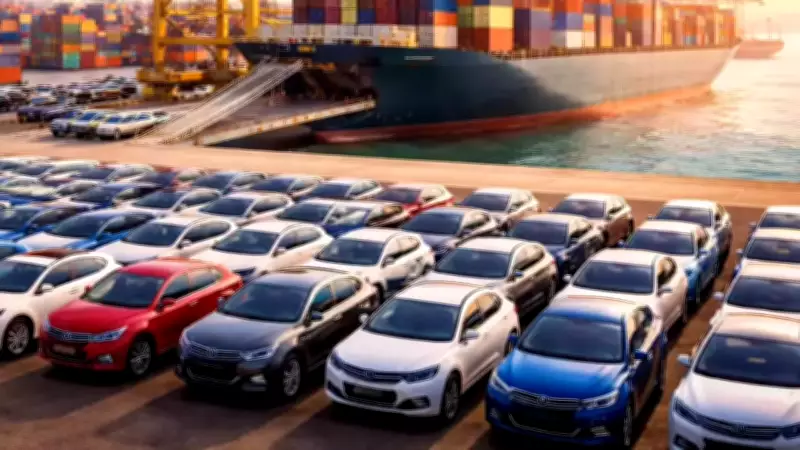
India and United States Edge Closer to Interim Trade Agreement, Automotive Sector Set for Major Impact
In a significant development for bilateral economic relations, India and the United States have progressed substantially towards finalizing an interim trade agreement. This pivotal pact is poised to deliver transformative effects across the automotive industry, introducing sweeping changes to import duty structures for American vehicles entering the Indian market.
Zero-Duty Access for Large American Motorcycles Marks Historic Shift
Under the terms of the proposed agreement, India will grant zero-duty access for large American motorcycles, a move that represents a dramatic departure from previous policies. Government officials, as cited by PTI, confirm that the pact will completely eliminate import duties on motorcycles with engine capacities ranging from 800 cc to 1,600 cc and above upon implementation.
This decision constitutes a major leap forward, especially considering India's recent incremental adjustments. In 2025, import tariffs on completely built-up motorcycles up to 1,600 cc were reduced from 50 percent to 40 percent, while duties on bikes above 1,600 cc were cut from 50 percent to 30 percent. The new agreement supersedes these measures by bringing duties down to absolute zero for large-capacity motorcycles.

Harley-Davidson Stands as Primary Beneficiary
The policy shift directly and substantially benefits iconic American motorcycle manufacturer Harley-Davidson. Although India remains a comparatively modest market for premium motorcycles and the United States holds a limited share in this segment, the agreement carries profound symbolic and commercial significance.
Harley-Davidson currently operates within India through a strategic partnership with Hero MotoCorp, established in October 2020. This collaboration enables Hero to develop and sell Harley-branded motorcycles, manage comprehensive service and parts operations, and retail accessories, riding gear, and merchandise through dedicated dealerships and its extensive network.
Tariff Concessions Extended to High-End US Cars
Beyond the motorcycle sector, the interim trade pact extends meaningful relief to the automobile segment. India has committed to providing duty concessions on imported US cars, specifically targeting diesel vehicles with engine capacities of 2,500 cc and above, alongside petrol vehicles of 3,000 cc and above.
For high-end internal combustion engine cars exceeding 3,000 cc, tariffs will be systematically reduced to approximately 30 percent over a phased period extending up to 10 years. This marks a substantial reduction from earlier import duties on such luxury vehicles, which could escalate as high as 110 percent.
Reciprocal Measures and Implementation Timeline
In a reciprocal arrangement, the United States will eliminate tariffs on certain auto parts imported from India, while some components will continue to attract duties of up to 18 percent. A joint statement regarding the interim trade pact has already been formally issued, with expectations set for the agreement to be signed by mid-March.
Notable Exclusion: Electric Vehicles Remain Outside Tariff Concessions
Officials have explicitly clarified that electric vehicles are not included within the scope of these tariff concessions. With numerous local manufacturers making substantial investments under government initiatives like the Production-Linked Incentive programme, authorities appear determined to protect the domestic EV sector from foreign competition at this juncture.
This exclusion means that US-based electric vehicle manufacturer Tesla will not derive benefits from the agreement. Any Tesla model imported into India will continue to face steep import duties, maintaining elevated price points. Currently, the company markets its Model Y in the Indian market under these existing tariff conditions.
The interim India-US trade agreement thus represents a carefully calibrated economic maneuver, opening doors for specific segments of American automotive exports while strategically safeguarding emerging domestic industries.






