

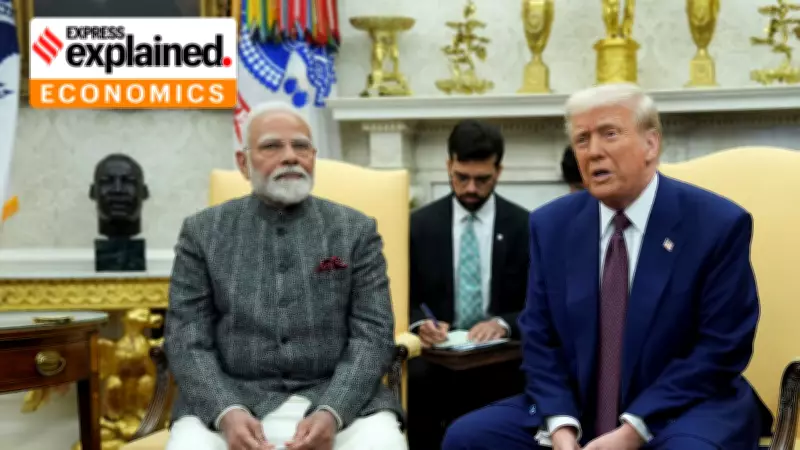
India-US Trade Pact Expands GPU Access and Data Center Investment Opportunities
The recent interim trade agreement between India and the United States marks a significant shift in bilateral technology cooperation, particularly in the electronics and artificial intelligence sectors. This development comes after a period of heightened tensions that had threatened to disrupt trade flows, including former US President Donald Trump's threat to impose a 25% tariff on Apple if it sold India-made iPhones in the US market.
Enhanced GPU Trade for AI Development
Under the agreement, both nations have committed to significantly increase trade in technology products, with a specific focus on Graphics Processing Units (GPUs) and other data center components. This is crucial for India, which lacks local GPU production capacity and relies on imports from American leaders like Nvidia to meet the compute needs of its AI startups and researchers.
The timing is notable as India recently reduced the budgetary allocation for its flagship IndiaAI Mission from Rs 2,000 crore to Rs 1,000 crore for the 2026-27 fiscal year. This mission subsidizes GPU access, and while approximately 40,000 GPUs have been installed so far, industry experts consider this insufficient compared to the computing capacity available to leading American AI companies.

The agreement represents a departure from previous US policies. The Biden administration had implemented export restrictions on GPUs to India as part of national security measures, but these were set aside after President Trump took office. India has successfully negotiated favorable terms, avoiding stringent export controls similar to those imposed on China.
Tax Incentives for Data Center Investments
Another key aspect of the agreement involves data center infrastructure. India has announced a tax holiday until 2047 for foreign companies establishing data centers in the country, addressing a major US demand during negotiations. This move is expected to spur substantial investments.
- Google has committed $15 billion for a 1GW data center in partnership with the Adani Group.
- Microsoft plans to invest $17.5 billion, primarily focused on AI data centers.
- Amazon has announced a $35 billion investment over five years, though specific allocations for data centers remain unspecified.
Union IT Minister Ashwini Vaishnaw estimates that these incentives could attract up to $200 billion in data center investments. Currently, India's data center market is valued at $10 billion, with revenues of $1.2 billion in FY24, and is projected to add 795 MW of capacity by 2027, reaching a total of 1.8 GW.
Impact on Electronics Manufacturing and Exports
The trade agreement is poised to significantly benefit India's electronics manufacturing sector. The US reduction of tariffs on India from 50% to 18% has created optimism, with industry projections suggesting bilateral electronics trade could reach $100 billion.
- Electronics exports stood at Rs 3.27 lakh crore (approximately $38 billion) in 2024-25, with the US as the largest market.
- The sector employs over two million workers directly, supported by a network of component suppliers and assemblers.
- Apple, a key player in India's electronics exports under the PLI scheme, has established a robust supply chain network, with India now producing nearly a quarter of all iPhones globally, second only to China.
Ashok Chandak, president of SEMI India and IESA, emphasized that the trade deal, combined with initiatives like iCET and TRUST, could enhance India's position as a global manufacturing and innovation hub by improving market access and technology flows.
This agreement not only mitigates past tensions but also sets the stage for deepened technological collaboration, positioning India to better compete in the global AI and electronics markets.






