

India-US Interim Trade Agreement Moves Closer to Finalization
Commerce Secretary Rajesh Agrawal made a significant announcement on Monday, revealing that a high-level delegation of Indian officials is set to travel to the United States next week. The primary objective of this visit is to finalize the legal terms of an interim India-US trade agreement, which is anticipated to be signed and implemented by March. This development marks a crucial step forward in bilateral trade relations between the two nations.
Delegation Led by Chief Negotiator Darpan Jain
Joint Secretary in the commerce ministry, Darpan Jain, who serves as India’s chief negotiator for these talks, will lead the delegation to Washington on February 23. Agrawal provided insights into the progress of negotiations, stating that virtual engagements between the two sides are already actively underway. He emphasized, “There have been virtual engagements going on (with the US) and next week, the chief negotiator will be leading a delegation to the US to finalise the legal framework towards the legal agreement that work will carry on next week in Washington.”
Agrawal further elaborated that the recently released joint statement between India and the US outlines the broad contours of the interim deal. These contours now need to be translated into a legally binding agreement. He explained, “The joint statement lays down the contours of the deal. Now the contours of the deal has to be translated into a legal agreement, which will be signed between the two sides.”

Framework Details and Tariff Reductions
Earlier this month, India and the United States announced that they had finalized a framework for an interim trade agreement aimed at making trade more reciprocal and mutually beneficial. Under this framework, US tariffs on Indian goods will be significantly reduced from 50 per cent to 18 per cent. This reduction is expected to cover a wide range of sectors, including:
- Textiles and apparel
- Leather and footwear
- Plastic and rubber products
- Organic chemicals
- Home decor
- Artisanal goods
- Select machinery
Following the successful conclusion of the interim pact, tariffs on additional products such as generic pharmaceuticals, gems and diamonds, and aircraft parts are also slated to be removed.
Indian Concessions and Protected Sectors
On the Indian side, New Delhi has agreed to eliminate or reduce tariffs on several US industrial goods and a variety of agricultural and food products. These include:
- Dried distillers’ grains
- Tree nuts
- Fresh and processed fruits
- Soybean oil
- Wine and spirits
However, the Indian government has maintained that sensitive agricultural and dairy sectors will remain protected. This includes key areas such as wheat, rice, maize, milk, poultry, and certain vegetables, ensuring domestic interests are safeguarded.
Broader Bilateral Trade Agreement Commitment
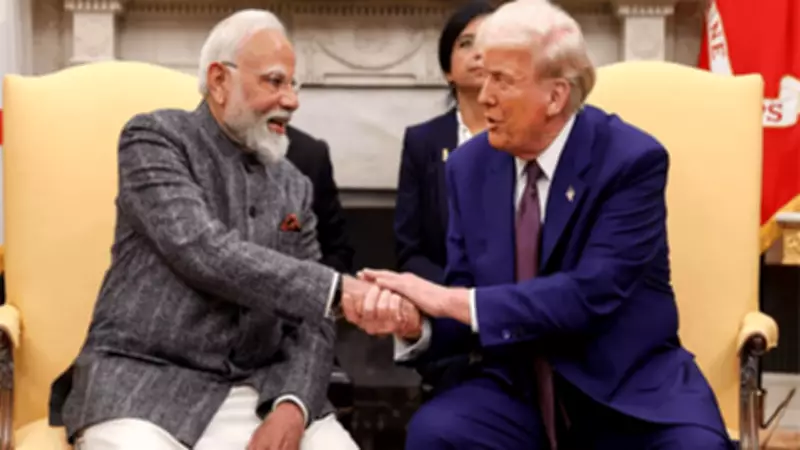
The framework also reaffirms the commitment of both countries to advance negotiations on a broader Bilateral Trade Agreement. This initiative was launched by Prime Minister Narendra Modi and US President Donald Trump in February 2025, following months of trade tensions. The interim deal serves as a stepping stone towards this more comprehensive agreement, highlighting ongoing diplomatic efforts to strengthen economic ties.
Updated Trade Data Highlights Growth
In related news, the commerce ministry released updated trade data, showcasing overall growth in exports. India’s total exports of merchandise and services in January 2026 stood at USD 80.45 billion, up from USD 71.09 billion in January 2025. Imports during the same period rose to USD 90.83 billion from USD 76.48 billion a year earlier, pushing the overall trade deficit to USD 10.38 billion compared to USD 5.39 billion last year.

Agrawal provided further context, noting that cumulative exports from April to January of the current financial year are estimated at USD 720.76 billion, compared to USD 679 billion in the corresponding period of the previous year. He stated, “It is an estimated growth of 6.15% and increased around approximately USD 40 billion dollars.” This data underscores the positive trajectory in India’s trade performance amidst global economic challenges.





