India Pursues Dual Trade Strategy with US and EU Amid Global Realignments
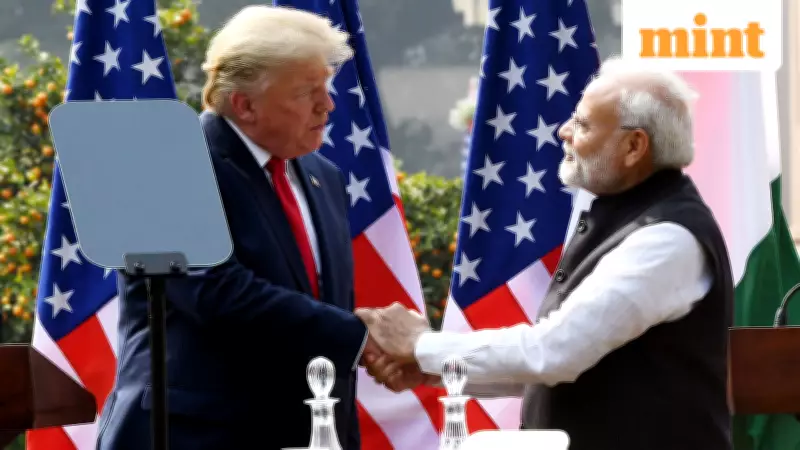
India is currently engaged in high-level discussions with the United States to finalize a mutually beneficial bilateral trade agreement, according to sources familiar with the ongoing negotiations. This development comes even as New Delhi works diligently to operationalize the recently concluded Free Trade Agreement (FTA) with the European Union, marking a significant moment in India's international trade diplomacy.
Simultaneous Negotiations with Major Economic Partners
Significant progress has been made in the India-EU FTA negotiations, with officials indicating that the deal is very close to fruition. "We have made very significant progress. We are very close to seeing that come to fruition. The two sides remain in touch," stated one anonymous source. Interestingly, even during the final stages of negotiating the EU agreement, Indian trade negotiators maintained continuous communication with their American counterparts, demonstrating the parallel nature of these crucial trade discussions.
The person emphasized that the US market holds equal, if not greater, importance compared to the European market for India's economic ambitions. "The US market is as important, if not more important; and we, therefore, have to keep our eyes on the ball there in terms of wanting to get that trade deal across the finish line as well," the source explained, dismissing any notion of competitive one-upmanship between the two negotiations.

Pax Silica Alliance and Trade Delays
Trade talks with the United States have experienced some delays, coinciding with Washington's efforts to draw New Delhi into Pax Silica, a newly formed technological alliance of nations designed to counter China's dominance in several critical sectors. This alliance specifically targets cooperation in semiconductors, critical minerals, and artificial intelligence infrastructure - areas of strategic importance for both nations.
India's External Affairs Minister S. Jaishankar is scheduled to attend the critical minerals ministerial meeting in Washington next week, highlighting the growing importance of this sector in bilateral relations. The timing of this visit underscores the interconnected nature of trade discussions and strategic technological partnerships between the two democracies.
EU FTA Details and Implementation Challenges
The India-EU Free Trade Agreement, announced jointly by Prime Minister Narendra Modi and European Commission President Ursula von der Leyen, represents a historic achievement following negotiations that first began in 2007 and were relaunched in 2022. This agreement positions India at the center of one of the world's largest integrated economic partnerships, covering a combined market of nearly two billion people and approximately a quarter of global GDP.
Key benefits of the EU FTA for India include:
- Improved market access for Indian goods with the EU eliminating tariffs on over 90% of tariff lines
- Enhanced competitiveness for labor-intensive exports including textiles, apparel, footwear, marine products, chemicals, and pharmaceuticals
- Preferential or duty-free entry for over 99% of Indian exports by trade value into the EU market
- Better access for Indian tea, coffee, spices, and processed food products
However, the agreement does not mitigate the immediate impact of the EU's Carbon Border Adjustment Mechanism (CBAM), meaning Indian exports of steel and aluminum will continue to face Europe's carbon tax. Both sides have agreed to establish a technical dialogue to address pathways for Indian industries to access the market despite this regulation, with provisions for future Indian carbon trading systems to be integrated into the CBAM framework.
Agricultural Protections and Market Access
The India-EU FTA includes careful protections for sensitive agricultural sectors on both sides. India has successfully shielded dairy, cereals, poultry, soymeal, and certain fruits and vegetables from immediate liberalization. Similarly, the EU has maintained protections for beef, sugar, rice, chicken meat, milk powder, honey, bananas, and soft wheat.

In exchange for these protections, India will open its domestic market wider for EU spirits, wine, and olive oil, creating new opportunities for European exporters while securing better access for Indian agricultural products in the European market.
Implementation Timeline and Broader Context
Implementation of the India-EU FTA is expected to proceed relatively quickly since it does not require approval from each of the 27 individual EU member state parliaments. Instead, it will go to the European Council (comprising the 27 heads of state and government) and then to the European Parliament for final approval.
This agreement follows India's recent trade pacts with the United Kingdom (Comprehensive Economic and Trade Agreement) and the European Free Trade Association nations (Switzerland, Norway, Iceland, and Liechtenstein). Together, these agreements create what one official described as "a $30 billion common market between India and that region," referring to the integrated supply chains connecting these European markets.
In the fiscal year 2025, India's bilateral trade in goods with the EU stood at $136.54 billion, with exports worth $75.85 billion and imports amounting to $60.68 billion, resulting in a healthy trade surplus for India. Services trade between India and the EU reached $83.10 billion in 2024, highlighting the comprehensive nature of the economic relationship.
As India navigates these complex trade negotiations simultaneously with both the United States and European Union, the country demonstrates its growing confidence and strategic positioning in the global economic landscape. The successful conclusion of these agreements would significantly enhance India's access to two of the world's largest markets while strengthening its position in emerging technological alliances like Pax Silica.