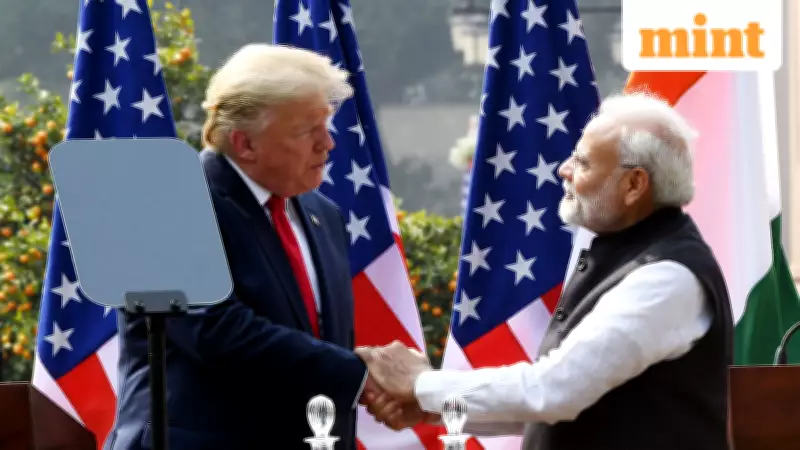
Economic Survey 2026 Addresses India-US Trade Tensions and Growth Outlook
The Economic Survey 2026, tabled by Finance Minister Nirmala Sitharaman on Thursday, prominently addresses the ongoing trade tensions between India and the United States. The document provides a detailed analysis of how these tensions have impacted India's economic landscape, while also projecting a resilient growth trajectory supported by domestic reforms.
Surprise at Trump's Tariff Moves and Early Expectations
According to the Survey, India had anticipated being one of the "early winners" in the new tariff regime under the Trump administration. However, this expectation was upended when President Donald Trump announced an additional penal tariff of 25% on Indian goods and services in August last year. This move came on top of a reciprocal tariff of 25% announced in April, bringing the total to 50% on most of India’s merchandise exports to the United States.
The document explicitly states that this development "surprised many", as India was poised to secure an early agreement to lower tariffs. The excerpt from the Economic Survey 2026 reads: "Although the President of the United States announced reciprocal tariffs of 25% on India in April, India was expected to strike an early agreement with the US administration and lower them."

Growth Acceleration Despite Tariff Headwinds
Despite the unexpected tariff hikes, which led to downward revisions in growth forecasts, the Economic Survey 2026 asserts that domestic economic growth accelerated. This resilience is attributed to a series of structural reforms and policy measures implemented by the government. The Survey notes that the ongoing fiscal year was "unusually challenging" due to heightened global trade uncertainty and high penal tariffs, which created stress for manufacturers and exporters.
In response, New Delhi leveraged the crisis as an opportunity to push through key reforms, including:
- GST rationalisation
- Faster progress on deregulation
- Simplification of compliance requirements across sectors
These measures helped bolster business confidence and mitigate the adverse effects of external trade pressures.
Ongoing Trade Negotiations and Future Prospects
The Economic Survey 2026 highlights that trade talks between India and the United States are still underway, with negotiations expected to be concluded this year. This development is seen as crucial for reducing external uncertainties, as the completion of trade talks could help alleviate tariff-induced disruptions and volatility in capital flows.
While slower economic growth in key trading partners and tariff-related challenges may intermittently weigh on exports and investor sentiment, the Survey remains optimistic about India's ability to navigate these headwinds. It emphasizes that present global conditions translate into external uncertainties rather than immediate macroeconomic stress for India.
Broader Trade Strategy and Economic Projections
In a related development, India recently sealed a long-delayed Free Trade Agreement (FTA) with the European Union (EU), which is expected to slash tariffs on most goods and boost two-way trade. This agreement is part of a broader strategy to diversify trade partnerships and reduce reliance on the United States.
Looking ahead, the Economic Survey 2026 projects India's economy to grow between 6.8% and 7.2% in the fiscal year starting in April. This forecast represents a slowdown from the current fiscal year's projection of 7.4%, which itself exceeded last year's forecast range of 6.3%-6.8%. The document underscores the importance of continued reforms and successful trade negotiations in sustaining growth amidst global trade tensions.