

Indian Two-Wheeler Makers Turn to Local Assembly to Blunt Mexico Tariff Impact
India's leading two-wheeler manufacturers are strategically pivoting towards deeper localization and flexible manufacturing to shield themselves from Mexico's recent tariff hike, even as exports to this key market have slowed significantly this year. Senior executives from Bajaj Auto Ltd, TVS Motor Company Ltd, and Hero MotoCorp Ltd have assured investors that their operations will not face material disruption, thanks to established local assembly arrangements and the ability to shift production across geographies as needed.
Tariff Backdrop and Export Trends
In December, Mexico imposed higher tariffs on imports from countries without a free trade agreement, including India. The duty on imported two-wheelers has increased to approximately 35%, up from the previous range of 15–20%, with these new levies taking effect from January 1. This move comes after Mexico emerged as India's largest two-wheeler export destination by value in FY25, accounting for $390 million—a year-on-year growth of 39% and representing 12% of India's total $3.2 billion two-wheeler exports.
However, the trend has reversed in the first half of the current financial year, with exports to Mexico falling by 30% to $147 million. This decline occurred even before the tariffs were implemented, indicating a broader slowdown in demand. Industry experts note that such tariff increases typically accelerate localization plans in markets where volumes justify local assembly, making this a critical juncture for Indian exporters.

Local Assembly as a Strategic Lever
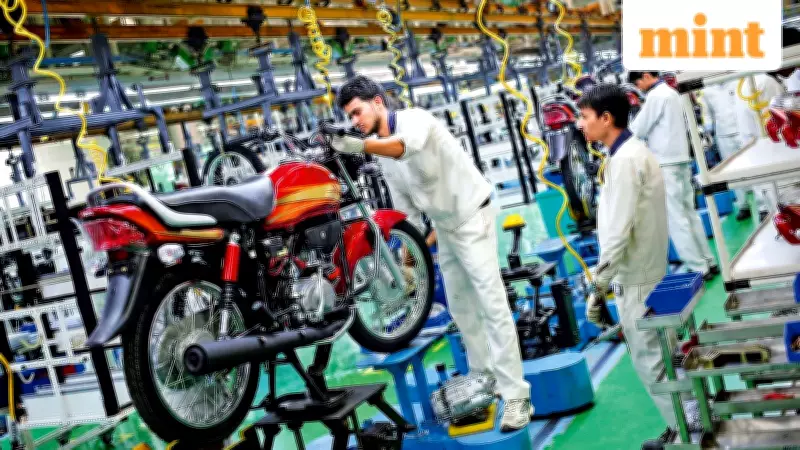
To mitigate exposure to higher tariffs, companies are increasingly exporting completely knocked down (CKD) kits, which are then assembled locally in Mexico. This approach allows for significantly lower duties—around 5% in Bajaj Auto's case—compared to the tariffs on fully built imports. This local-assembly strategy is not limited to two-wheelers; it could also gain traction among carmakers facing similar tariff prospects in key export markets like Mexico and South Africa. While Mexico has already imposed duties of up to 50% in some cases, South Africa is evaluating similar rates as part of its auto policy review.
Company-Specific Responses and Diversification
Hero MotoCorp has emphasized its diversified manufacturing footprint and localization strategy to offset tariff impacts. Harshavardhana Chitale, chief executive at Hero MotoCorp, stated during a post-results earnings call on February 6 that the company has a localization plan in place in Mexico through partnerships, such as with Grupo Salinas, which handles distribution and operates Italika, a subsidiary with assembly facilities. Hero also benefits from a manufacturing unit in Colombia, which has a free trade agreement with Mexico.
TVS Motor Company is exploring localization as it expands its footprint in North America. KN Radhakrishnan, director and chief executive at TVS Motor, noted during an earnings call on January 28 that the impact is currently minimal due to low volumes, but the company is working to increase local content over the coming months.
Bajaj Auto, India's largest two-wheeler exporter, highlighted that its investments in local assembly in Mexico insulate it from the tariff changes. Rakesh Sharma, executive director at Bajaj Auto, explained during a media call on January 30 that Mexico is among its top three markets, and local manufacturing with partners means these levies do not apply to them.
Beyond Mexico: Geographic Diversification
While focusing on localization, companies are also banking on geographic diversification to smooth volatility in individual markets. Rakesh Sharma of Bajaj Auto pointed out that operating in emerging markets like Argentina, Nigeria, and the Philippines involves navigating disruptions such as bans or devaluations, making such challenges a routine part of international business. Exports remain a key growth driver for the sector, with SIAM data for April–September showing significant growth: Bajaj Auto reported a 17% increase in exports to 891,858 units, TVS Motor saw a 34% surge to 680,888 units, and Hero MotoCorp posted a 54% jump to 176,000 units.

In summary, Indian two-wheeler makers are proactively adapting to Mexico's tariff hike through local assembly and flexible strategies, ensuring resilience in a volatile global trade environment while continuing to drive export growth through diversification.





