

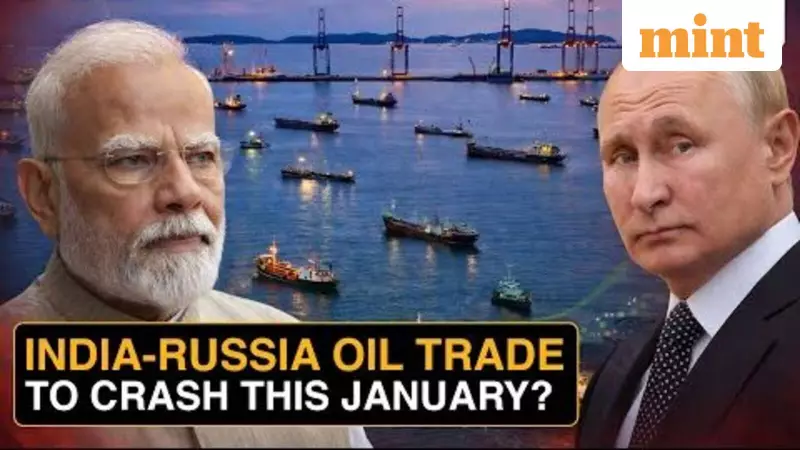
Why Indian Ports See Russian Oil Tankers Drifting With Nowhere To Go
India's imports of Russian crude oil are slipping once more. This trend marks a significant shift after nearly two years of heavy reliance on discounted Russian barrels. The change is now visible not just in financial reports but also on ocean routes.
Multiple oil tankers carrying Russian crude are currently drifting at sea. These vessels have nowhere to go. Their barrels remain unsold, and their final destinations are uncertain. This situation raises important questions about India's energy strategy.
The Discount Engine Slows Down
For almost two years, Russian oil provided a giant discount engine for Indian refineries. These refineries processed the crude and exported refined products at competitive prices. The arrangement benefited both nations significantly.

Now, that engine is slowing down. Several factors contribute to this decline. Changing global oil prices play a key role. Shifts in payment mechanisms also create complications. Additionally, alternative suppliers are becoming more attractive to Indian buyers.
Visible Consequences At Sea
The fallout extends beyond balance sheets. Maritime tracking data shows tankers loaded with Russian crude idling near Indian coasts. These ships cannot discharge their cargo because buyers are hesitant.
This creates a logistical bottleneck. Ports face congestion issues. Shipping companies incur additional costs from extended voyages. The uncertainty affects entire supply chains connected to these shipments.
Key Reasons Behind The Shift
Several specific reasons explain why Indian imports of Russian crude are decreasing:
- Price Adjustments: The discount on Russian oil has narrowed recently. Other suppliers now offer more competitive rates.
- Payment Challenges: Ongoing issues with currency settlements make transactions more difficult.
- Quality Considerations: Some Russian crude grades require specific refining capabilities that not all Indian plants possess.
- Diversification Efforts: India is actively seeking to diversify its oil sources to enhance energy security.
These factors combine to reduce the appeal of Russian crude for Indian refiners. The change happens gradually but shows clear effects in current trade patterns.
Looking Ahead For Indian Energy
This development signals a potential rebalancing of India's oil import strategy. The country may increase purchases from traditional Middle Eastern suppliers. African and American crude could also see higher demand.
The drifting tankers represent a temporary situation. Market forces will eventually resolve the imbalance. However, the episode highlights how quickly energy trade dynamics can change.
Indian refiners continue to monitor global oil markets closely. They seek the most advantageous deals while maintaining reliable supplies. The current pile-up of Russian crude at sea serves as a reminder of the complex calculations involved in energy imports.






