Indian Railways remains the backbone of affordable travel in India, connecting millions daily. With the digital shift accelerating, understanding your ticket's status has become crucial for a smooth journey. The rise of online booking has simplified processes, but the various waitlist codes on a Passenger Name Record (PNR) can still puzzle travelers.
The Digital Surge in Railway Bookings
Gone are the days of long queues at station counters for most passengers. Indian Railways' online arm, IRCTC, has witnessed a massive surge in digital adoption. In a written reply in the Lok Sabha on December 3, 2025, Railway Minister Ashwini Vaishnaw revealed a significant milestone: e-ticketing now accounts for over 87% of all reserved tickets booked on the network. This shift underscores a national preference for the convenience of booking from anywhere, anytime.
The ticket booking ecosystem offers two primary modes: online via a valid IRCTC user ID and offline through Passenger Reservation System (PRS) counters at stations. However, the streamlined online interface and 24/7 availability have made IRCTC the preferred choice for the majority. This digital transformation also extends to checking the fate of your booking, especially if it's not immediately confirmed.

Decoding the PNR: Your Ticket's Waitlist Language
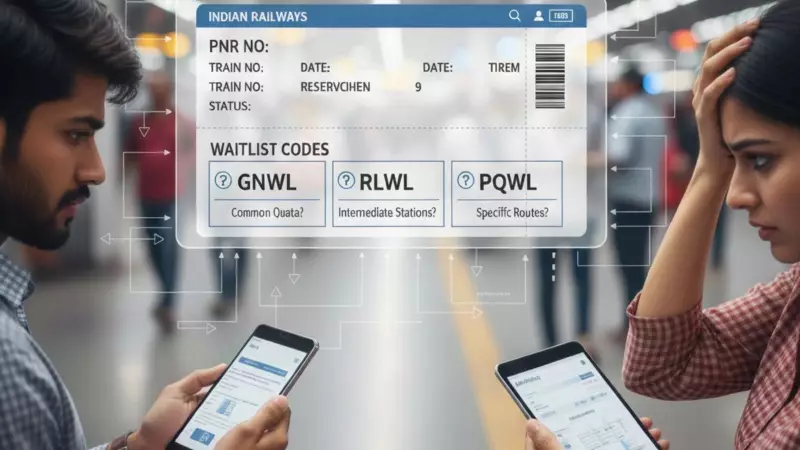
When a train ticket is not confirmed (CNF) at the time of booking, it falls into a waiting list, categorized under specific quotas. These cryptic codes—GNWL, RLWL, PQWL—determine your ticket's chances of confirmation. Here’s a breakdown of what they mean for your travel plans.
GNWL (General Waitlist): This is the most common and favorable waitlist. It is for passengers boarding from the train's originating station or major intermediate stations. GNWL tickets have the highest probability of confirmation as they get the first priority from the general quota of seats.
RLWL (Remote Location Waitlist): This quota is for specific intermediate stations that are not the train's starting point. The number of seats under this quota is limited. An RLWL ticket's confirmation depends on cancellations from passengers who booked from that particular remote station, making its chances typically lower than GNWL.
PQWL (Pooled Quota Waitlist): Often used for shorter journeys or between clusters of stations, this quota pools seats from several stations. A PQWL ticket is considered only after the GNWL is cleared, which usually results in lower confirmation odds.
Other Important PNR Status Codes
Travelers might also encounter a few other status indicators on their PNR. RAC (Reservation Against Cancellation) means you are guaranteed a seat, but it may be a side-berth seat shared with another passenger; you can board the train. REGRET/WL indicates that no more bookings are permitted as the waitlist has crossed a critical limit. For last-minute planners, TQWL (Tatkal Quota Waitlist) is specific to the Tatkal booking scheme.
How to Check Your PNR Status Online
Checking your PNR status is a straightforward online process that takes seconds. Follow these simple steps to get the latest update on your ticket:
- Visit the official Indian Railways PNR enquiry website.
- Locate and enter the 10-digit PNR number printed on your ticket.
- Click on the 'Submit' or 'Check Status' button.
The system will instantly display your ticket's current status—whether it's confirmed, still on a waitlist (showing your position), RAC, or cancelled. It is advisable to check the status close to the chart preparation time for the most accurate information before heading to the station.
As Indian Railways continues to modernize and digitize, empowering passengers with knowledge of these codes ensures they are better prepared. Whether it's a regular commute or a special festival train, knowing your PNR status helps in planning a hassle-free journey on the world's fourth-largest rail network.