

India's Strategic Shift: Refiners to Scale Back Russian Crude Imports Post-US Trade Agreement
In a significant development for global energy markets, Indian refiners are poised to begin reducing their imports of Russian crude oil once existing purchase orders are completed. This strategic pivot aligns with the terms of a joint interim trade agreement recently announced between India and the United States, as reported by PTI citing informed sources.
US Tariff Reductions and India's Commitment
The backdrop to this shift involves substantial tariff adjustments by the United States. US President Donald Trump announced a reduction in reciprocal tariffs on Indian imports from 25% to 18%, while also eliminating an additional 25% punitive tariff that had been imposed specifically due to India's purchases of Russian oil. This decision was predicated on India's firm commitment to cease acquiring Russian barrels.
Since August of last year, the United States had imposed total tariffs of 50% on Indian imports, creating considerable economic pressure. The recent agreement marks a diplomatic and economic recalibration between the two nations.

Refiners' Response and Government Stance
Refiners, who process crude oil into commercial fuels like petrol and diesel, have reportedly received informal advisories to start scaling back their Russian oil purchases. However, no formal directive has been issued by the government to date. Most refiners are expected to honor existing commitments, which are typically placed 6 to 8 weeks in advance, but will refrain from placing new orders for Russian crude.
Official responses have been measured. The Oil Ministry has declined to comment on the matter, while the Commerce Ministry and the Ministry of External Affairs have not directly addressed the commitments made by India regarding Russian oil imports. Notably, Union Commerce Minister Piyush Goyal stated on February 7 that the Ministry of External Affairs would provide clarity on India's acquisition of Russian crude.
The White House in the United States has asserted that India's commitments explicitly include a pledge "to stop directly or indirectly importing Russian Federation oil."
Which Refiners Are Affected?
The impact varies across India's refining landscape:
- Hindustan Petroleum Corporation (HPCL), HPCL-Mittal Energy (HMEL), and Mangalore Refinery and Petrochemicals (MRPL) had already ceased buying Russian oil following US sanctions on exporters last year.
- Bharat Petroleum Corporation (BPCL) and Indian Oil Corporation (IOC) are now expected to scale back their imports in line with the new agreement.
- Reliance Industries (RIL) is anticipated to halt Russian oil purchases after the delivery of its current order of 150,000 barrels within the next few weeks. RIL has been a major purchaser from Russian giants Lukoil and Rosneft.
The Nayara Energy Exception
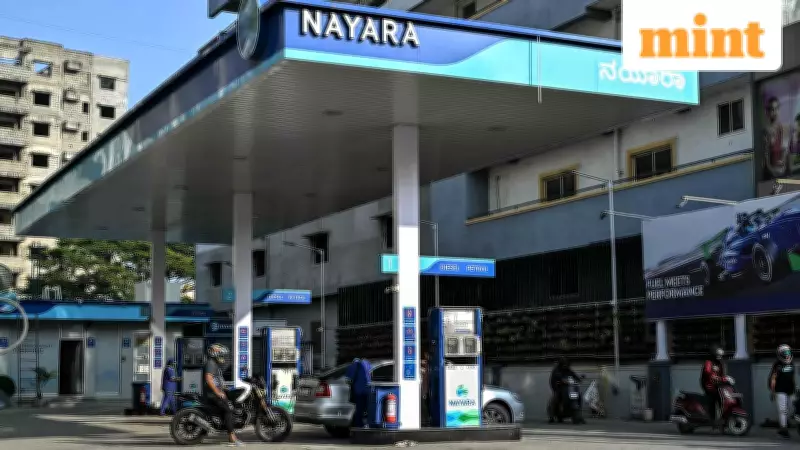
In a unique twist, Nayara Energy may find itself compelled to continue importing Russian oil despite the broader policy shift. This situation arises because Nayara Energy is jointly owned by Rosneft, which holds a 49.13% stake, and has been sanctioned by the European Union and the United Kingdom.
These sanctions have effectively isolated Nayara from other major global suppliers, leaving it with limited alternatives and potentially dependent on Russian oil from non-sanctioned entities for the foreseeable future. Sources indicate that this exceptional circumstance was explained to US trade officials during negotiations in December, suggesting that Nayara might require an exemption or a special dispensation from the 'no-Russian-oil' policy.
Potential Advantages from Venezuelan Oil Imports
As Indian refiners look beyond Russian crude, alternative sources are being evaluated. Prashant Vasisht of ICRA highlighted Venezuelan crudes as a potential area of interest for Indian refiners. He noted that this oil is heavy and sour, making it cheaper, and that many Indian refineries are equipped to process such types of crude.

Echoing this sentiment, NSE CEO and MD Ashish Chauhan remarked earlier this month that Venezuelan oil is among the heaviest or "un-processable crude" globally, with most older and smaller refineries worldwide unable to handle it. "Indian refineries have been designed to process any crude due to our dependence on imported crude—almost 85% of our needs come from imports. Venezuelan crude will come with discounts because it cannot be processed by all, and India's refining technology and role come into play. So, India has some specific advantages," Chauhan explained.
Key Takeaways
- India is strategically adjusting its oil import policy in response to a new trade agreement with the United States.
- Existing Russian oil orders will be honored, but no new purchases are anticipated moving forward.
- Refiners like Nayara Energy may face operational challenges due to international sanctions, potentially necessitating policy exemptions.
- Indian refiners could explore Venezuelan crude as a viable and cost-effective alternative, leveraging their advanced processing capabilities.





