

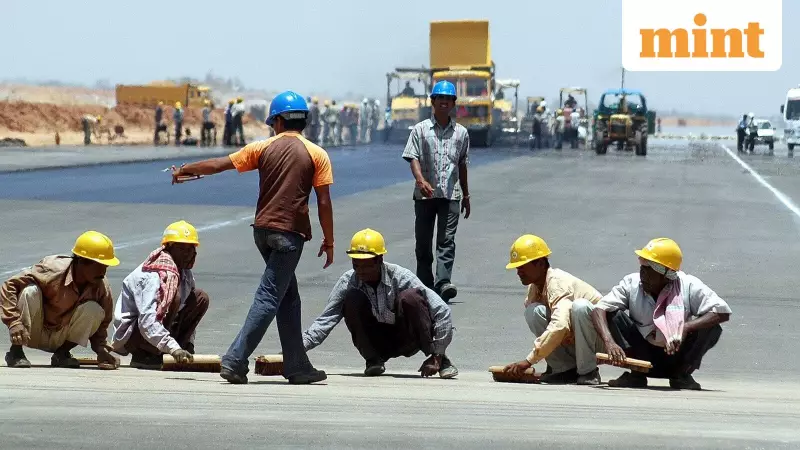
The sight of thousands of Indian workers queuing at a Moscow employment centre last week is more than just a news story; it's a powerful symbol of a profound shift in economic relations between New Delhi and Moscow. The arrival of nearly 10,000 job seekers heralds the practical implementation of a landmark pact signed during President Vladimir Putin's visit to India in December 2025.
The Foundation: A Pact for Systematic Migration
Among the 16 agreements inked during that summit, the Labour Mobility Agreement stands out for its long-term significance. This pact creates a legal framework for the organised recruitment of skilled Indian professionals in sectors like IT, construction, and healthcare. Its stated goal is to ensure safe migration, recognise skills, and smooth the process for filling jobs in high-demand Russian industries, thereby boosting bilateral ties and Indian employment.
In reality, this agreement offers an economic lifeline to Russia, which is grappling with a catastrophic labour shortage. This crisis stems from an aging population, low birth rates, and the severe impact of the war in Ukraine. The conflict has triggered mass mobilisation, a brain drain of skilled workers, and a reduction in traditional labour migration, creating vast gaps in construction, manufacturing, and technology sectors, and pushing wages higher.

The Scale: From a Trickle to a Potential Flood
This formal accord is accelerating a trend already in motion. Media in Central Asia, closely linked to Russia, have taken note. News.az, a portal from Baku, Azerbaijan, reported that preliminary figures for the first nine months of 2025 show over 27,000 work-related entries by Indians. It projected that total arrivals could surpass 35,000 by year-end if the trend holds.
The report further stated, "The number of Indian nationals arriving in Russia for employment has risen sharply since 2023." That year, about 10,000 entered for work—a fourfold increase from 2022. The number climbed to nearly 26,000 in 2024. Industry estimates suggest the total number of Indian workers in Russia may already exceed 60,000.
Recruiters are sourcing Indian migrants for roles in construction, manufacturing, agriculture, logistics, and services. While many take on physically demanding jobs, there is also significant interest in Indian technicians, machine operators, and industrial workers, valued for their reliability. Although language and certification remain hurdles, recruiters are confident they can be overcome.
The Dual Appeal: Wages for Workers, Relief for Russia
For Indian workers, Russia presents a compelling alternative to traditional destinations like the Gulf. It offers wages that often beat domestic pay for similar work, along with regulated hours and competitive incentives. For Russia, this inflow is a pragmatic solution to acute labour shortages at a time when other migration sources have become unreliable.
Officials link this initiative to the broader bilateral target of $100 billion in trade by 2030, arguing that integrating Indian talent will fuel Russia's economic growth.
The Shadow of Conflict: Recruitment into the Army?
However, this new corridor exists under the dark shadow of Russia's war in Ukraine. A critical concern is whether Indian workers might be coerced into military service. Last week, Minister of State for External Affairs Kirti Vardhan Singh informed the Rajya Sabha that 202 Indian nationals are believed to have been recruited into the Russian armed forces.
He detailed that concerted government efforts secured the early discharge of 119, while 26 are reported dead and 7 missing. Efforts continue for 50 others, with the government engaged at various levels with Moscow to ensure their safety and discharge.
This issue gained tragic prominence this week when British newspaper The Independent reported that two Indian men, Ajay Godara (22) from Rajasthan and Rakesh Kumar Maurya (30) from Uttarakhand, who had travelled on student visas, were killed after allegedly being forcibly recruited to fight. Their families claim they were duped into non-combat roles only to be sent to the front lines.
Russia's war has seen thousands of foreigners from Nepal, Pakistan, Sri Lanka, and elsewhere recruited, often under dubious circumstances.

Expert Analysis: Economic Need Overrides Military Conscription
Despite these alarming cases, some experts believe fears of widespread conscription of Indian labour are overblown. Amarjiva Lochan, a former Delhi University dean and migration analyst, argues that Russia is keener on sourcing from places like Myanmar, which already has millions working abroad.
"The Indians are not trained, and Russia is not going to spend money on them," Lochan explains, suggesting Russia would rely on better-trained fighters from other regions. He highlights that Russia is experiencing its lowest unemployment in 50 years, at 2.7%, indicating a genuine economic compulsion to fill civilian jobs, not a military one.
One thing is certain: if the current trend continues, Russia could become a major new destination for Indian migrants, opening a fresh chapter in a centuries-old tradition of Indian workforce mobility. The success of this ambitious cooperation will depend on ensuring the safety and rights of workers, far from the battlefields of Ukraine.





