

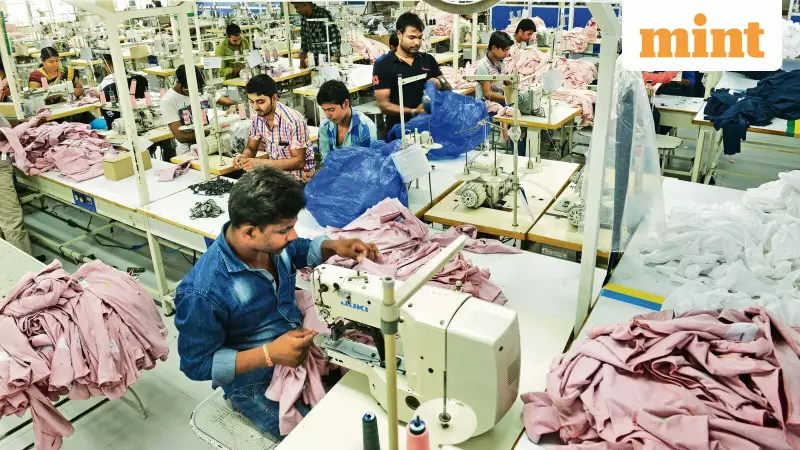
In a significant move to bolster the competitiveness of its vast small business sector, the Indian government is poised to announce a major financial initiative. According to sources familiar with the matter, a ₹2,000-crore technology upgradation scheme for Micro, Small, and Medium Enterprises (MSMEs) is likely to be unveiled in the Union Budget for the 2026-27 financial year.
Scheme Details and Target Beneficiaries
The proposed scheme, currently under discussion within the Union Ministry of Micro, Small and Medium Enterprises, is designed to accelerate the adoption of modern technology. It will offer a 20% capital subsidy to MSMEs with an annual turnover of less than ₹50 crore for investments in specific areas. These include the purchase of energy-efficient machinery, the implementation of smart manufacturing processes, and automation upgrades.
This financial support is critical for a sector defined by its scale. In India, a micro-enterprise is classified as having a turnover of up to ₹5 crore, a small enterprise up to ₹50 crore, and a medium enterprise up to ₹250 crore. The scheme aims to directly assist a substantial portion of this ecosystem.

A Strategic Response to Global Trade Shifts
The timing of this initiative is not coincidental but a strategic response to evolving global trade regulations. Several major economies are introducing carbon taxes on imports from countries with less stringent climate policies. The European Union's Carbon Border Adjustment Mechanism (CBAM) is already in effect from January 2025.
Furthermore, the United Kingdom and Norway plan to launch similar CBAM-like mechanisms in 2027. Other nations, including Canada, Australia, and Taiwan, are also in various stages of developing their own carbon border tax regimes. These measures threaten to put Indian MSME manufacturers at a severe disadvantage in international markets.
Compounding this challenge are rising tariff barriers. The United States has already imposed steep tariffs, including a 50% duty on certain Indian exports, while Mexico has announced similar 50% tariffs on select Indian goods effective January 2026. The technology upgrade scheme is seen as a vital tool to enhance efficiency and reduce the carbon footprint of Indian products, thereby mitigating the impact of these external pressures.
Integration with Existing Green Initiatives and Expert Perspectives
Sources indicate that the new scheme may be integrated with the existing MSE-GIFT (Green Investment and Financing for Transformation) scheme. Launched in December 2023 under the World Bank-backed RAMP project, MSE-GIFT provides interest subvention and risk-sharing facilities for loans aimed at cleaner operations and has a corpus of ₹478 crore.
Industry experts have welcomed the focus but highlight practical challenges. Vinod Kumar, President of the India SME Forum, noted that many small businesses operate outdated machinery, hurting their productivity. "If these small businesses need to compete globally, their equipment and machinery need to be modern," he said, emphasizing the need for government incentives.
However, Professor Veeramani C. from the Centre for Development Studies pointed out a key consideration. While the 20% subsidy is helpful, businesses must fund the remaining 80% of the investment. The profitability of this investment is closely linked to economies of scale, which smaller units may lack.
Environmental analysts see the move as crucial. Parth Kumar from the Centre for Science and Environment (CSE) explained that direct and indirect industrial emissions account for nearly half of India's energy-related CO2 emissions. For small-scale industries, installing and maintaining expensive emission control equipment is often unaffordable. "Technology-based upgradation... is a far better approach," Kumar stated.
The push for modernization is also tied to deeper integration into global value chains (GVCs). A Niti Aayog report notes that India's GVC participation lags at 40.3%, behind regional competitors like Malaysia (60%) and South Korea (56.2%). Upgrading supply chain technology is seen as essential for improving quality, innovation, and ultimately, global market share.

This proposed ₹2,000-crore intervention targets the heart of the Indian economy. The MSME sector, comprising over 73 million businesses, contributes approximately 30% to the country's $4 trillion GDP and accounts for a staggering 45% of its exports, valued at over ₹14 trillion. Enhancing its technological base is not just an industrial policy but a cornerstone for sustaining economic growth and export resilience in a carbon-conscious world.





