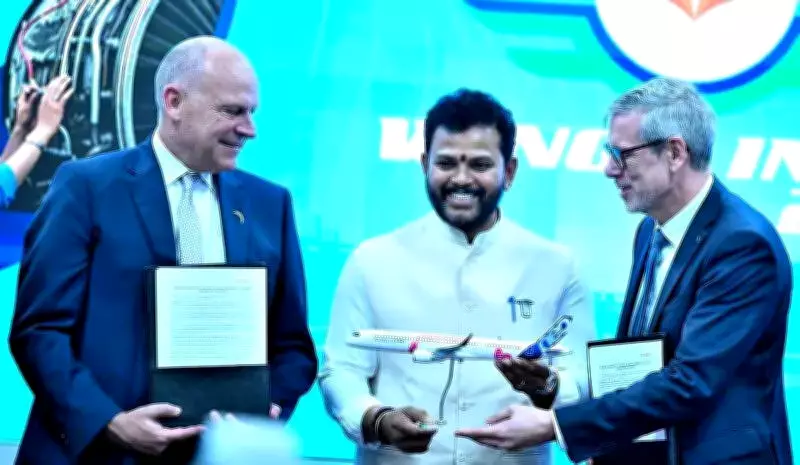
Hyderabad witnessed a significant declaration about India's aviation future as Union Civil Aviation Minister K Ram Mohan Naidu addressed the prestigious Wings India 2026 event. Speaking on the second day of the four-day aviation extravaganza at Begumpet Airport, Naidu articulated a bold vision: India is transitioning from being one of the world's fastest-growing aviation markets to establishing a comprehensive, self-reliant aviation ecosystem.
Infrastructure Expansion and Regional Connectivity
Minister Naidu presented compelling data showcasing India's remarkable infrastructure growth. He revealed that the country has doubled its number of airports over the past eleven years, expanding from 74 to 164 operational airports. Looking ahead, India aims to reach an impressive 350 airports within the next two decades. In just the last eighteen months, twelve new airports and terminal buildings have been inaugurated, demonstrating accelerated development.
The UDAN regional connectivity scheme has been a cornerstone of this expansion. Since its inception in 2016, ninety-two airports have been developed and made operational under this initiative, including the revival of fifty-five previously unutilized airstrips. This program has benefited over 1.5 crore passengers through more than 3.17 lakh flights. A modified version of UDAN now targets connecting 120 new destinations and serving 4 crore passengers over the coming decade.

Policy Environment and Global Leadership
Naidu emphasized India's stable and open policy environment, which has facilitated growing international recognition. He highlighted significant milestones, including the Delhi Declaration adopted by twenty-nine nations at the Asia Pacific Ministerial Conference on Civil Aviation in 2024. Furthermore, India hosted the IATA General Meeting in 2025 after a forty-two-year gap, underscoring its rising prominence in global aviation forums.
Capacity Building and Workforce Development
The minister outlined substantial growth in aviation capacity and manpower. Three new airlines are poised to become operational soon, while carriers are placing orders for nearly 100 aircraft annually over the next fifteen years. Citing a CAPA study, Naidu projected that aircraft operating in India could exceed 5,000 by 2050. This expansion will create demand for up to 30,000 pilots in the next fifteen years.
To meet this demand, India issued a record 1,628 commercial pilot licenses in 2025 and approved five new flying training organizations. This brings the total to forty organizations with up to sixty bases, significantly enhancing pilot training infrastructure.
Innovation and New Mobility Solutions
Naidu detailed advancements in new mobility, noting that 100% Foreign Direct Investment is permitted in autonomous systems and electronic aviation. The Directorate General of Civil Aviation has issued guidelines for vertiports and eVTOL certification. He cited successful deployments in Meghalaya and plans for eVTOL air ambulances incubated at IIT Madras as examples of India's innovative approach.
Policy Reforms and Domestic Capability
Several policy steps have been implemented to reduce costs and build domestic capability. The Protection of Interest in Aircraft Objects Act, 2025, has reduced leasing costs by 8–10%. Additionally, GIFT City is being developed as a major leasing hub. Upcoming Maintenance, Repair, and Overhaul projects include Air India and IndiGo facilities in Bengaluru, Air Works in Bhubaneswar, Lufthansa's widebody engine MRO in Bengaluru, and Safran's engine MRO at Shamshabad, Hyderabad.
Sustainability and Digital Transformation
On the sustainability front, a draft sustainable aviation fuel policy targets 1% blending by 2027, 2% by 2028, and 5% by 2030. India is positioning itself for an annual production capacity of 8–10 crore litres. Naidu also highlighted the integration of digital twins, AI-led airport operations, and the DigiYatra initiative to enhance passenger experience.
Gender Diversity and Women's Participation
The minister stressed the importance of increasing women's participation across aviation roles. He noted that women constitute about 15% of India's pilots, significantly higher than the global average of 5%, and emphasized the need to further improve gender diversity in the sector.

Telangana's Role in Aviation Transformation
In his address, Deputy Chief Minister Bhatti Vikramarka emphasized that India's aviation sector is evolving from "Make in India" to "Make for the World," with Telangana playing a crucial role in this transformation. He highlighted Hyderabad's emergence as a hub for world-class aero-engine MRO facilities, major aircraft structures manufacturing, advanced drone and UAV ecosystems, global innovation centers, and a dense network of MSMEs integrated into global supply chains.
"Many aircraft flying across continents today carry components made by young engineers sitting in Hyderabad," Vikramarka proudly stated, underscoring the city's growing contribution to global aviation manufacturing.