

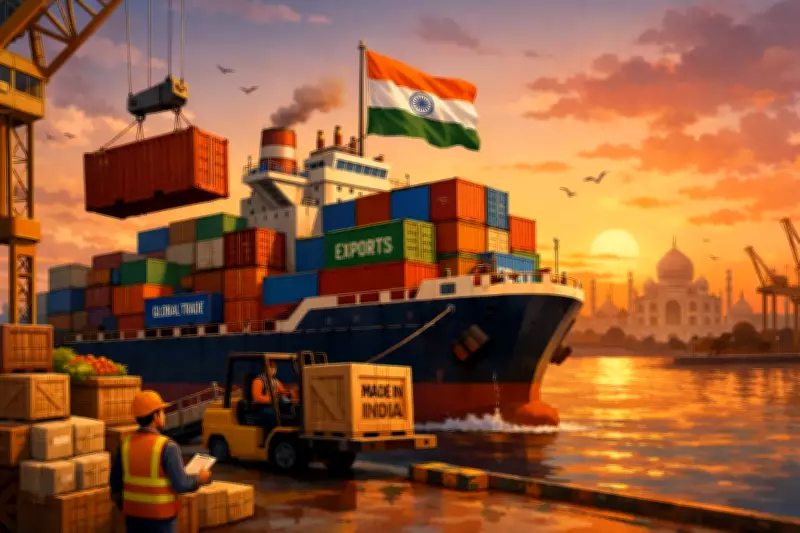
Indian Exporters Project $1 Trillion Export Milestone by 2026-27
Indian exporters are expressing strong optimism that the nation's goods and services outflows could achieve a monumental $1 trillion target in the fiscal year 2026-27. This ambitious projection is largely fueled by the recently finalized trade agreements with the United States and the European Union, which are set to significantly reduce tariff barriers and enhance market access.
Tariff Reductions Spark Immediate Order Inflows
The United States has already taken a decisive step by lowering tariffs on Indian products from a steep 50% to a more manageable 18%. This substantial reduction is opening new avenues for increased orders across multiple sectors. S C Ralhan, president of the Federation of Indian Export Organisations (FIEO), confirmed to ET that orders have begun arriving for key industries including chemicals, shoes, and marine products. He emphasized, "We expect more orders to come in the next 10-15 days. India's exports in FY27 could rise to $1,000 billion."
Key Drivers: US-India and EU Trade Pacts
The anticipated surge is closely tied to two major trade agreements. The US-India trade pact is expected to be implemented imminently, while the EU deal is likely to take effect by the end of this year. These agreements are viewed as pivotal catalysts for export growth. Under the initial phase of the bilateral agreement with the US, reciprocal tariffs on Indian goods will decrease from 25% to 18%. Additionally, Washington has revoked the 25% tariffs previously imposed due to India's purchase of Russian crude oil, which the US had claimed was supporting Moscow's military efforts in Ukraine.

Sector-Specific Growth and Capacity Challenges
Ramesh Juneja, chairman of the Council for Leather Exports, highlighted India's current limited presence in the US market, noting, "We have only 3% share in the US while China has 35% share, but China faces a higher tariff of 34%. We expect orders to come in but we don't have that much capacity." Despite this, the council forecasts that India's leather and footwear exports, currently valued at Rs 18,000 crore, will increase by 30% in the first year following the agreements, with a further 50% rise subsequently, bolstered by anticipated foreign investment.
During the April-December period, India's exports of goods and services reached $634.26 billion, reflecting a 4.3% year-on-year increase. Manu Gupta, chairman of the Toy Association of India, pointed out that two-thirds of global toy transactions occur in the US. He believes that labour-intensive handmade toys, such as stuffed and wooden items requiring manual finishing, stand to benefit the most from the tariff reductions.
Implementation Clarity and Ongoing Discussions
Despite the promising tariff cuts, exporters have raised concerns regarding the need for clarity on implementation timelines and provisions related to oil purchases. These critical issues are scheduled for discussion in an upcoming meeting with commerce and industry minister Piyush Goyal on Wednesday, as India moves to finalize its trade arrangements with both the US and the EU. This dialogue aims to address uncertainties and ensure a smooth rollout of the agreements, further supporting the export sector's growth trajectory.






