India's Strategic Priorities at the Critical Minerals Ministerial
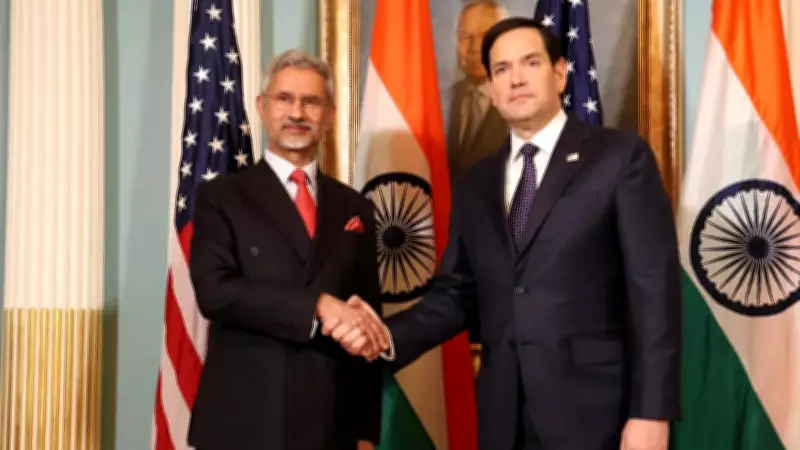
India is poised to participate in the inaugural Critical Minerals Ministerial organized by the US State Department next week, marking a significant step in global efforts to create reliable and diversified supply chains. This gathering of like-minded nations aims to counter Beijing's economic coercion in a sector where India remains heavily import-dependent, despite possessing vast unexplored rare-earth reserves and uneven value-added processing capabilities.
The Urgent Need for International Collaboration
Recent years have seen India actively pursuing both bilateral and plurilateral cooperation agreements. The country has signed memorandums of understanding with resource-rich nations like the Democratic Republic of Congo and Argentina, while also partnering with technologically advanced countries such as Australia and Japan. Notably, India and the United States collaborate through multiple frameworks including the Mineral Security Partnership (MSP), the Quad alliance, and the recently announced Pax Silica initiative.
Bilaterally, the two nations have launched the TRUST Initiative (previously known as iCET) and the Strategic Mineral Recovery Initiative. However, many of these partnerships remain largely framework-oriented, yet to translate into tangible outcomes such as assured mineral flows, meaningful technology transfers, or substantial capacity building in processing and downstream manufacturing.

Four Pillars for Tangible Outcomes
The ministerial presents New Delhi with a crucial opportunity to move beyond statements of intent and press for concrete results anchored in four strategic pillars.
First Pillar: Combating Artificial Price Suppression
China's dominance in rare earths stems from subsidy-linked overcapacity that has systematically driven efficient producers out of the market. Establishing alternative mine-to-magnet supply chains requires partner countries to address this artificial price suppression through coordinated mechanisms. Long-term offtake guarantees and well-designed price-risk sharing arrangements would be essential to create sustainable alternatives to China's current market control.
Second Pillar: Differentiated Approaches to Mineral Security
Critical minerals vary significantly in their applications and supply challenges. Rare earth elements, vanadium, and antimony serve highly specialized applications in relatively small quantities. Their low demand combined with high criticality makes China's dominance particularly effective as short-term leverage. Export controls on these items disproportionately harm other nations more than China itself, making joint stockpiling initiatives among partner countries a necessary defensive strategy.
Conversely, minerals with broader commercial applications and larger quantity requirements—such as magnesium and copper—face lower risks of Chinese export restrictions. Nevertheless, ensuring their steady supply from diversified sources remains crucial to buffer against potential short-term disruptions. The ministerial should prioritize redrawing global supply chains for these high-volume minerals.
Third Pillar: Boosting Domestic Value Addition
While India possesses significant leverage through its large market and the world's largest monazite reserves, it risks being typecast as either a consumer of finished goods or an exporter of unprocessed ore. For instance, India currently exports manganese ore in raw form, though its value could increase three to tenfold through domestic refining into ferromanganese or manganese steel.
India must aggressively pursue joint long-term research collaborations, processing partnerships, and capacity-building initiatives to retain more value within its borders. Breaking China's chokehold will also require investments in substitutes—such as using iron or manganese instead of cobalt in batteries—along with design innovations that reduce dependence on rare earths in magnets. While existing frameworks like MSP and TRUST emphasize research and development along with technology sharing, these aspects require further strengthening and implementation.

The Underappreciated Role of Recycling
Critical minerals differ fundamentally from oil in their potential for recovery and reuse. Recycling represents an often-overlooked facet of mineral security that could bypass China's dominant processing capabilities. The world may be approaching a tipping point after decades of intensive mining have substantially decreased ore grades and quality. In Chile, the world's largest copper producer, mining waste now contains higher-grade copper than many primary production sites.
However, as demonstrated by lithium markets in recent years, artificially low prices from Chinese primary production can discourage recycling investments. Currently, less than three percent of global lithium demand is met through recycling. Procurement policies with guaranteed price floors among partner countries would be essential to incentivize recycling initiatives. India, despite being a late entrant, possesses significant potential to become a global recycling hub and should strategically position itself accordingly.
Fourth Pillar: Enhancing Financial and Technological Capabilities
Despite numerous agreements with resource-rich countries, Indian firms face constraints due to limited financial resources and technological expertise, hindering their global competitiveness. International partnerships can provide access to deeper capital pools and advanced technologies. The Mineral Security Partnership, for example, helps streamline due diligence and identify projects for co-investment.
While at least one Indian project—a lithium refining facility in Brazil—currently benefits from such funding, Indian companies often hesitate to expand into politically unstable regions. India must negotiate for blended-finance mechanisms that offer political backstops and safety nets through joint risk-sharing arrangements, providing necessary confidence for international ventures.
As India prepares for the Critical Minerals Ministerial, these four pillars—combating price manipulation, adopting differentiated approaches, boosting domestic value addition, and enhancing financial capabilities—represent a comprehensive strategy to transform framework agreements into tangible outcomes that strengthen India's position in the global critical minerals landscape.