

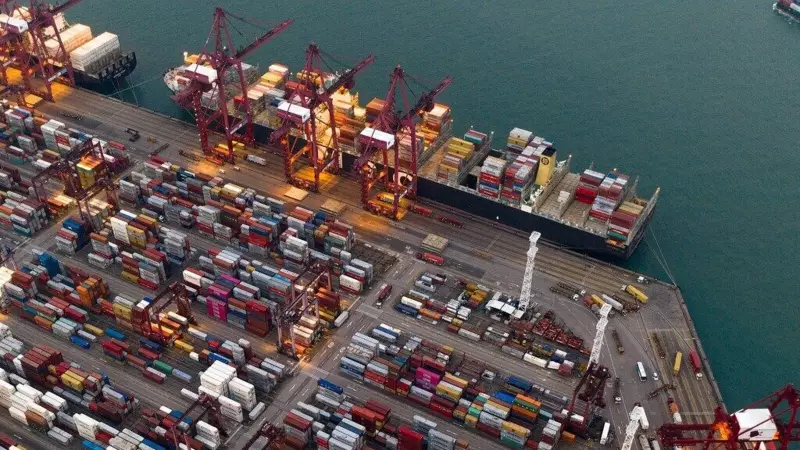
India's export sector is poised for a modest increase in the coming financial year, but the path forward is expected to be significantly more challenging than in recent times. According to data from the economic think tank Global Trade Research Initiative (GTRI), the country's total goods and services exports are likely to rise by approximately 3% to $850 billion in the fiscal year 2025-26 (FY26).
A Slower Growth Trajectory Amid Global Headwinds
This projected growth follows an export performance of $825 billion in FY 2024-25, which comprised $438 billion from merchandise and $387 billion from services. The think tank, cited in a PTI report dated 25 December 2025, warns that the global trade environment for 2026 is set to become tougher. A confluence of factors—including rising protectionism in advanced economies, weakening worldwide demand, and the emergence of new climate-linked trade barriers—is creating headwinds just as India aims to scale its export volumes.
GTRI founder Ajay Srivastava characterized the outlook as one marked less by rapid expansion and more by the challenge of maintaining current positions. He explained that while services exports might marginally cross the $400 billion mark, goods exports are likely to remain broadly flat. This stagnation is attributed to subdued global demand and renewed pressure from US tariffs.

The Looming Challenge of the EU's Carbon Tax
Srivastava emphasized that the external trade environment is deteriorating rapidly. A major and imminent challenge stems from the European Union. The EU's Carbon Border Adjustment Mechanism (CBAM) is scheduled to become fully operational on 1 January 2026. This mechanism will effectively impose a carbon tax on imports into the bloc.
The impact is already being felt. Srivastava noted that even before financial payments under CBAM begin, the complex compliance and reporting requirements have led to a 24% decline in India's steel exports to the EU. From 2026, EU importers will factor CBAM costs into the pricing of Indian goods, with the actual financial settlement through certificate surrender occurring in 2027.
Urgent Need for FTA Review and Strategic Response
In light of these challenges, GTRI has urged the government to take proactive measures. A key recommendation is an urgent, sector-by-sector review of India's existing Free Trade Agreements (FTAs). The think tank argues that the focus must shift from viewing FTAs as diplomatic achievements to ensuring they deliver tangible, measurable trade gains. The review should assess whether these agreements are genuinely expanding exports and integrating Indian companies into global value chains, or if they remain underutilized.
The overall message from the data is clear: while India's export engine is expected to keep moving forward, reaching the $850 billion milestone, the growth rate is slowing. Navigating the new realities of global trade—from tariff pressures and demand weakness to green regulations—will require strategic agility and a sharp focus on competitive advantages in both goods and the more resilient services sector.






