

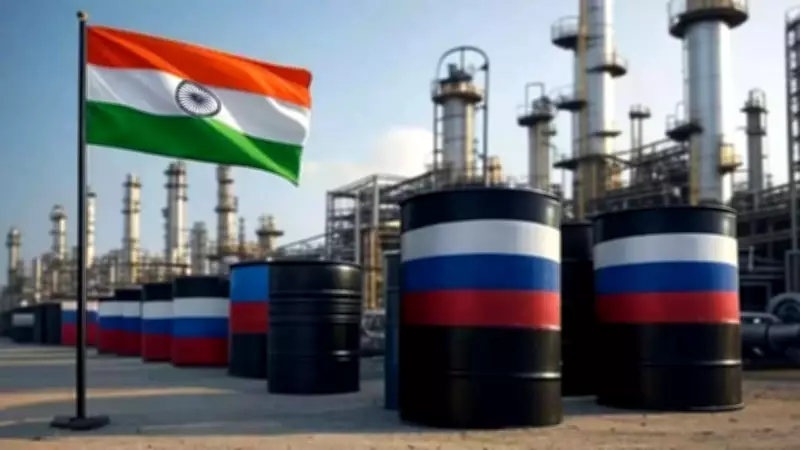
Russia Claims India Signals Renewed Interest in Importing More Crude Oil
Russia asserted on Tuesday that India has indicated a "renewed interest" in importing larger volumes of Russian crude oil. This development comes as global energy supplies face mounting disruptions following the closure of the Strait of Hormuz. The strategic waterway was shut down after US and Israeli strikes on Iran, escalating tensions in the region.
Strait of Hormuz Disruptions Impact Global Oil Flow
The Strait of Hormuz, recognized as the world's most critical oil shipping chokepoint, is currently experiencing significant disruptions. Iranian actions in response to the recent strikes have led to these disturbances, threatening the flow of nearly a fifth of the world's oil supply and a substantial share of liquefied natural gas exports. This narrow passage links the Persian Gulf with global markets, and any prolonged restriction could severely disrupt supplies to major importers such as India, China, and Japan, potentially driving up global crude prices.
Moscow Sees Fresh Demand from India Amid Energy Crisis
Russian Deputy Prime Minister Alexander Novak, who oversees the country's energy sector, confirmed the signals from India during an interview with state-run Rossiya 1 TV in Moscow. "Yes, we are getting signals of renewed interest from India," Novak stated, according to news agency PTI. He also did not rule out the possibility that the European Union might reconsider its decision to curtail imports of Russian hydrocarbons in light of the unfolding energy crisis.

Potential Reduction in Discounts to Asian Buyers
According to Russia's NTV channel, owned by energy giant Gazprom, the escalation of hostilities and Iran's strikes on oil and gas infrastructure in Gulf countries could enable Moscow to reduce the "deep discounts" it has been offering to Asian buyers, including India. In recent months, Russia has been India's largest crude supplier, although the gap with Saudi Arabia narrowed earlier this year. Data shows that Russian supplies to India stood at a little over 1 million barrels per day in February, compared with 1.1 million barrels per day in January and 1.2 million barrels per day in December.
India's Preparedness and Strategic Response
Amid the escalating crisis, India is closely monitoring the situation in the Gulf. Russia has indicated its readiness to support India with energy supplies in case of disruptions arising from Middle East tensions. Iran has targeted oil refineries and production sites across the region in retaliatory strikes and closed the Strait of Hormuz for commercial activities, with warnings from its Islamic Revolutionary Guard Corps about potential attacks on ships.
However, India has sought to reassure markets about its preparedness. Petroleum and Natural Gas Minister Hardeep Singh Puri emphasized on Tuesday that the country has sufficient reserves of crude oil and petroleum products to manage short-term disruptions. "The trilemma of energy availability, affordability and sustainability continues to guide India's approach, focused on meeting the energy requirements of our citizens," Puri told the media.
Adequate Stocks and Diversified Sourcing Strategies
India holds approximately 25 days' worth of crude oil and 25 days' worth of petrol and diesel stocks, totaling roughly eight weeks of inventory. Only about 40 percent of India's crude imports transit through the Strait of Hormuz, while the remaining 60 percent comes from other diversified sources. Indian energy firms continue to import Russian crude under existing contracts, providing an additional buffer against supply shocks.
Nearly 2.5 to 2.7 million barrels per day of India's crude imports transit the Strait of Hormuz, largely sourced from countries like Iraq, Saudi Arabia, the UAE, and Kuwait. With cargo movements from West Asia disrupted, Indian refiners have begun exploring alternative sources to ensure continuity.

Government Measures to Ensure Fuel Security
The Ministry of Petroleum and Natural Gas has established a 24x7 control room to monitor fuel stocks and supply positions nationwide. Public sector oil marketing companies are maintaining adequate inventories to safeguard against potential shortages. Government sources have reiterated that India's priorities remain focused on uninterrupted fuel availability, protection of consumer interests, and the well-being of nearly one crore Indians living and working in the Gulf region.





