

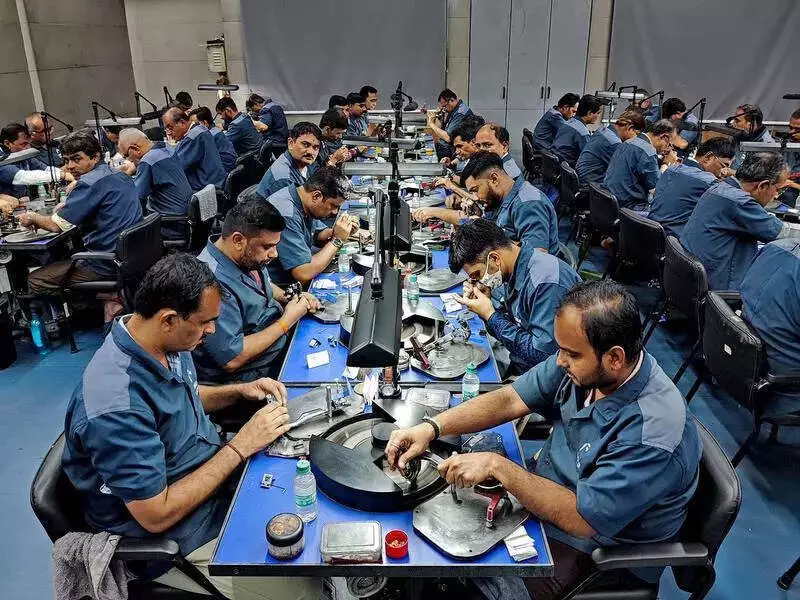
India's crucial diamond polishing industry, centered in Surat, is facing a severe crisis as imports of rough diamonds from Russia have plummeted by more than half over the past five years. This sharp decline comes amid renewed threats of punitive tariff increases by the United States, which could deliver a devastating blow to the already struggling sector.
A Steep and Sustained Decline in Russian Rough Imports
The financial figures reveal a stark picture. The value of rough diamond imports from Russia to India stood at a robust $818 million in the financial year 2021-22. This figure has seen a dramatic collapse, dropping to $422 million in 2024-25—a reduction exceeding 50%. The downward trend is accelerating in the current fiscal year. Data from April to November 2025-26 shows imports have dwindled further to just $231 million.
This collapse is not happening in isolation. The global diamond trade is caught in a perfect storm of geopolitical conflict and shifting market dynamics. The United States and its G7 allies imposed sanctions on Russian-mined diamonds two years ago following the war in Ukraine. These sanctions prohibit Russian rough diamonds, even those processed in a third country like India, from entering some of the world's largest consumer markets.

Double Blow: US Tariffs and the Rise of Lab-Grown Diamonds
The situation has been exacerbated by direct US trade actions targeting India. Exports of polished diamonds from India to the US already face a steep 50% tariff. Given that the gem and jewellery sector is among India's top three export industries to the US, accounting for roughly $10 billion in trade, this tariff has severely impacted profitability.
Now, the industry braces for a potential new 500% tariff announcement, which experts fear could be a fatal blow for many cutting and polishing units. Concurrently, the industry is battling competition from affordable lab-grown diamonds (LGDs), which have captured significant market share and depressed prices for natural stones.
The loss of Russian rough is particularly painful for Surat, which polishes an estimated 90% of the world's diamonds. Russian stones, which constitute about 30% of global supply, are often smaller in size. Smaller diamonds require more manual labour to polish, meaning their processing employed a vast number of skilled workers in Gujarat.
Industry Exodus and a Precarious Future
The consequences on the ground are severe. With the supply of Russian rough drying up, a significant number of diamond polishers and manufacturing units have been forced to shift to polishing lab-grown diamonds to survive. This transition has come at a heavy human cost, with wages for workers falling by as much as 75% in the LGD sector.
Industry leaders warn of a cascading effect. Dinesh Navadiya, Chairman of the Indian Diamond Institute (IDI), stated, "If Russian rough supply continues to fall, prices of similar products from other mining countries will rise. If the conflict continues, it will have multiple effects on the industry here."
Many units had hoped the geopolitical situation would be temporary. A Surat-based diamond polishing unit owner revealed, "It was expected that the Russia-Ukraine conflict would end in a few months. Manufacturing units took up LGD polishing for the time being, but now it seems we will have to reshape plans in the current scenario." The industry, once reliant on a steady flow of Russian stones, is now being forced to make painful, long-term strategic changes to ensure its survival.






