

India's Russian Oil Imports Remain Independent of US Trade Framework, Says Commerce Minister
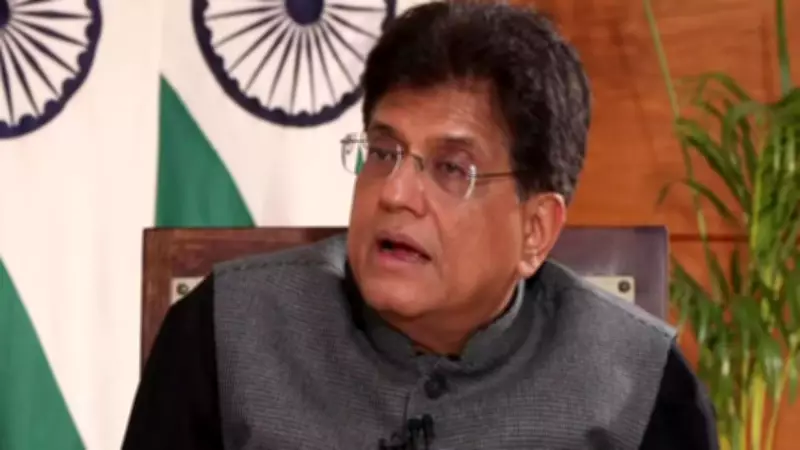
Union Commerce and Industry Minister Piyush Goyal has firmly stated that decisions regarding India's imports of Russian crude oil are made exclusively by domestic buyers and are not influenced by the recently concluded India-US interim trade agreement framework. In an exclusive interview with ANI, Goyal emphasized that while diversification into energy supplies—including liquefied natural gas (LNG) and oil—is strategically vital for India, the trade deal does not dictate sourcing choices.
Strategic Energy Diversification Takes Priority
Minister Goyal addressed growing concerns about whether the bilateral trade framework impacts India's energy procurement decisions. "The buying of crude oil, LNG, or LPG from the US is in India's strategic interest as we diversify sources. But the decisions are taken by the buyers themselves. The trade deal does not decide who will buy what and from where," Goyal asserted. He highlighted that the primary objective of the agreement is to facilitate smoother trade flows and enhance market access advantages for Indian exporters, rather than interfering with energy imports.
Elaborating on the benefits, Goyal explained, "The trade deal ensures that the pathway to trade is smooth and ensures preferential access. Free Trade Agreements (FTAs) are all about preferential access to your competition. So today, when we've got an 18 per cent reciprocal tariff, we have a preference over other developing nations who are usually our competition. And that's why the free trade deal becomes very attractive."

Clarification on Russian Oil Imports and Ministerial Roles
When questioned about whether the trade framework influences India's approach to Russian oil imports, Goyal responded, "I don't deal with that," noting that such matters fall under the jurisdiction of the Ministry of External Affairs. He clarified that while ministries coordinate on broader issues, domain-specific decisions are handled by their respective departments.
"We all work together. But if there's a nuance or a detail about the trade deal, obviously, if you ask, let's say the agriculture minister, or you ask the rural development minister, or you ask the telecom minister, or you ask the foreign minister, he wouldn't know the nuances of the trade deal. Obviously, he will direct it to me, just as I will direct the issues related to geopolitics to the foreign minister," Goyal added, underscoring the specialized nature of ministerial responsibilities.
Details of the India-US Interim Trade Agreement Framework
India and the United States recently announced a framework for an Interim Agreement on reciprocal and mutually beneficial trade, reaffirming their commitment to a broader Bilateral Trade Agreement launched by US President Donald Trump and Prime Minister Narendra Modi on February 13, 2025. Key components of the framework include:
- India has agreed to eliminate or reduce tariffs on all US industrial goods and a wide range of agricultural and food products, such as dried distillers’ grains, red sorghum for animal feed, tree nuts, fresh and processed fruits, soybean oil, wine, and spirits.
- The United States will impose an 18 per cent reciprocal tariff on goods originating in India, covering textiles and apparel, leather and footwear, plastic and rubber products, organic chemicals, home décor items, artisanal goods, and certain machinery.
- The US has indicated that reciprocal tariffs may later be removed on select products, including generic pharmaceuticals, gems and diamonds, and aircraft parts, subject to the successful conclusion of the Interim Agreement.
Additionally, India has outlined plans to purchase USD 500 billion worth of US energy products, aircraft and aircraft parts, precious metals, technology products, and coking coal over the next five years, as per the agreement framework. This move aligns with India's broader strategy to diversify energy sources and strengthen economic ties with global partners.
Minister Goyal's statements reinforce India's autonomous decision-making in energy imports while highlighting the strategic importance of the US trade deal in enhancing export opportunities and fostering economic growth.






