

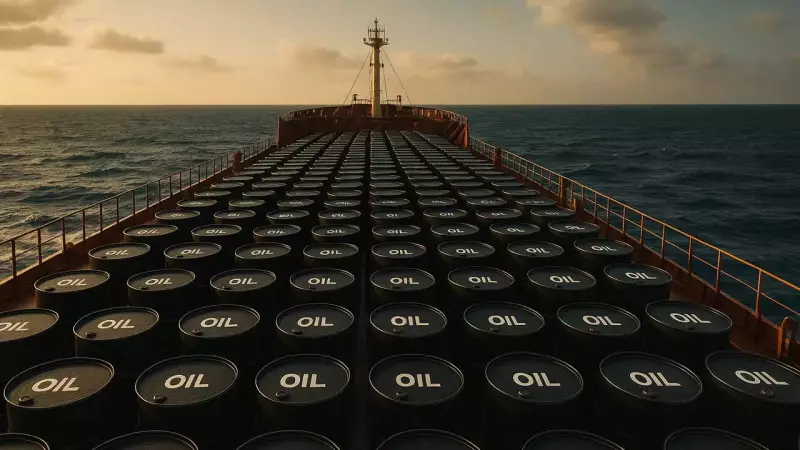
The flow of discounted Russian crude oil to India is projected to hit a significant roadblock, potentially reaching its lowest point in four years by January 2026. This dramatic shift is a direct consequence of escalating pressure from the administration of US President Donald Trump, which has imposed a series of sanctions and tariffs aimed at curtailing this trade.
Sanctions and Tariffs: The Dual Pressure on India
The Trump administration has been actively piling pressure on New Delhi to halt its procurement of crude from Russia, arguing that the revenue indirectly funds the war in Ukraine. A key part of this strategy is a 50% tariff package imposed on Indian goods, with a significant 25% attributed specifically to India's imports of Russian crude oil.
While the tariffs alone did not drastically alter import patterns, the sanctions announced in October targeting Russian oil giants Rosneft and Lukoil have forced a recalculation. Indian refiners, wary of secondary sanctions, have begun actively seeking alternative sources, even though the option to buy oil from non-sanctioned Russian entities remains legally open.

A Projected Plunge and the Search for Alternatives
According to industry sources cited in a Bloomberg report, deliveries of Russian oil to India are expected to plummet to approximately 600,000 barrels per day in January. This would mark the lowest level since early 2022, just as the Russia-Ukraine conflict began. For context, Indian imports had peaked at a staggering 2.1 million barrels per day in June, constituting about 45% of the country's total crude intake.
This impending shortfall has triggered a scramble. Indian refiners have already started shifting to more expensive grades from the Middle East and have increased purchases from the United States. They are also exploring supplies from newer producers like Guyana and Brazil. This sudden pivot has led to higher shipping costs and a scarcity of available vessels.
Geopolitical Chess: Will the Decline Last?
The critical question is whether this drop is a permanent trend or a temporary disruption. Analysts and market observers suggest the latter. Russia has launched its own charm offensive, with President Vladimir Putin recently visiting Delhi to assure "uninterrupted shipments of fuel."
Furthermore, the slow progress on a US-India trade agreement has reduced New Delhi's incentive to fully align with Washington's stance. Experts like Elisabeth Braw of the Atlantic Council note that purchasing decisions are driven by economics, not ideology. Indian buyers prioritize cost and suitability, and Russian crude, selling at a steep discount of $40-$45 per barrel, remains highly attractive.
Analysts predict that new pathways will emerge. "If the deal drags on, then more and more people will find ways or more pathways will be made to enable such non-sanctioned barrels to still be bought legitimately by the Indian purchasers," said June Goh, senior oil market analyst at Sparta Commodities.
This could involve a shift towards non-sanctioned Russian entities, increased use of shadow carriers, and ship-to-ship transfers. Already, new trading firms like Eastimplex Stream FZE and Grewale Hub FZE have appeared in port documentation as suppliers.
Sumit Ritolia, lead analyst at Kpler, encapsulates the prevailing view: "While India’s oil imports from Russia are likely to decrease, the decline is most likely to be temporary, allowing the supply chain to reorganise itself. Unless more expansive secondary sanctions are introduced, India will continue to buy from a non-sanctioned supplier of Russian oil."
The final January figures will also hinge on the stance of Reliance Industries, a major past buyer. While it has paused Russian oil purchases for its export refinery, an existing agreement with Rosneft could still supply up to 350,000 barrels per day.
Ultimately, the trajectory of India's Russian oil imports will be a complex dance of geopolitical pressure, economic necessity, and the relentless innovation of global energy markets.






