

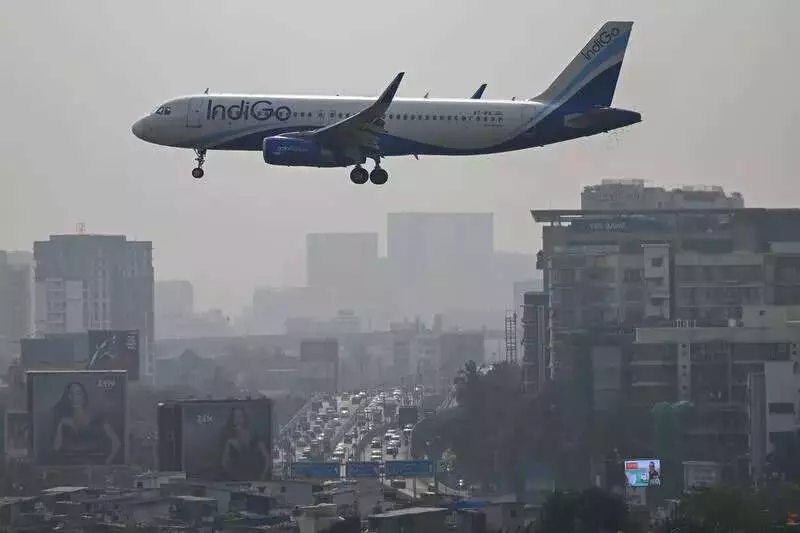
Passengers at Mumbai's Chhatrapati Shivaji Maharaj International Airport faced severe disruption for a second consecutive day on Saturday as budget carrier IndiGo struggled with an acute crew shortage. The airline was forced to cancel a staggering 146 flights between midnight and 8 pm, throwing travel plans into chaos and leaving thousands stranded.
Airport Scrambles to Manage Passenger Surge
In response to the massive cancellations, Mumbai International Airport Ltd (MIAL) activated a series of emergency measures to handle the surge of affected passengers. The airport operator arranged additional seating and complimentary refreshments for those waiting. More terminal managers and customer service staff were deployed to guide flyers, and food outlets were instructed to maintain adequate supplies with teams monitoring prices to prevent gouging.
To ease congestion, dedicated exit gates were opened specifically for passengers from cancelled flights. These were supported by terminal staff, airline representatives, and CISF personnel to speed up the dispersal of crowds. A 24x7 help desk was set up to provide continuous updates, and flight information boards were refreshed in real-time as details came in from the airline.

Logistical Nightmare and Passenger Ordeals
Behind the operational statistics are stories of significant personal hardship and financial loss for travelers. Mumbai resident Vijay Rao, returning from a pilgrimage to Vaishnodevi, had booked a direct Jammu-Mumbai flight three months in advance for approximately Rs 8,000 per person. His flight's cancellation forced a costly and stressful alternative. Rao had to purchase last-minute Jammu-Delhi tickets for Rs 10,500 each, followed by Delhi-Mumbai fares at a steep Rs 31,000 per head. An overnight stay in Delhi costing Rs 12,000 pushed his total expense to around Rs 46,500 per person—a nearly six-fold increase.
Other passengers expressed deep distrust despite available options. "Most of the flight options available are for IndiGo flights, we're wary after the experience we had the last two days," said Saumya Desai, an affected passenger, highlighting the erosion of confidence in the airline.
Contrasting Narratives: Ministry Claims vs. Ground Reality
Even as the crisis unfolded at Mumbai airport, the Union Ministry of Civil Aviation issued a statement late evening claiming that normalcy had been restored at airports across the country. The ministry asserted that all necessary facilities were being provided and that check-in and check-out processes were happening smoothly.
This official claim stood in stark contrast to the scene on the ground, where the airport was implementing extensive contingency plans. MIAL assigned extra housekeeping teams for constant cleaning, with special attention to high-traffic areas like women's washrooms and baby-care rooms. A joint baggage retrieval taskforce involving terminal operations, security, IndiGo staff, and baggage teams was created to expedite luggage handling from cancelled flights.
In a significant logistical move, the airport managed to make space for about 25 grounded IndiGo aircraft despite tight apron availability and deployed additional marshals to handle increased landside traffic. The government's announcement of fare caps on Saturday did little to immediately alleviate the primary problem for stranded passengers: simply finding an available seat on any flight home.






