

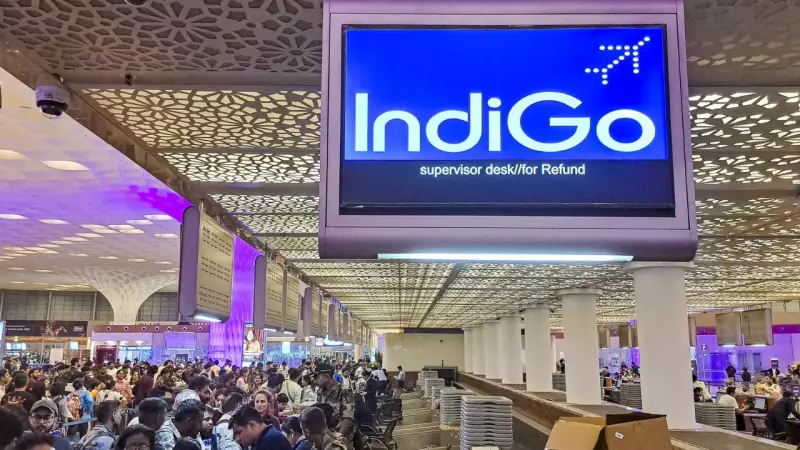
India's aviation sector is facing severe turbulence as the country's largest airline, IndiGo, struggles with a massive operational crisis that has now stretched into its fourth consecutive day. The disruption has left thousands of passengers stranded at airports nationwide, triggered a sharp spike in airfares, and forced the aviation regulator to step in with emergency directives.
Widespread Chaos and Soaring Ticket Prices
The scale of the disruption is unprecedented. On Thursday, December 5, alone, IndiGo cancelled over 550 domestic and international flights, a number far exceeding its typical daily cancellation rate of 170-200. Major hubs like Mumbai, Delhi, Bengaluru, and Hyderabad were among the worst affected. At Mumbai airport, 118 flights were axed, comprising 74 departures and 44 arrivals, with most other departures delayed by two to three hours or more.
The fallout was immediate and harsh for travelers. With IndiGo commanding a 65% share of the domestic market, the sudden reduction in capacity sent airfares skyrocketing. Passengers booking last-minute, emergency travel bore the brunt, paying exorbitant prices only to be left waiting at boarding gates for hours. A same-day ticket on the Mumbai-Delhi route was reportedly priced at a staggering Rs 23,000, while direct flights to destinations like Goa, Ahmedabad, Kochi, and Trivandrum were completely sold out.

Root Cause: Pilot Shortage After New Duty Rules
The core of the crisis stems from a severe crew shortage following the implementation of Phase-2 of the revised Flight Duty and Time Limitation (FDTL) norms on November 1. These rules are designed to enhance safety by ensuring pilots get adequate rest and operate within strict duty hour limits, particularly capping landings between midnight and 6 am.
While airlines were given time to adjust, IndiGo admitted to the Directorate General of Civil Aviation (DGCA) that it had underestimated the pilot requirements under the new regime. This miscalculation, coupled with the airline's increased winter schedule, created a critical mismatch between planned flights and available crew. An IndiGo staffer at Bengaluru airport summed up the problem to a frustrated passenger, stating, "The plane is ready, but we don’t have a pilot to fly it."
Regulatory Intervention and Passenger Anguish
The DGCA convened multiple emergency meetings with the airline's management, instructing IndiGo to stabilise its operations immediately and prevent unfair airfare hikes. The regulator revealed that IndiGo has sought operational exemptions from specific FDTL provisions for its Airbus A320 fleet until February 10, 2026, to ease the situation.
"IndiGo has assured DGCA that corrective actions are underway and that normalized and stable operations will be fully restored by 10 February 2026," the regulator stated. Meanwhile, on the ground, scenes of chaos unfolded. Passengers reported vacant counters, unresponsive customer service, long snaking queues, and overcrowded terminals. Social media was flooded with images of people sleeping on luggage and piles of unattended bags. Many missed critical appointments, stranded without clear information on alternative flights.
Congress leader Rahul Gandhi criticised the situation, calling it a cost of the government's "monopoly model" in the aviation sector. Civil Aviation Minister Ram Mohan Naidu has directed the airline to take urgent measures to normalise operations and assist affected passengers. The DGCA is now closely monitoring IndiGo's operations and fare patterns as the airline works to recover from one of its worst operational crises.






