

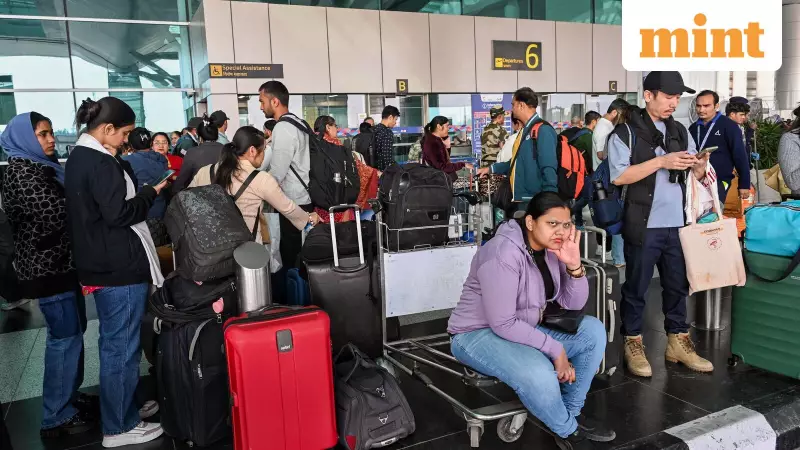
India's aviation sector is facing an unprecedented crisis as IndiGo, the country's largest carrier by fleet and market share, has brought its domestic operations to a virtual standstill. The airline has cancelled all domestic departures from Delhi, with cascading cancellations reported at various other airports across the country. This meltdown, unfolding over several days, represents a severe operational failure for an airline that commands a dominant 65% share of the domestic market.
The Scale of the Collapse: A Network Paralyzed
The impact is staggering due to IndiGo's sheer size. The airline operates over 2,200 daily flights with a fleet of around 400 planes, carrying close to 4 lakh passengers every day within India. The current crisis has left no other carrier in a position to absorb the slack created by IndiGo's grounding. Data from aviation analytics firm Cirium reveals the depth of the problem: IndiGo operates scheduled services on 1,526 sectors, and a crippling 595 of these are monopoly routes where it is the only operator. This means the collapse is affecting one-third of its entire network.
An initial 48-hour recovery deadline set by the airline has been missed, with cancellations continuing into a third day. The airline appears to be attempting a total operational reset, realigning its crew, aircraft, and sectors to restart with minimal impact going forward. However, for thousands of passengers stranded nationwide, the immediate reality is one of disrupted plans and uncertainty.

Opportunity for Rivals: Who Gains from IndiGo's Loss?
The crisis has created a sudden vacuum in the market, presenting a rare opportunity for IndiGo's competitors. SpiceJet, despite its own well-documented financial struggles, has emerged as an immediate saviour. The airline is operating close to 30 additional departures across domestic and some international sectors. This surge capacity allows SpiceJet to command higher last-minute fares, generating much-needed cash. The airline's recent fleet augmentation, including damp-leased planes, has provided the flexibility to add flights at short notice.
Air India stands as a major beneficiary, especially on lucrative metro routes where it competes neck-and-neck with IndiGo. With IndiGo grounded, Air India can sell its remaining seats at significantly higher fares, particularly on busy Friday evening flights, many of which are now sold out. The broader Air India group is poised to gain substantially. On duopoly routes—where only two carriers operate—Air India Express is the other carrier on 93 out of 212 routes, followed by Air India on 59 routes. Together, the Tata-owned group dominates over half of all duopoly routes affected by IndiGo's stoppage.
The group is considering deploying widebody aircraft like the Boeing 787 Dreamliner on domestic routes to clear passenger backlogs at major airports. Other carriers like Akasa Air overlap on 14 duopoly routes, while Star Air and Alliance Air operate on a handful, though their smaller capacity limits their overall impact.
The Real Losers: Stranded Passengers and Long-Term Repercussions
Despite the short-term gains for rivals, the aviation ecosystem has no true winners in this scenario. The primary losers are the lakhs of passengers stranded across India, facing ruined travel plans with little hope of reaching their destinations on time. The market lacks sufficient additional capacity to accommodate them all, leading to sky-high ticket prices for available seats.
The long-term repercussions of this fiasco will be significant. For IndiGo, the reputational damage and loss of passenger trust could be severe. The event will also be a major test for the aviation regulator, scrutinizing its oversight of systemic risks when one player becomes too dominant. While airlines like Air India might enjoy a temporary revenue boost, the crisis underscores the fragility of India's aviation infrastructure when its largest pillar falters. The episode serves as a stark reminder of the need for greater resilience and competitive balance in the sector.






