

The ongoing operational crisis at IndiGo airlines has sent shockwaves far beyond stranded passengers, severely crippling the air cargo network and inflicting heavy financial losses on farmers and traders in Pune and western Maharashtra. Over the past five days, the ripple effect of massive flight cancellations and delays has grounded perishable goods, hitting a vital economic artery for the region.
Perishable Produce Piles Up, Farmers Bear Brunt
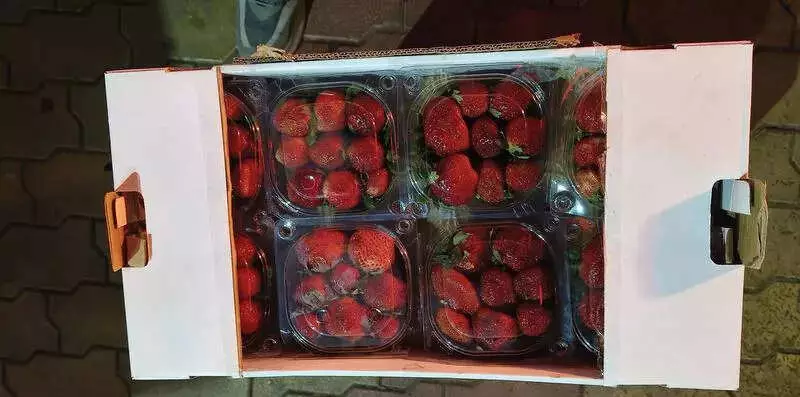
Anil Yeole, a vendor from Mahabaleshwar, exemplifies the direct impact. He typically collects strawberries from about 45 farmers daily, shipping nearly 2.5 tonnes to markets in Kolkata, Chennai, and Guwahati via Pune airport. His daily transactions average between Rs 4 lakh to Rs 5 lakh. However, for the last four to five days, none of his consignments have taken off.
"Strawberries must reach the destination market by the next day to avoid spoilage," Yeole explained, highlighting the time-sensitive nature of his business. He pointed out a critical vulnerability: there is no insurance for fruits, meaning growers absorb the entire loss when shipments fail.

Official Figures Confirm Major Cargo Disruption
The scale of the disruption is confirmed by airport authorities. Pradeep Kumar Singh, Joint General Manager (Cargo) at Pune airport, told sources that there has been a dramatic 55% decline in both inbound and outbound cargo movement since the IndiGo chaos began.
"On average, we process 180-190 metric tonnes of cargo daily. In the past three to four days, this has plummeted to just about 90 metric tonnes," Singh stated. He added that international cargo remains largely unaffected due to limited international flight operations.
Floriculture and Vegetable Sectors Also Suffer
The crisis has extended to other agricultural sectors. Pune is a major hub for high-value cut flowers, especially roses. Praveen Sharma, President of the India Society of Floriculture Professionals, reported that the region has already seen an approximate 10% loss due to cargo being stuck at the airport, degrading flower quality.
This comes during the peak wedding season, where demand and prices have surged. Rose bunches that sold for Rs 200-250 are now fetching up to Rs 500. Despite this, orders from distant cities like Kolkata, Guwahati, Ranchi, and Jaipur have completely stopped, accounting for a 20% drop in routine volume. Growers are now forced to use slower, less reliable buses and trains.
Vegetable vendors are in a similar predicament. Ravindra Wagh of Shreenath Agro said exotic vegetables like iceberg lettuce, celery, parsley, broccoli, and cherry tomatoes, which are primarily sent via air cargo from Pune, are stuck. "The entire supply chain is affected. We faced last-moment cancellations, having to reload cargo multiple times. One consignment took 48 hours for a Pune-Bengaluru journey," Wagh recounted. This has forced farmers to sell produce in local markets at reduced prices.
Automobile Parts and Vaccines Impacted
The disruption is not limited to agriculture. Sandip Bhosale, owner of SB Logistics, highlighted that shipments of automobile parts and vaccines have also been hit. Pune, a key cargo hub for western Maharashtra, has seen many customers cancel shipments and retrieve consignments to seek alternatives, further complicating logistics across industries.
The IndiGo crisis has thus exposed the critical dependency of regional economies on robust air logistics. With no immediate resolution in sight, farmers, traders, and businesses continue to count their losses, hoping for a swift normalization of flight schedules to prevent further damage to perishable goods and livelihoods.






