

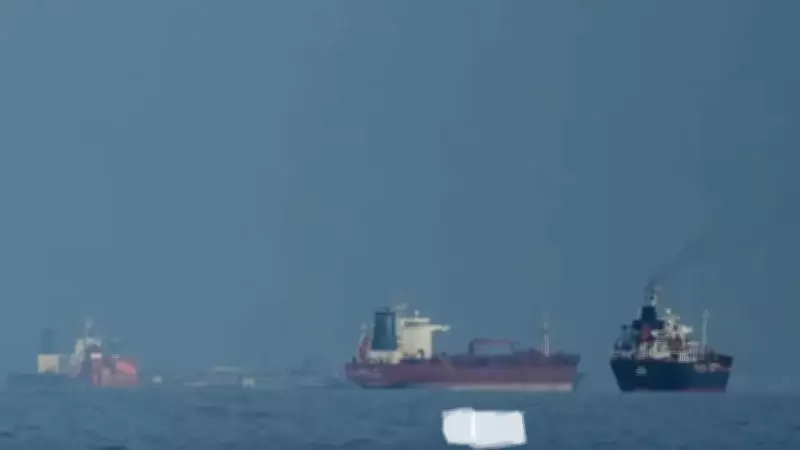
US-Sanctioned Iranian Oil Tanker Reroutes from India to China Amid Payment Issues
A US-sanctioned Aframax tanker transporting Iranian crude oil has dramatically altered its voyage mid-journey, abandoning its original destination of India and redirecting towards China. This significant development underscores the persistent and complex challenges facing the resumption of oil trade with Iran, particularly for nations like India that have been major historical buyers.
Tracking Data Reveals Sudden Course Change
According to detailed reports from the ship-tracking firm Kpler, the tanker Ping Shun had been signalling Vadinar in Gujarat, India, earlier this week. However, in a surprising turn of events, the vessel has now updated its declared destination to Dongying in China. This cargo, estimated at approximately 600,000 barrels, was loaded from Iran's Kharg Island in early March and was initially expected to arrive at the Indian port on April 4.
Sumit Ritolia, Lead Research Analyst at Kpler, confirmed the shift, stating, "An Iranian crude vessel 'Ping Shun' that had been en route to Vadinar, India, over the past three days has dropped India as its declared destination near arrival and is now signalling China." It is crucial to note that while Automatic Identification System (AIS) tracking data provides real-time insights, such signalled destinations can change during transit and are not always final.

Payment Concerns and Tightened Financial Terms
The primary driver behind this mid-voyage rerouting appears to be acute payment-related concerns. In the current sanctions environment, sellers of Iranian crude are increasingly tightening financial terms, moving away from earlier credit arrangements towards demanding upfront or near-term payments. This shift complicates transactions significantly for buyers like India.
Ritolia elaborated on the sensitivity of the situation, noting, "While such mid-voyage destination changes are not unprecedented with Iranian crudes, they highlight the increasing sensitivity of trade flows to financial terms and counterparty risk." He further added that if the payment issues are resolved, the cargo could still potentially make its way to an Indian refinery. However, this episode powerfully underscores how commercial terms are becoming as critical as logistics in determining the flow of Iranian crude to countries other than China.
Historical Context and India's Former Reliance
Had the Ping Shun delivered its cargo to Vadinar, it would have marked a historic moment: India's first import of Iranian crude in nearly seven years. Imports were abruptly halted in May 2019 following the United States' decision to tighten sanctions on Iran's oil exports.
Historically, India was a major purchaser of Iranian oil. In 2018, imports peaked at about 518,000 barrels per day. This figure declined to 268,000 barrels per day in early 2019 during a brief sanctions waiver period before stopping entirely. At its zenith, Iranian crude constituted around 11.5 per cent of India's total oil imports. Indian refiners particularly favoured Iran's light and heavy grades due to their compatibility with refinery configurations and the favourable commercial terms previously offered.
Ongoing Sanctions and Banking Hurdles
Despite a recent, temporary US waiver allowing limited purchases of Iranian oil at sea for a 30-day period—aimed at easing global oil prices amid regional conflicts—significant financial and banking constraints remain formidable obstacles. This waiver is set to expire on April 19.
A critical barrier is Iran's continued exclusion from the SWIFT international banking messaging system, which makes cross-border payments exceedingly difficult. Earlier workaround mechanisms, such as routing euro payments through intermediary banks, are no longer viable options for most transactions. Analysts estimate that around 95 million barrels of Iranian oil remain stored on vessels at sea, with a portion theoretically available for buyers like India if these financial hurdles can be overcome.

Strategic Implications and Future Outlook
The rerouting of the Ping Shun tanker is a stark illustration of how international sanctions, evolving payment mechanisms, and heightened risk perception continue to dictate global oil trade dynamics. In the current geopolitical climate, China has emerged as a more consistent and reliable buyer of Iranian crude, often navigating the sanctions landscape with alternative financial channels.
Vadinar, the originally intended Indian destination, is home to a major refinery operated by Nayara Energy, which is backed by the Russian oil major Rosneft. The Indian oil ministry has consistently maintained that any potential resumption of Iranian imports would be contingent upon techno-commercial viability, indicating a cautious and calculated approach amidst swirling geopolitical and financial risks.
This incident serves as a potent reminder that the path to resuming normal trade relations with Iran is fraught with complexity, where financial viability is now as decisive a factor as diplomatic relations and logistical planning.





